I am a UX Designer who combines empathy and research to create intuitive and meaningful user-centric experiences that help people feel confident and supported. Passionate about women’s health and emerging technologies, I turn complex challenges into empowering, inclusive solutions.
Touch to Tech: Investigating the Use of Augmented Reality in Breast Self-Examination Education
Empowering women in learning to confidently conduct breast self-examination (BSE) through interactive technology
Why this matters?
Being aware of breast health is important, as it helps women notice changes early and take action by scheduling a checkup. Breast self-examination (BSE) is a simple but important method for potential early breast cancer detection. However, many women feel uncertain due to a lack of knowledge or have misconceptions that prevent them from regularly practicing.
To address this, I designed and tested an augmented reality (AR) prototype that provides step-by-step guidance with real-time feedback. This study evaluated its usability, trust and mental effort in comparison with a traditional BSE mobile application. AR enables interactive, hands-on guidance by overlaying information onto the real world, making it useful for personalized learning in sensitive and private tasks such as BSE.
What I set out to explore
Aim
To investigate the user experience of an augmented reality (AR) prototype for educating women in breast self-examination for potential awareness of early breast cancer detection.
Research questions
1. What are the needs and user requirements for designing an AR prototype for educating women in breast self-examination for potential early breast cancer detection?
2. How effective can AR be compared to traditional mobile applications in terms of mental effort, usability, and trust?
Design thinking for AR prototype
Using a research-driven and iterative approach in designing the AR prototype.
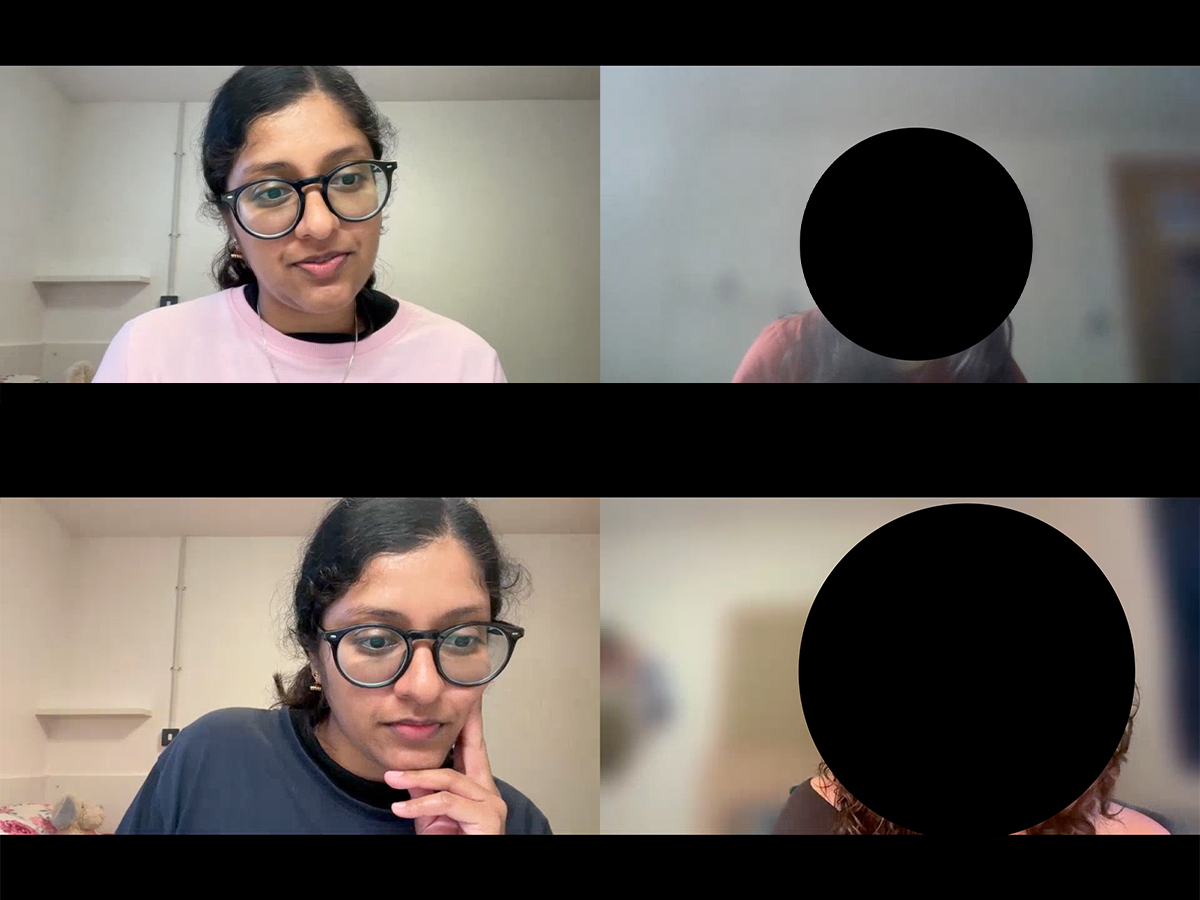
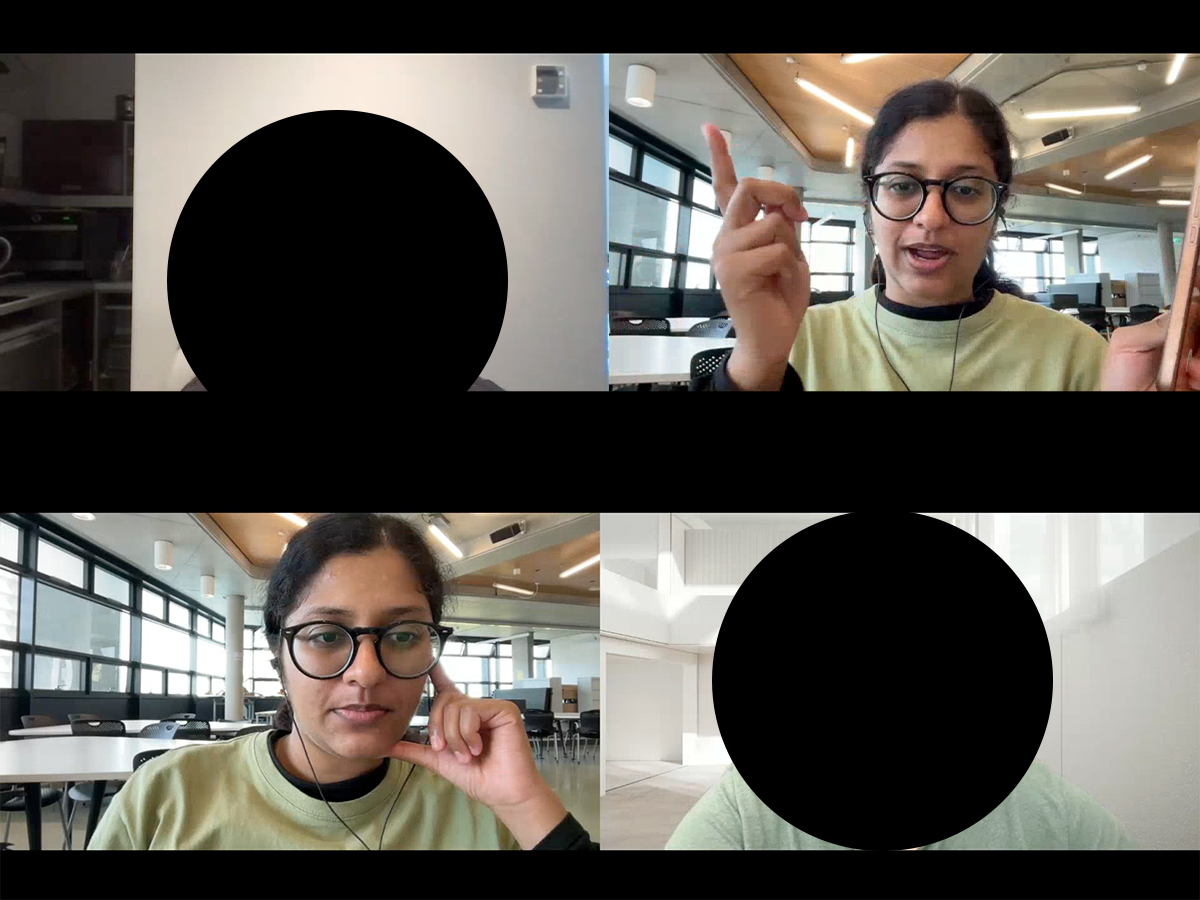
Screenshots from the user needs interview conducted online
Empathize
To understand the user needs, I conducted semi-structured interviews with six women to address Research Question 1.
These conversations helped me gain insight into:
Their experiences with breast self-examination, including the challenges they face and gaps in knowledge.
Their needs from an AR tool to support them and build trust.
Define
From the findings of the user needs interview, the key insights identified were:
Support and reassurance – build confidence in users
Trustworthy information – use credible sources
Consent, privacy and security – ensure clear consent; data is handled securely and transparently
Usability and guidance – provide simple, quick, easy-to-follow instructions
Key insights from the user needs interview
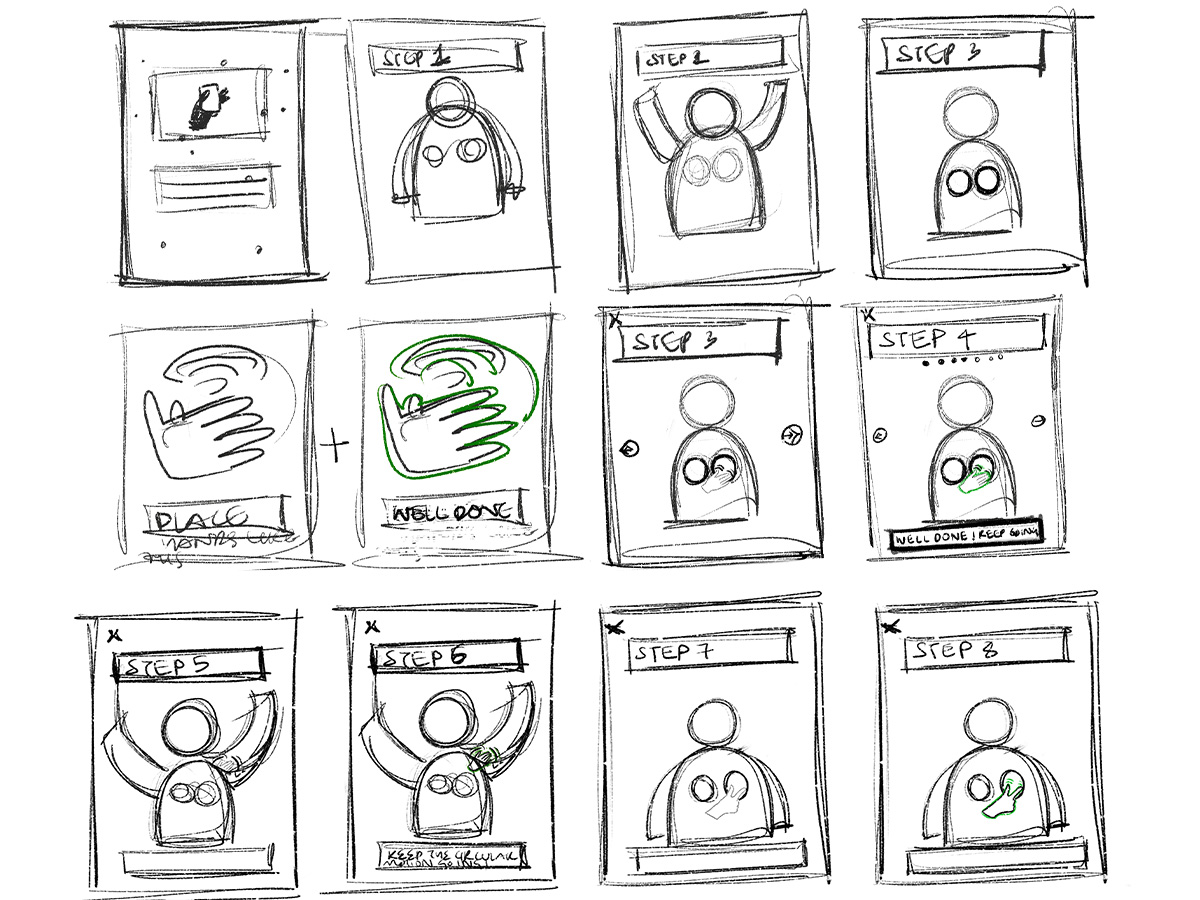
Initial Crazy8’s session during ideation
Ideate
Key insights from the user needs interview guided the brainstorming phase during ideation to make the AR BSE experience clear, supportive, and easy to follow. During the interview, participants also interacted with an existing BSE application and shared feedback on its usability, trustworthiness and guidance. This feedback helped shape the AR prototype design.
Prototype A
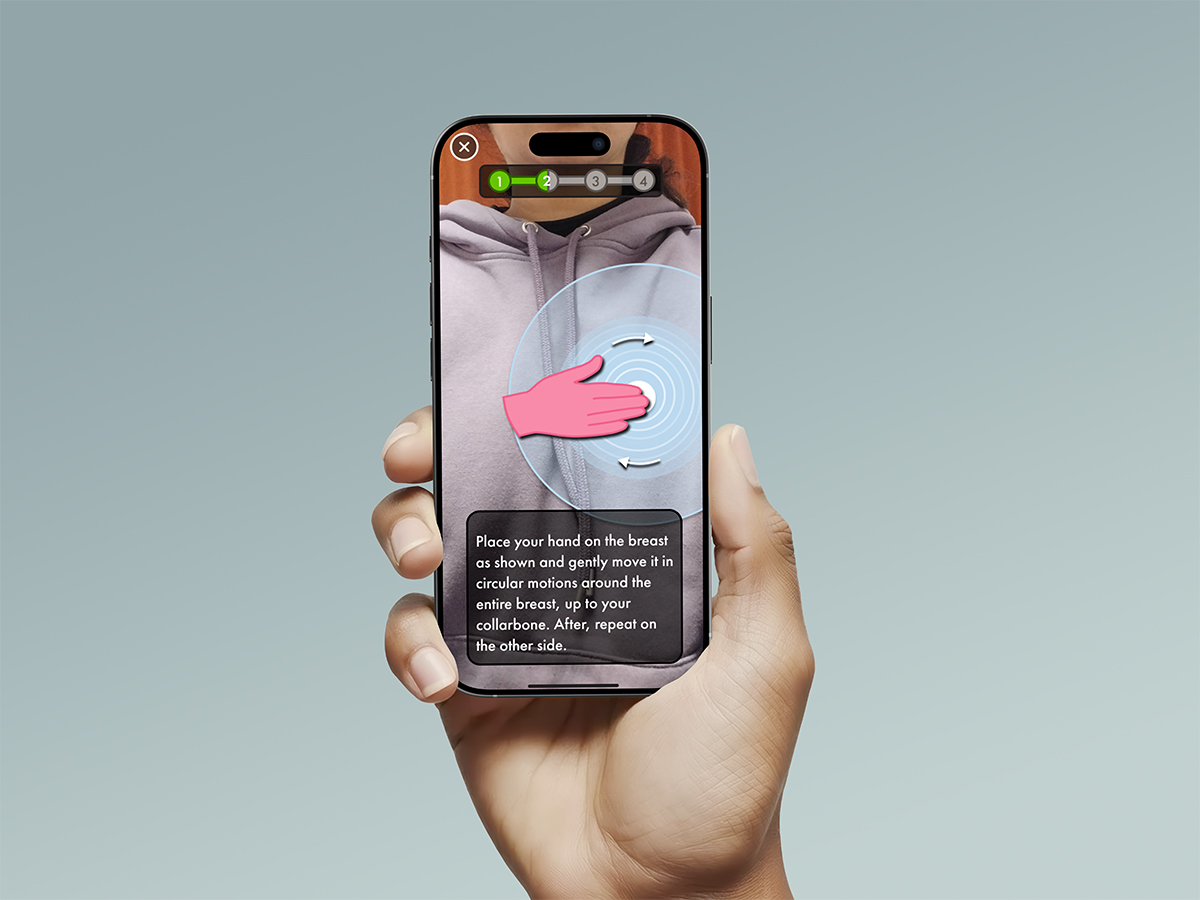
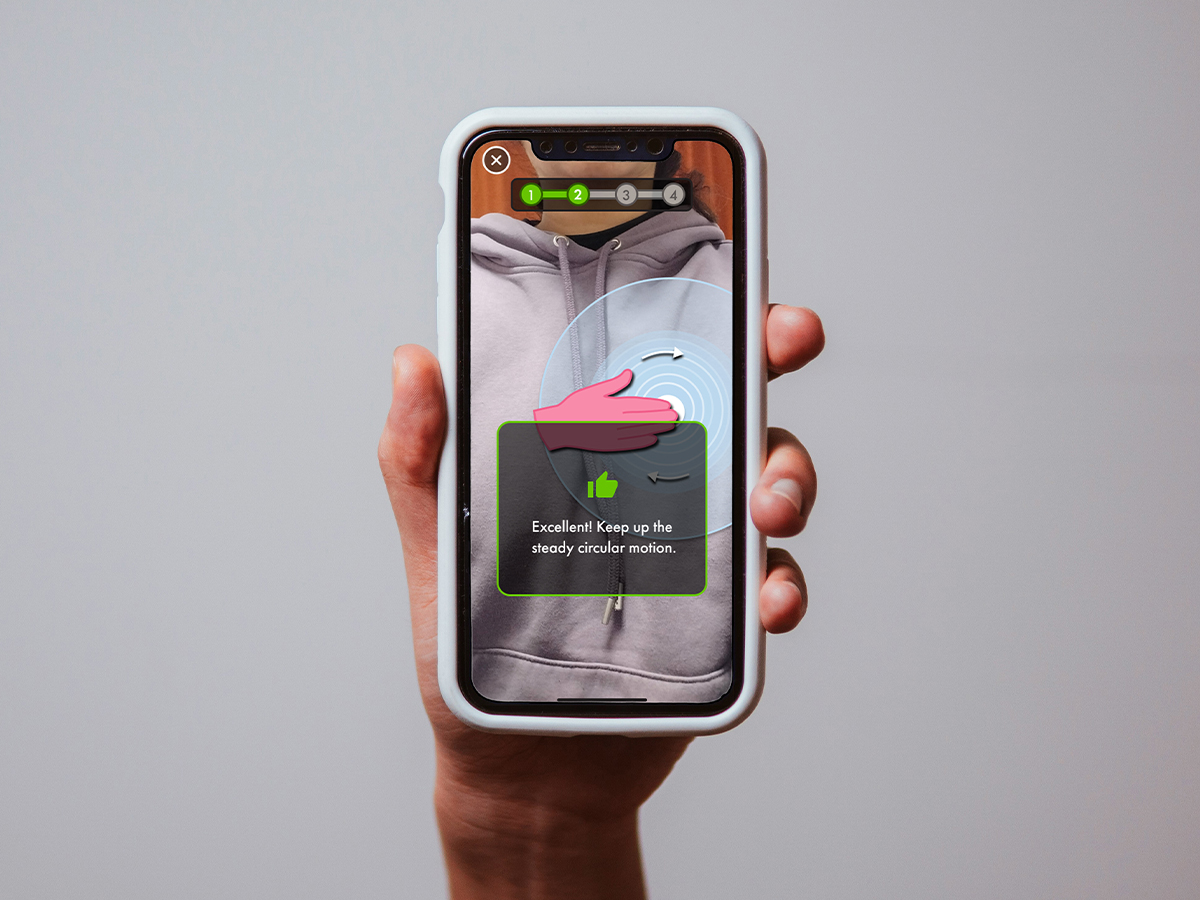
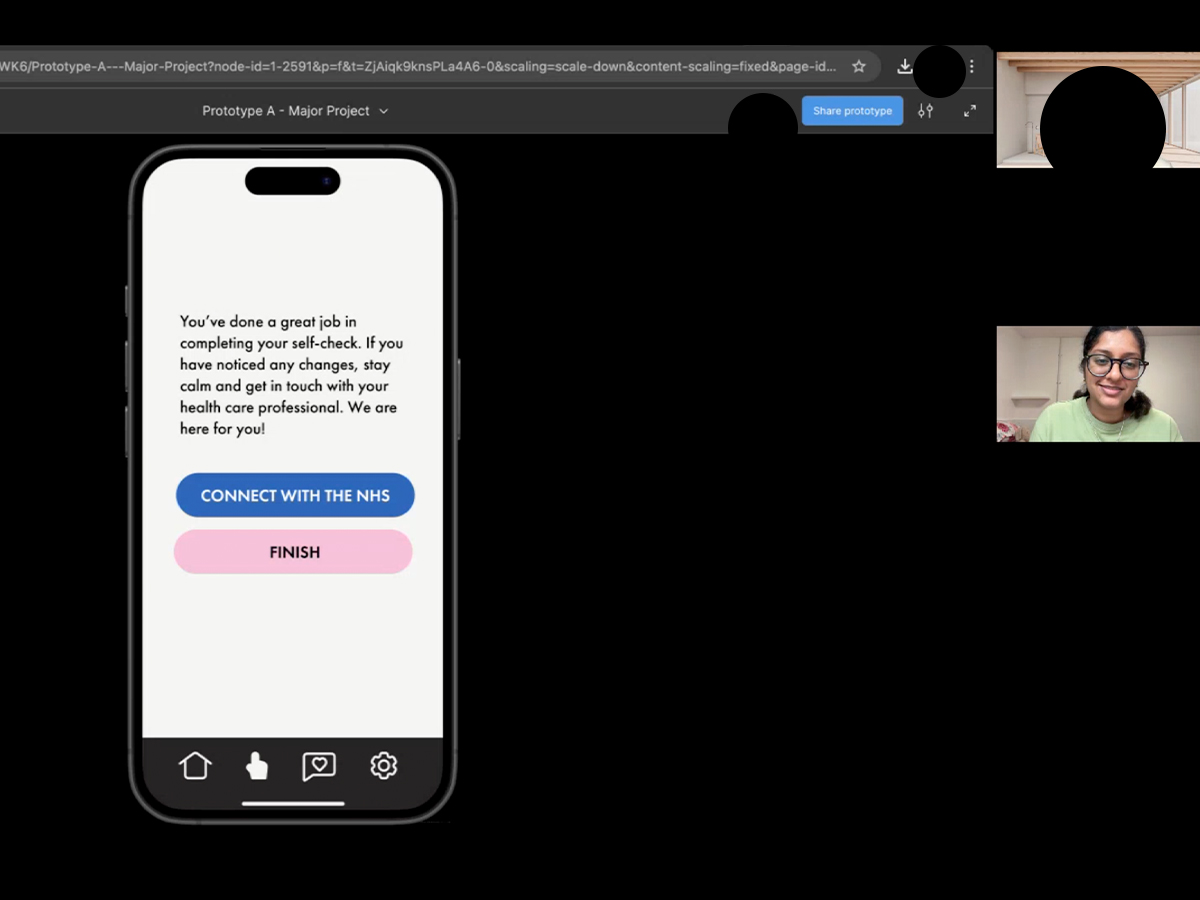
Prototype A demonstrates the AR-guided BSE application designed for this project. Developed with Cognitive Load Theory in mind, it provides step-by-step guidance, real-time feedback, and aims to reduce mental effort.
Prototype A: AR-based BSE application
Prototype B: Existing BSE application
Prototype B
Prototype B is an existing BSE application that participants used during the study. The feedback on its mental effort, usability and trust highlighted areas where Prototype A could be improved.
Testing
The study used a within-subject design with sixteen participants, most under thirty-five. Each participant engaged with both Prototype A (AR BSE application) and Prototype B (existing BSE application). After each interaction, they completed a post-evaluation form measuring mental effort, usability and trust. An exit interview was also conducted to capture qualitative data.
Screenshots from final user testing sessions conducted online
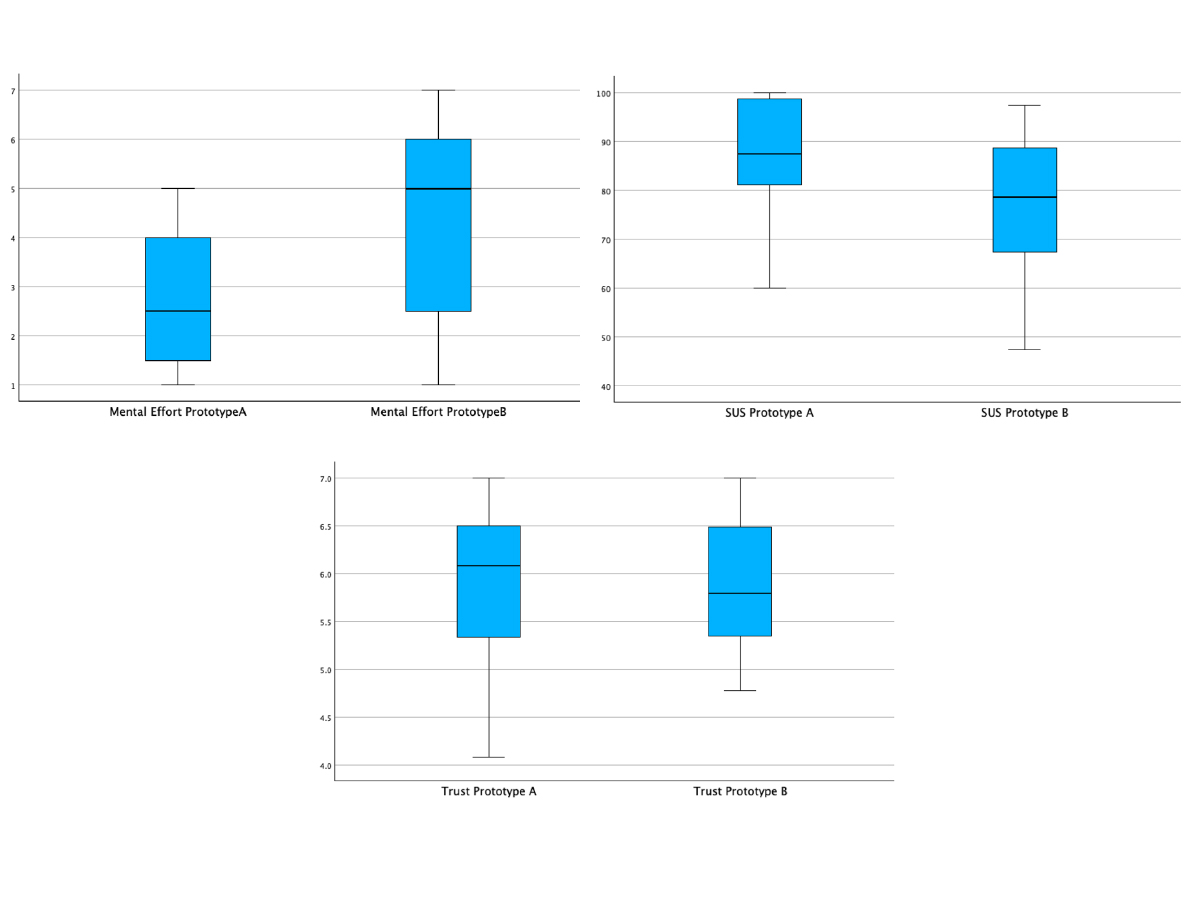
The boxplots illustrate the differences in mental effort, usability, and trust
Quantitative Results
A Wilcoxon Signed-Rank test and a Paired t-test were used to analyze the data. The results showed Prototype A significantly reduced mental effort and improved usability compared to Prototype B, while trust scores remained similar between the two prototypes.
Qualitative Results
Usability and Guidance: Prototype A’s step-by-step guidance made BSE easier, while Prototype B was usable but increased mental effort.
Support and Confidence: Prototype A provided real-time feedback, whereas Prototype B’s visual design was friendly but less interactive.
Privacy and Trust: Prototype B felt safer, while Prototype A required additional security reassurance to boost trust.
“The step-by-step instruction made it easier to follow” – P04 (Prototype A)
“The pictures are nice and warm” – P02 (Prototype B)
Participant interacting with Prototype A during the exit interview
Implications
Step-by-step AR guidance with real-time feedback makes the application easier to use, reduces mental effort, and builds user confidence.
Privacy and security are key to fostering trust in AR applications.
Design Recommendations
Informative images to help understand what to look for during BSE.
Calendar, reminders and period tracking to help users understand hormonal breast changes and support regular BSE adoption.
Inclusivity by designing content that can educate all genders.