jack-brocklehurst profile photo

I am a dedicated English Industrial Designer with a passion for innovative designs. Having lived in both the Netherlands and the UK, I bring an international perspective to my work, blending technical expertise with a hands-on approach to product development.

The DuWell system was born from the problem of the "disconnected gym experience," where fitness enthusiasts must juggle multiple devices for music, tracking, and health data. This fragmentation leads to a poor user experience, a lack of real-time feedback, and difficulty sharing objective data with professionals such as physiotherapists.

My solution, DuWell, is a single, integrated training system that combines these functions seamlessly, creating a more cohesive and user-friendly workout.
The DuWell system was born from the problem of the “disconnected gym experience,” where fitness enthusiasts must juggle multiple devices for music, tracking, and health data. This fragmentation leads to a poor user experience, a lack of real-time feedback, and difficulty sharing objective data with professionals such as physiotherapists. My solution, DuWell, is a single, integrated training system that combines these functions seamlessly, creating a more cohesive and user-friendly workout.

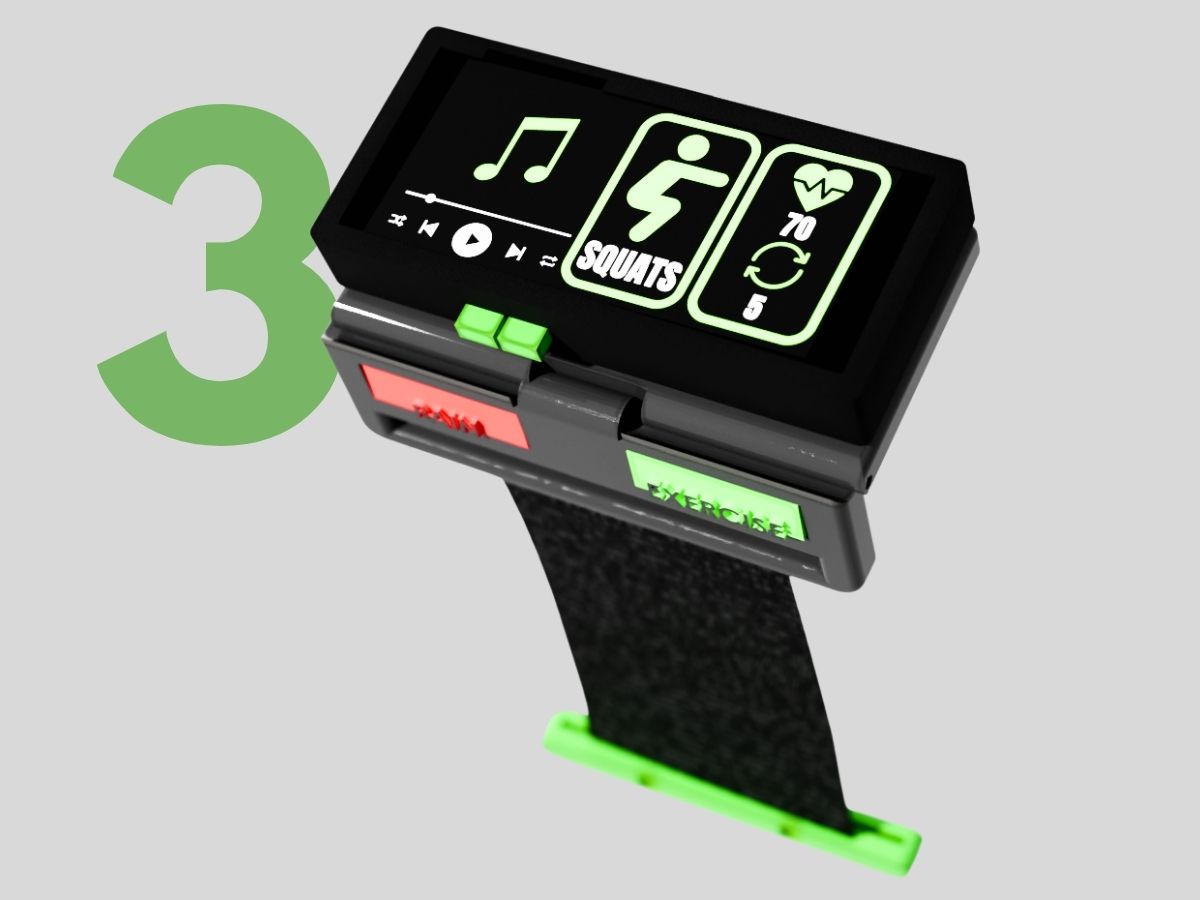
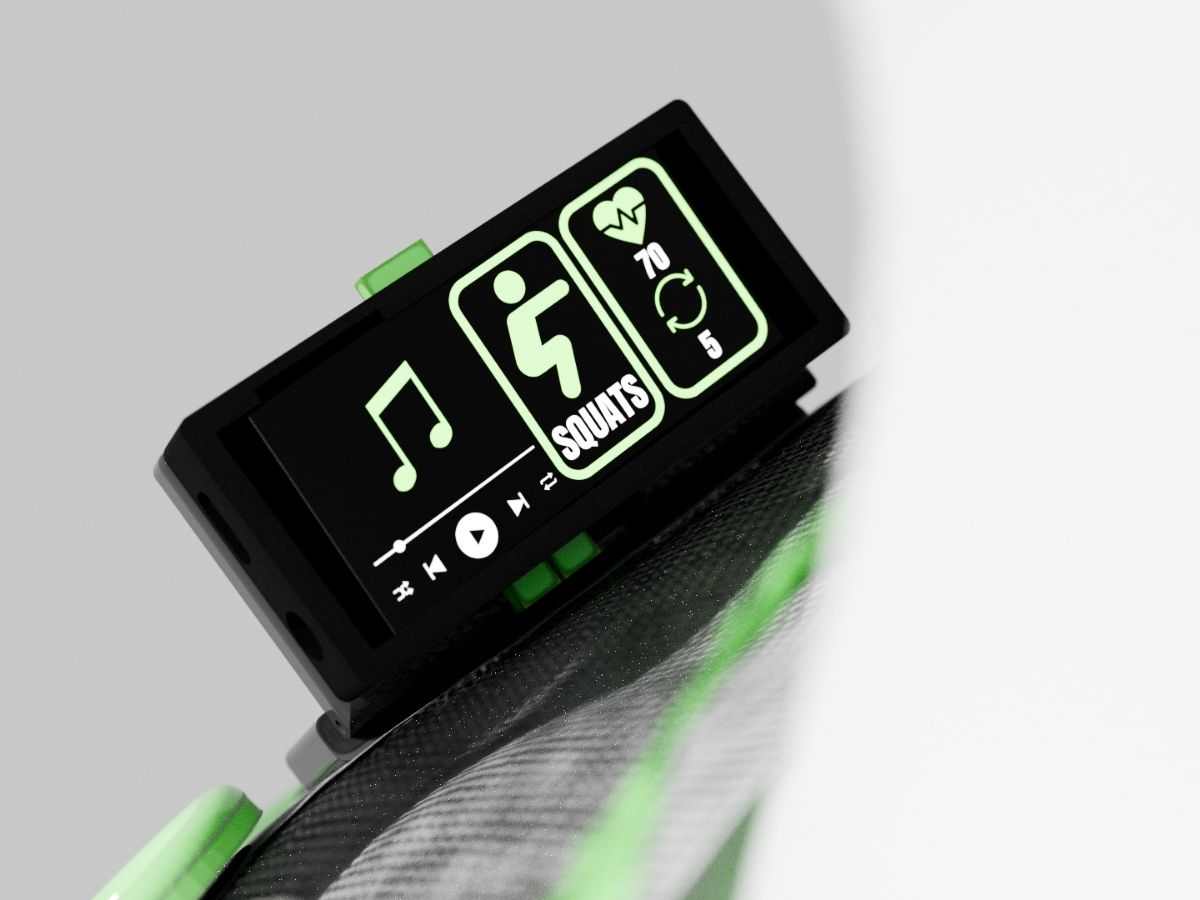
The DuWell device is a multi-part wearable system designed to solve the problem of fragmented technology in the gym. It integrates a user’s music, real-time health data, and professional physiotherapy feedback into a single, cohesive experience. The product’s innovative design is a direct result of user research and prototyping that prioritized comfort, data accuracy, and usability.

Images describing the prototyping stage of DuWell. From Initial foam and nylon straps to knitted straps and 3D printed with electronics.

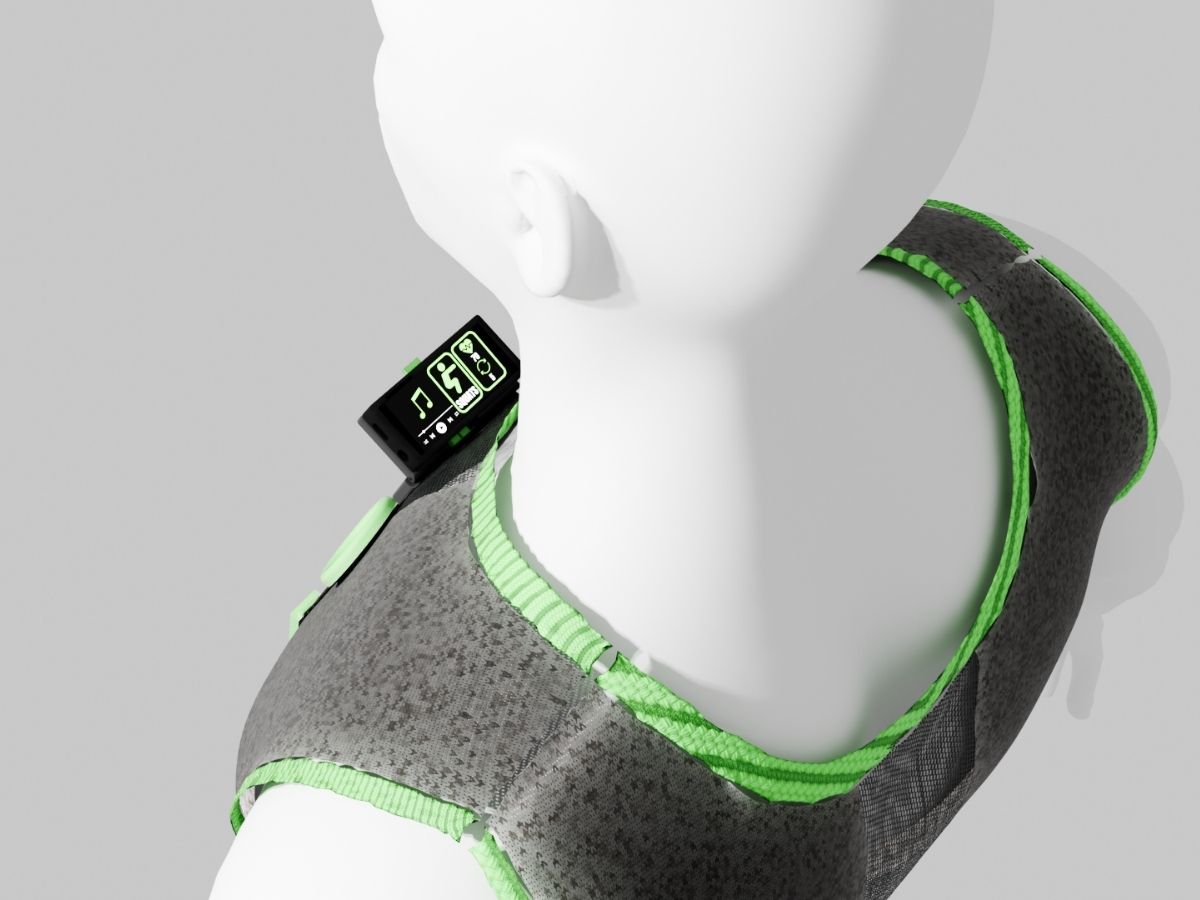
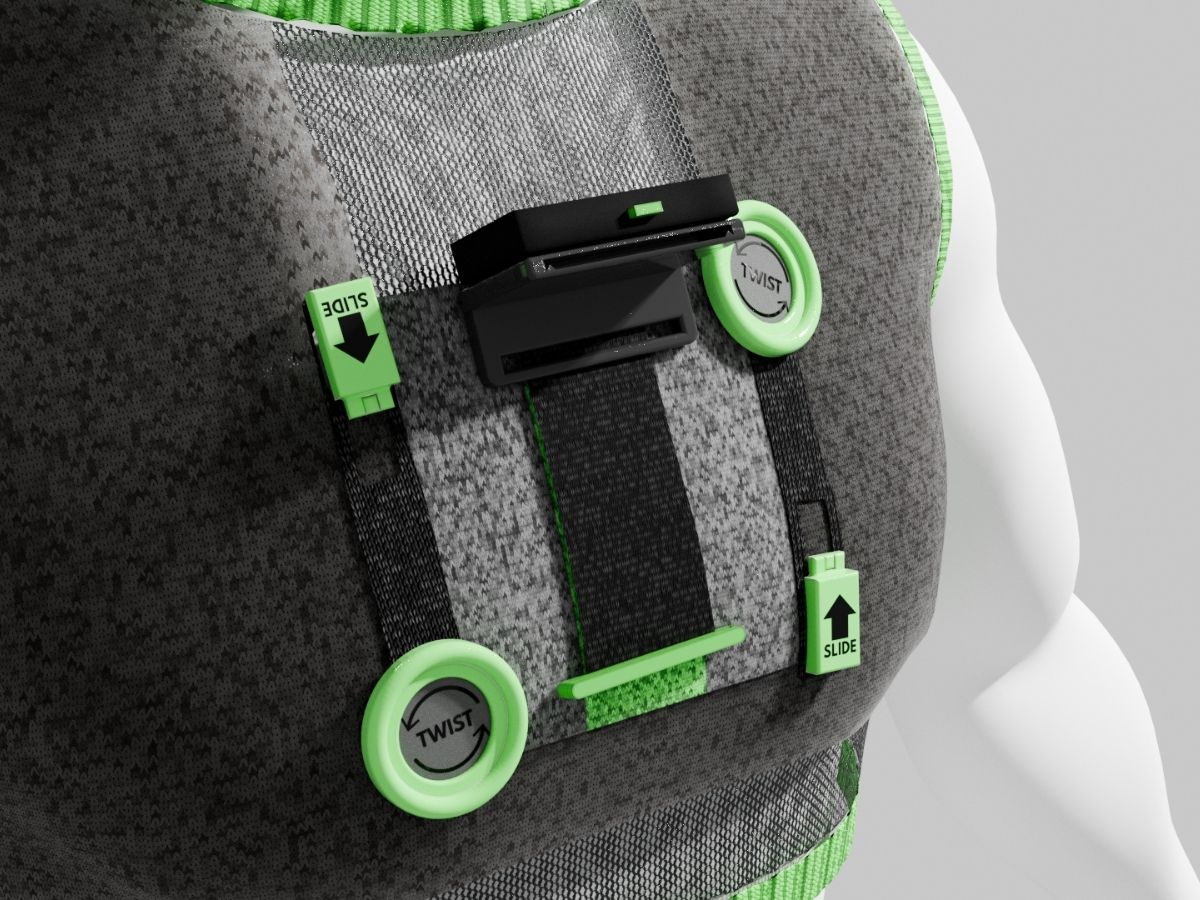
The DuWell design evolved from initial user feedback on discomfort and balance issues with a single device. Through hands-on prototyping and sketching, I separated the functions into a three-part system: a comfortable undershirt for comfort and ergonomics, a detatchable sensor module for data acquisition, and a detachable external device for user interaction. This modular approach solved key ergonomic and hygiene challenges, creating a more functional and user-friendly product.

The three-part design consisted of:

  1. Undershirt
  2. Sensor Module
  3. External Device

This three-part system provides a balanced solution that ensures data integrity and user comfort without compromising on features or functionality.

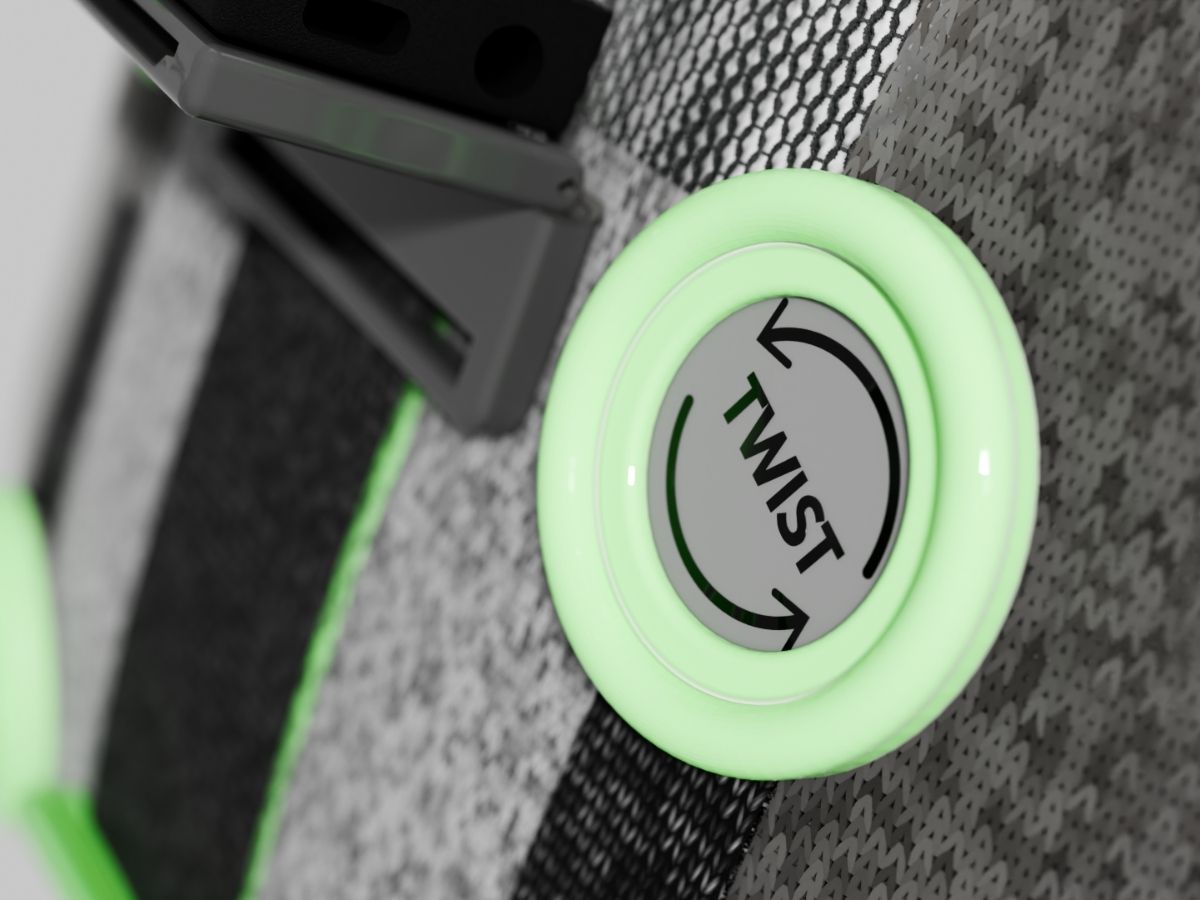
Undershirt: A comfortable, discreet vest worn under clothes to house the vital sensors requiring direct skin contact (ECG, PPG, temperature).
Sensor Board: This is not a separate piece, but rather the integration of sensors directly into the undershirt's fabric using e-textile technology.
Sensor Module: Designed to be detachable, which simplifies cleaning and allows the user to have multiple undershirts for one device. This modularity reduces the overall cost of using the product while promoting better hygiene and cleanliness.
External Device: This is the visible, multifunctional unit that clips on. It houses the screen, controls, IMU, microphone, and battery, allowing for easy user interaction and versatility.
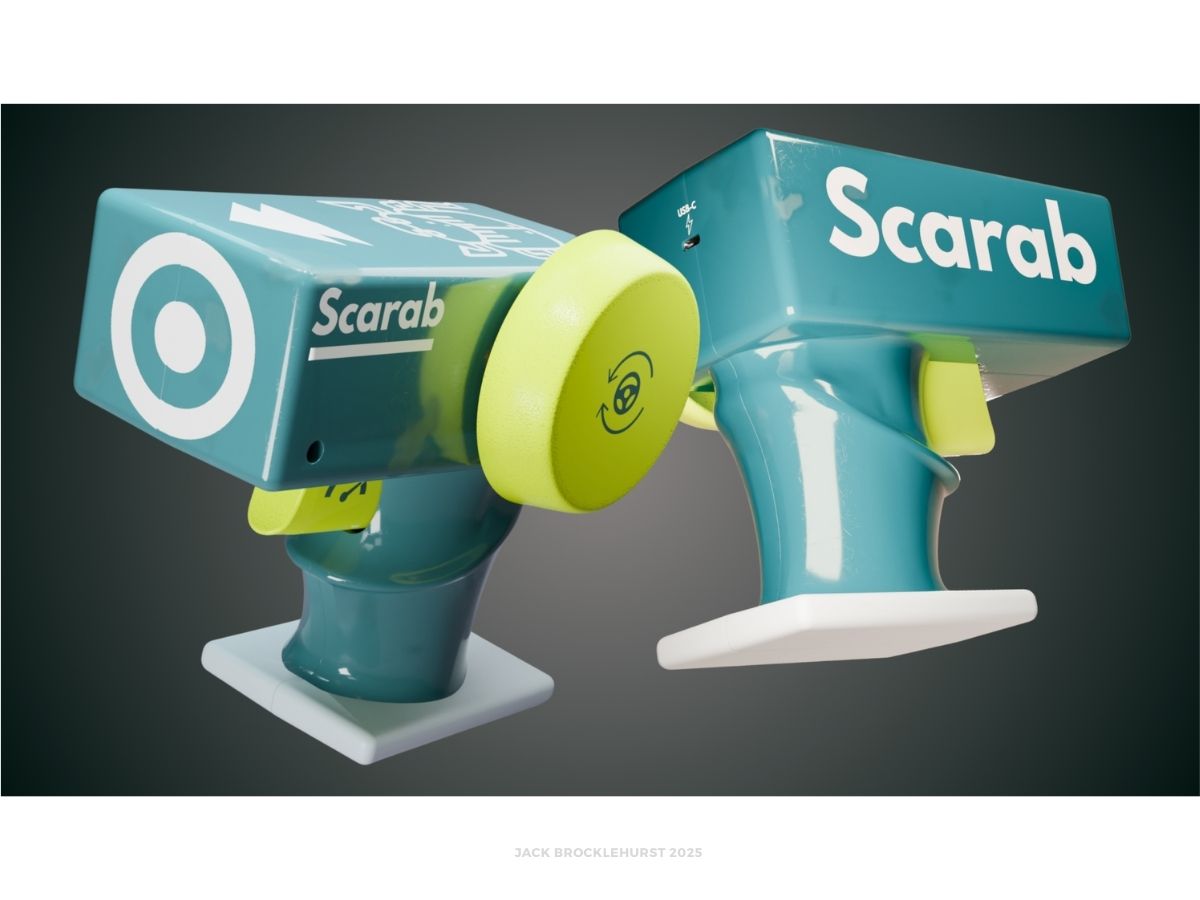
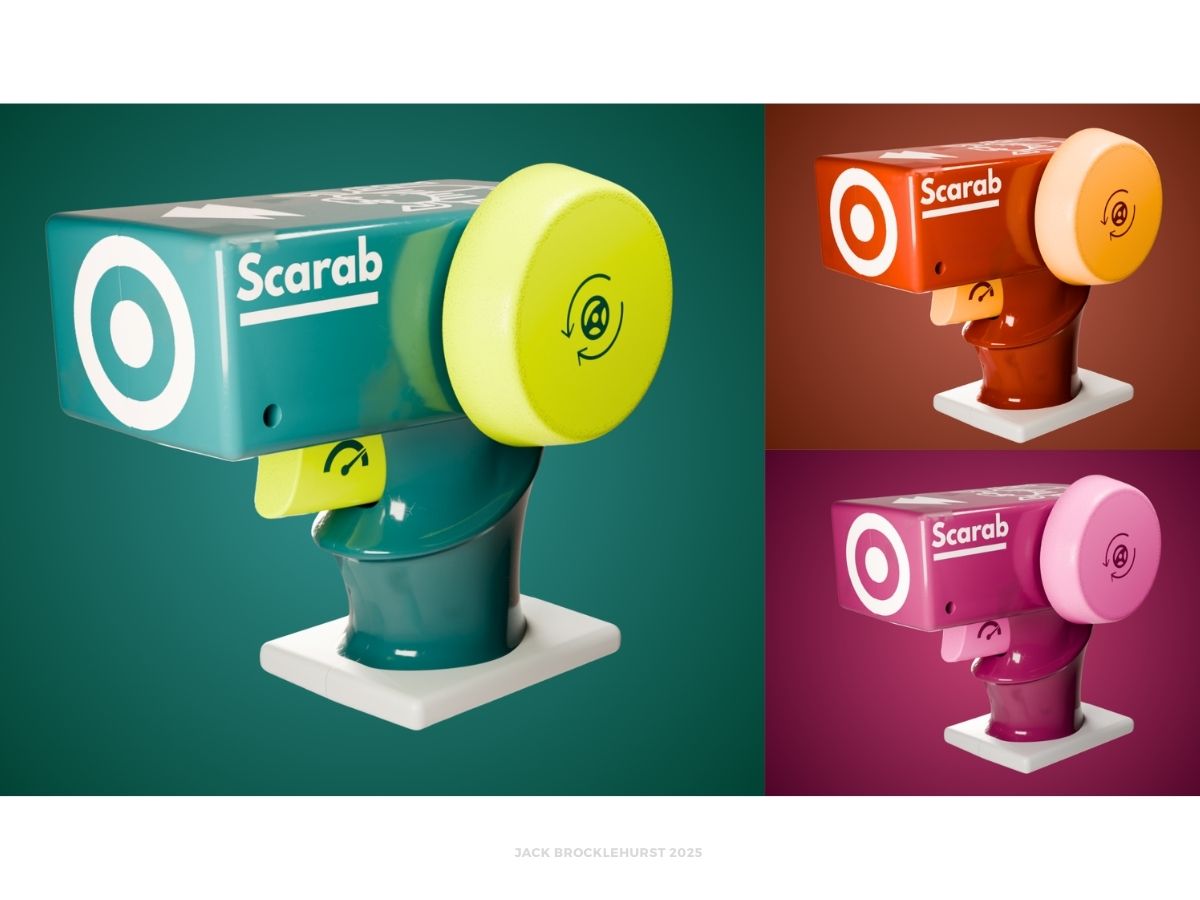
Scarab was a project I undertook at Loughborough University, where our assignment involved designing a remote-controlled car. This part of the project aimed to help us develop high-quality CAD models that maintained curvature continuity while ensuring the product's manufacturability. Following this, we were required to render the final model to a high standard.
Scarab was a project I undertook at Loughborough University, where our assignment involved designing a remote-controlled car. This part of the project aimed to help us develop high-quality CAD models that maintained curvature continuity while ensuring the product’s manufacturability. Following this, we were required to render the final model to a high standard.
ClearWay—an augmented reality (AR) mask designed to protect lives during megastructure fires! The goal of this project was to develop an AR device that assists users in navigating safely out of a building in the event of a fire. The inspiration for this idea came from the rising population and the increasing size of buildings. This project was developed during my studies at Loughborough University.
ClearWay, an augmented reality (AR) mask designed to protect lives during megastructure fires! The goal of this project was to develop an AR device that assists users in navigating safely out of a building in the event of a fire. The inspiration for this idea came from the rising population and the increasing size of buildings. This project was developed during my studies at Loughborough University.
Throughout my design career, I have worked on a variety of projects. Here are a few that I believe are worth showcasing at a glance.
For my MSc Industrial Design course at Loughborough University, my first challenge was to design an injection-moulded product using a living hinge. I created a foldable bottle holder, inspired by bottle return schemes in the Netherlands, that flat-packs for space-saving and includes a strap for easy portability, offering a sustainable and practical solution for students.
For my MSc Industrial Design course at Loughborough University, my first challenge was to design an injection-moulded product using a live hinge. I created a foldable bottle holder, inspired by bottle return schemes in the Netherlands, that flat-packs for space-saving and includes a strap for easy portability, offering a sustainable and practical solution for students.
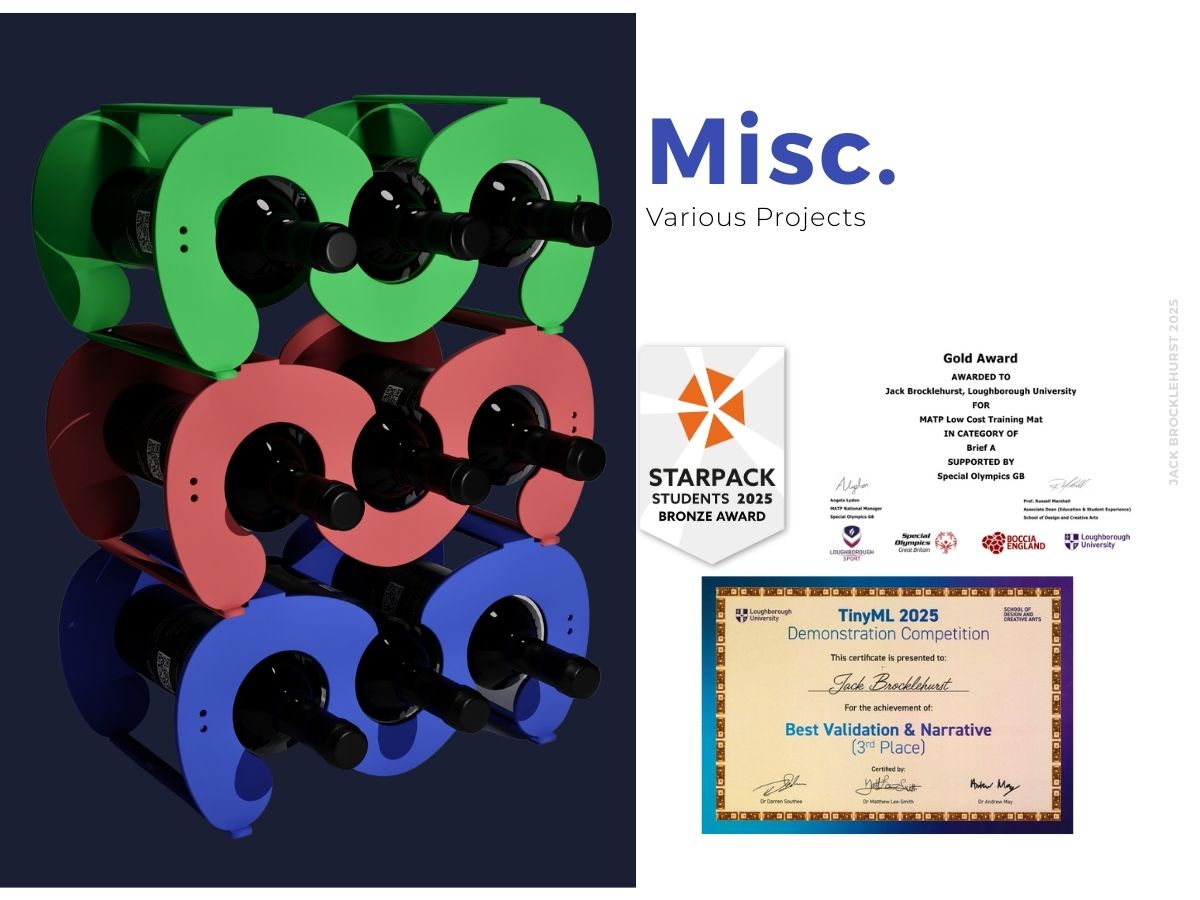
For the Starpack Awards 2025, I designed the "Warning Triangle," a multi-purpose car care pack that doubles as a breakdown triangle, winning a Bronze Award. This project significantly developed my SolidWorks and rendering skills, creating a practical and user-friendly design with features like child-safe caps, clear labels, and a robust handle. I'm thankful for the recognition from IOM3 and the IOM3 Packaging Group.
For the Starpack Awards 2025, I designed the “Warning Triangle,” a multi-purpose car care pack that doubles as a breakdown triangle, winning a Bronze Award. This project significantly developed my SolidWorks and rendering skills, creating a practical and user-friendly design with features like child-safe caps, clear labels, and a robust handle. I’m thankful for the recognition from IOM3 and the IOM3 Packaging Group.
For my "Design for AI Products" module at Loughborough University, I developed a TinyML model capable of recognizing British Sign Language phrases like "thank you" and "see you later." The project placed 3rd for "Best Validation & Narrative" in the TinyML 2025 Demonstration Competition. This experience solidified my belief that TinyML has the potential to revolutionize design by embedding powerful AI into small, low-power devices, creating intuitive and accessible products for the future.
For my “Design for AI Products” module at Loughborough University, I developed a TinyML model capable of recognizing British Sign Language phrases like “thank you” and “see you later.” The project placed 3rd for “Best Validation & Narrative” in the TinyML 2025 Demonstration Competition. This experience solidified my belief that TinyML has the potential to revolutionise design by embedding powerful AI into small, low-power devices, creating intuitive and accessible products for the future.
For a university project, I developed an inclusive sports product to make the Motor Activities Training Programme (MATP) more accessible. My modular design uses Zotofoam and noise-making buttons to create an interactive training mat. This low-cost, customizable solution provides users with immediate feedback, helping to refine skills, build confidence, and promote coordination through play.
For a university project, I developed an inclusive sports product to make the Motor Activities Training Programme (MATP) more accessible. My modular design uses Zotofoam and noise-making buttons to create an interactive training mat. This low-cost, customisable solution provides users with immediate feedback, helping to refine skills, build confidence, and promote coordination through play.