I currently work as a Training Consultant at RINA Tech UK, and I apply systems-thinking approaches to conduct training analyses and develop curated training solutions. I have a keen interest in applying systems-thinking approaches to complex and safety-critical systems.
A Systems Approach to Fatigue Risk in UK Rail Freight Train Accidents and Incidents Between 2010 and 2024
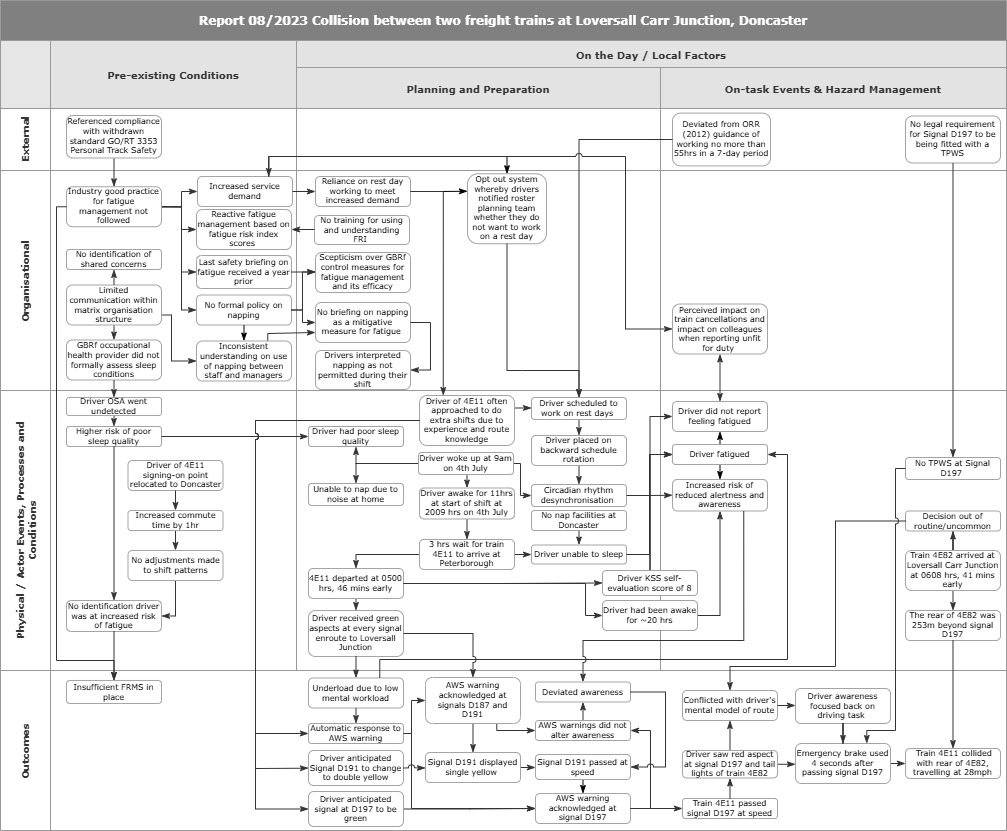
Figure 1. Example of AcciMap Analysis Output of RAIB (2023) Investigation Report 08/2023.
Background
Fatigue is a complex and multi-faceted state that does not have a universal definition and there are no objective methods to measure it (Balkin et al., 2023, pp.17; ORR, 2024). It encompasses physical and mental dimensions which are influenced by sustained effort, sleep quality and length, circadian rhythms, fluctuating workload and time on task which can negatively impair performance (Balkin et al., 2023, pp.19-20; ORR, 2024; RSSB, 2024a; RSSB 2025a). Consequently, performance degradation due to fatigue can increase the risk of accidents in safety-critical environments such as rail freight.
Research examining fatigue risk within rail freight specifically remains limited, particularly within the UK context. Much of the existing literature focuses on passenger rail, with a small number of studies exploring fatigue within international rail freight populations, where operational environments differ compared to UK rail freight environments. This gap can make it difficult to determine the extent of fatigue risk within rail freight specific contexts and may lead to differences between perceived risk and actual risk, subsequently impacting policy decision-making.
Aims and Objectives
In collaboration with the Rail Safety Standard Board (RSSB), this study aimed to investigate fatigue risk factors that contribute to adverse safety outcomes and near-miss events involving UK rail freight workers. The study had two objectives:
1. To compile a list of fatigue risk factors identified as having contributed to UK rail freight accidents and near misses by analysing relevant RAIB reports involving freight workers; and
2. Using the outcomes from objective one, to assess the frequency and perceived impact on safety of fatigue risk factors through ratings provided by UK rail-freight workers.
Methods
This study adopted a triangulated method, as described by Waterson et al. (2023) to investigate fatigue risk within UK rail freight. Firstly, a review of 22 existing accident investigation reports published by the Rail Accident Investigation Branch (RAIB) was undertaken to identify fatigue-related contributory factors. AcciMap analyses (Rasmussen, 1997; Svedung and Rasmussen, 2002) were conducted to model how environmental, individual, organisational and regulatory factors interact in accident formation. Findings from the AcciMaps were then used to compile a list of 36 fatigue risk factors. Additionally, AcciMaps were also aggregated into two AggreMaps (Salmon et al., 2020a; Salmon et al., 2020b) which enabled recurring systemic contributory factors across all rail sectors and those specific to freight to be identified.
A semi-structured focus group with industry professionals was then conducted to ascertain the frequency of the identified fatigue risk factors and the potential impact on worker safety these factors may have. Finally, semi-structured interviews with industry subject matter experts were consulted to discuss the fatigue risk factors identified from the AcciMap analyses and provide the opportunity to identify any additional fatigue risk factors which may be relevant to rail freight. Data from the focus group and interviews were thematically analysed and coded using NVivo version 14.
Figure 2. Procedure used to develop AcciMaps, AggreMaps and derive fatigue risk factors, adapted from Brandford, Naikar and Hopkins (2009) and Salmon et al. (2020b), with the final fatigue risk factor stage added for the present study.
Results
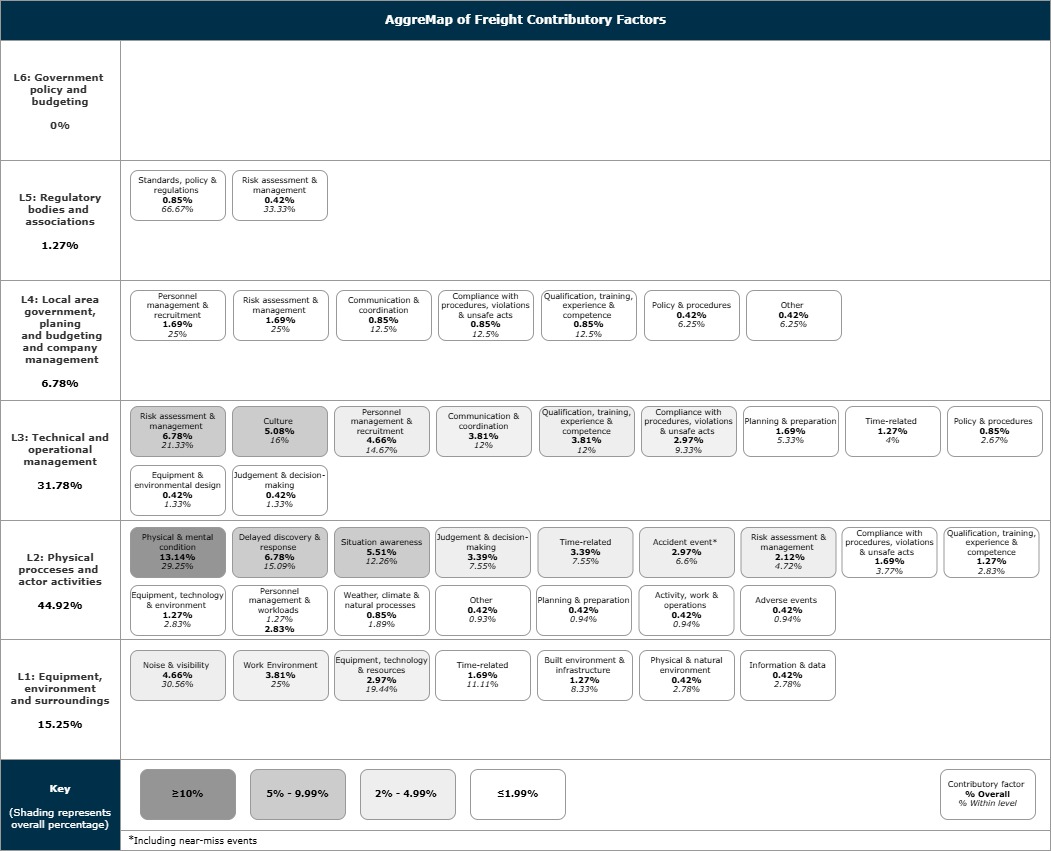
The AcciMap and AggreMap analyses revealed the most frequent contributory factors across all freight-specific incidents were primarily linked to physical and mental conditions. This outcome is expected due to the sample of RAIB reports which selected identified fatigue as a significant factor in contributing to the accident or incident. The next more frequent were delayed discovery and response and risk assessment and management, with culture coming third.
Figure 3. AggreMap of Contributory Factors Identified Across Freight-specific RAIB Investigation Reports.
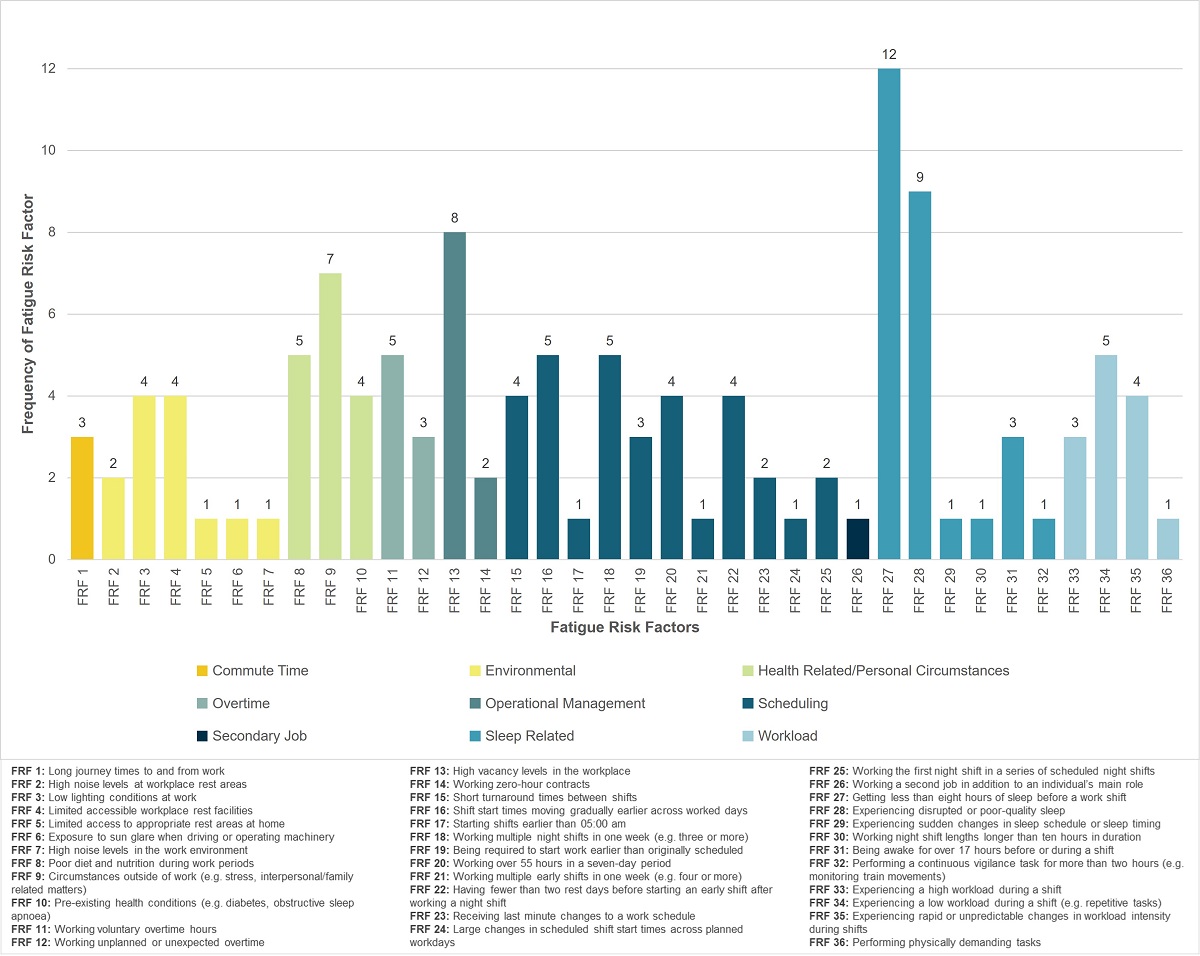
The most frequent fatigue risk factor (FRF) within incidents across all rail sectors, was obtaining less than eight hours of sleep before a shift, followed by disrupted or poor-quality sleep. While sleep-related FRFs occurred most frequently per incident, the widest range of FRFs was associated with scheduling, with 11 distinct contributing factors, which was then followed by sleep-related and environmental factors with six types of factors each.
Figure 4. Bar Chart Showing Frequency of Fatigue Risk Factors Across RAIB Investigation Reports.
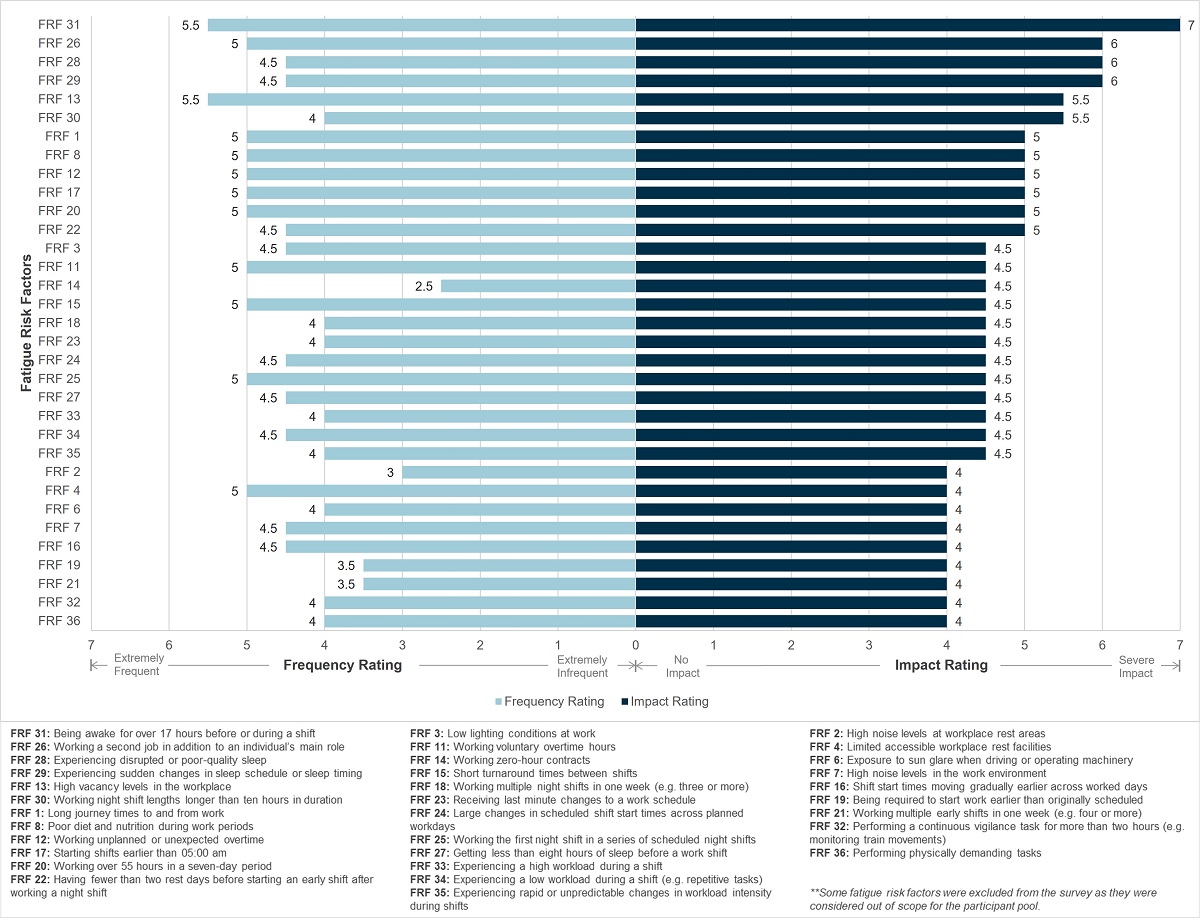
Participant ratings highlighted the highest impact FRFs as being awake for over 17 hours before or during a shift, having a second job in addition to an individual’s main role and high vacancy levels in the workplace. Thematic analysis of focus group and interview data identified three overarching themes: freight-specific fatigue risk contributors; personal responsibility and organisational support in fatigue risk management; and organisational fatigue risk management system.
Figure 5. Butterfly Chart Showing the Median Frequency and Impact Ratings for Each Fatigue Risk Factor (Ordered by Highest to Lowest Impact Rating).
Discussion
This study aimed to identify FRFs contributing to accidents and incidents within UK rail freight and evaluate the frequency and safety impact on freight personnel. The findings suggest that UK rail freight companies experience certain FRFs more acutely than other UK rail sectors.
The AcciMap and AggreMap analyses identified delayed discovery and response as being the most frequent contributory factor in freight-related incidents, highlighting the performance degradation fatigue may lead to. Additionally, risk assessment and management also emerged as the most frequent contributory factor and many individual factors identified within analyses were associated with scheduling practices which were found to compound or contribute to an elevated risk of fatigue.
This study is constrained by the small cohort size, and the distinct operational environments of freight companies may further influence the types of fatigue risks experienced and observed due to the variation in service demands across operators. Investigating freight populations can also be challenging due to the safety-critical nature of the work and performing around the clock operations, requiring planning to avoid disruption to ongoing operations.
Studies investigating systemic fatigue risks within UK rail freight populations to date have been minimal, and the findings from this study helps to close this gap. The findings also provide a baseline for future studies which may include exploring the experiences of front-line rail freight staff and potential comparative work with passenger rail.