I am an industrial designer who brings curiosity, empathy, and adaptability into every project. With a foundation in design, AI tools, and business skills, I thrive on turning ideas into striking products that tell a story from concept to execution.
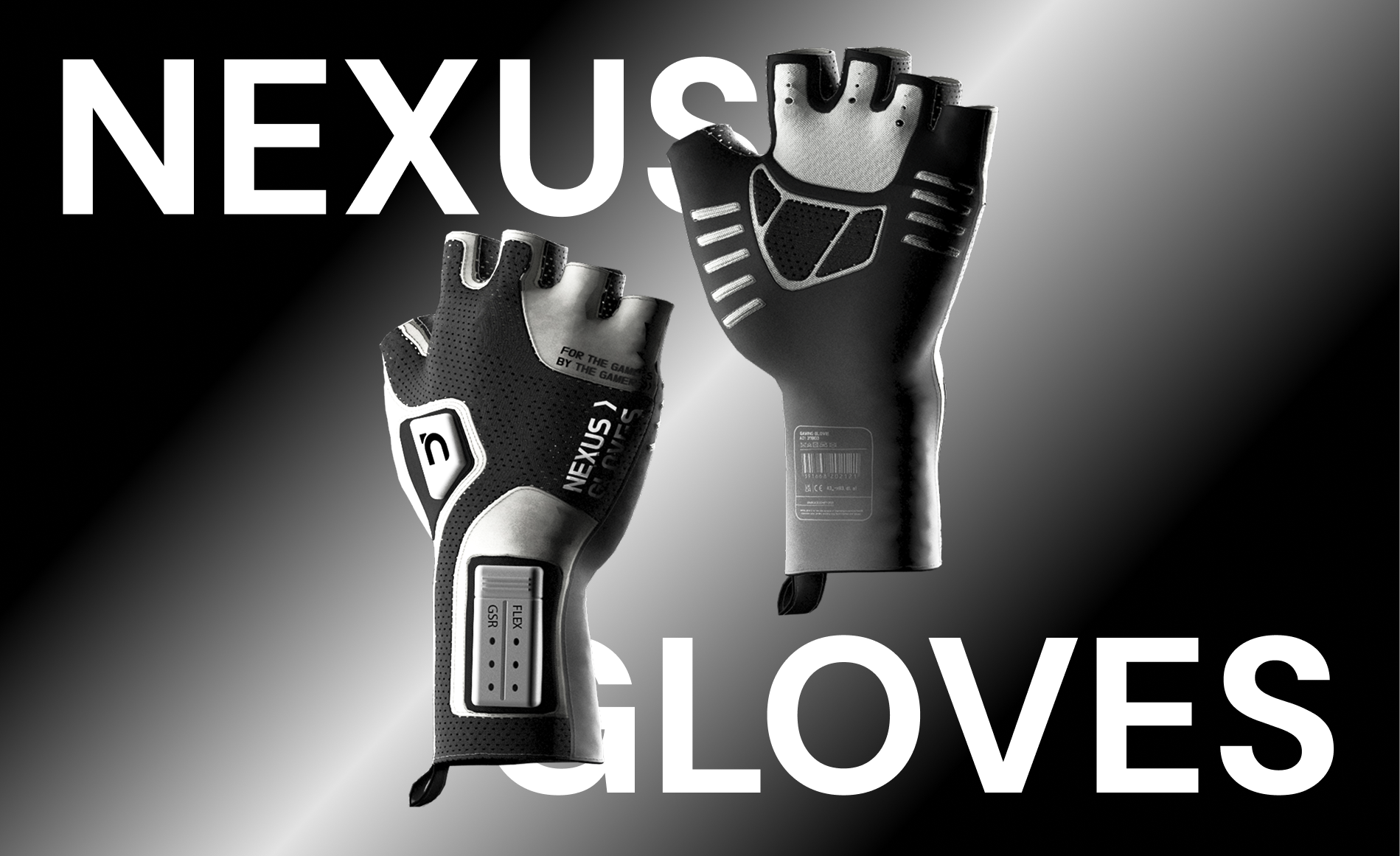
Nexus Glove reimagines gaming wearables with real-time stress and wrist-strain tracking, turning every session into a smarter, healthier play.
THE CONTEXT
Born from the Player’s Experience
As a gamer myself, I’ve often felt the toll of high-intensity play, such as shivering hands, shortness of breathing, sweaty palms, and a racing heartbeat. These stress responses aren’t just uncomfortable; they can chip away at performance and long-term wellbeing. That personal experience sparked the drive to dig deeper and find a way to help players manage these challenges.
Goal of this Project
The Nexus Glove is designed with both casual and e-sports gamers in mind, those who thrive in competitive arenas where quick reflexes and split-second decisions define the outcome. By addressing the hidden strain behind the game, the project aims to create a healthier, more balanced relationship between players and gaming.
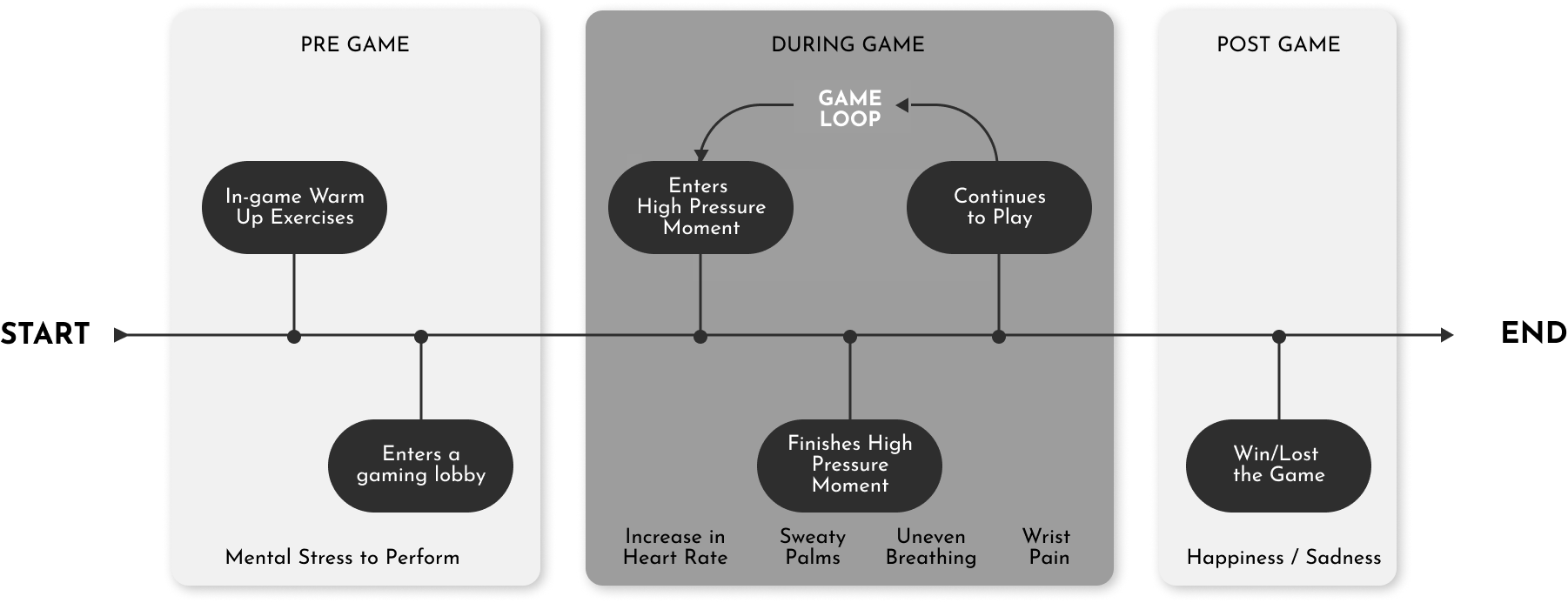
User Journey Mapping
Gamers often endure multiple high-pressure moments in a single session, leading to stress responses and repetitive strain injuries (RSI). Repeated exposure to these conditions can have a significant impact on both performance and long-term health on gamers.
PAIN POINTS
Physical Stress Responses
Mental Stress Responses
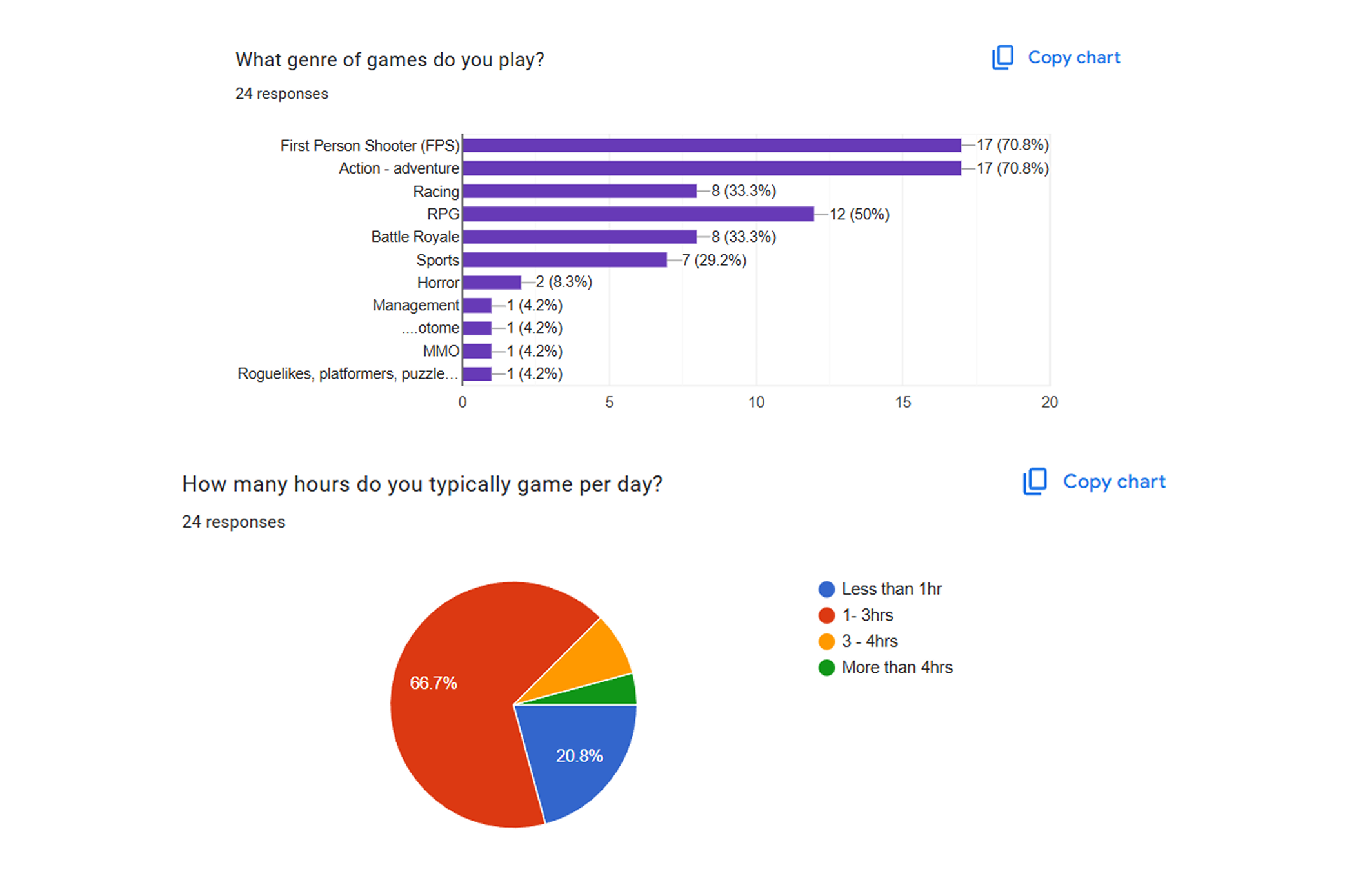
Online Survey
An online survey with over 40 participants revealed two key categories of stress responses: physical and mental. This distinction provided the foundation for developing deeper insights and shaping the next stage of concept exploration.
CONCEPT
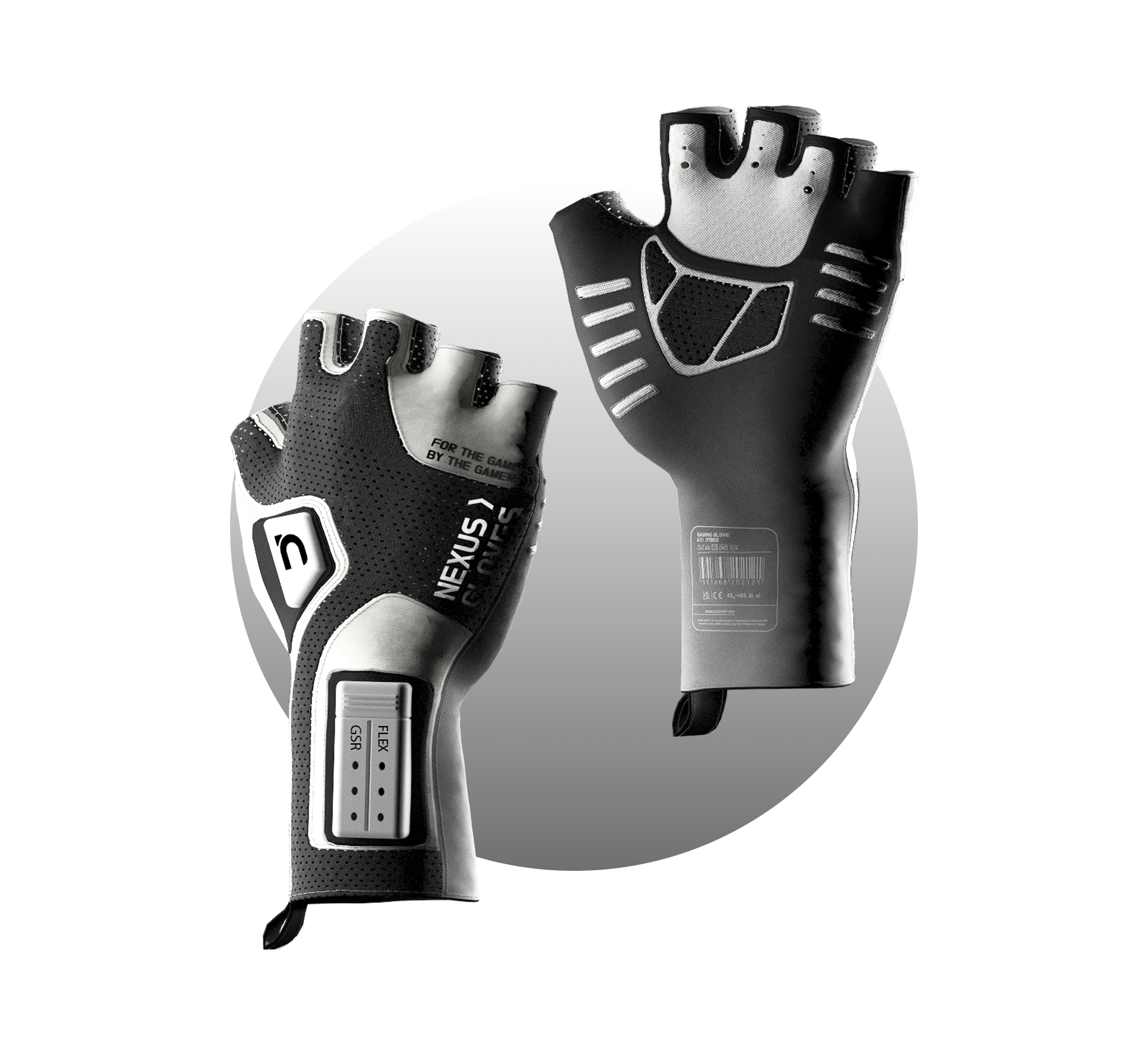
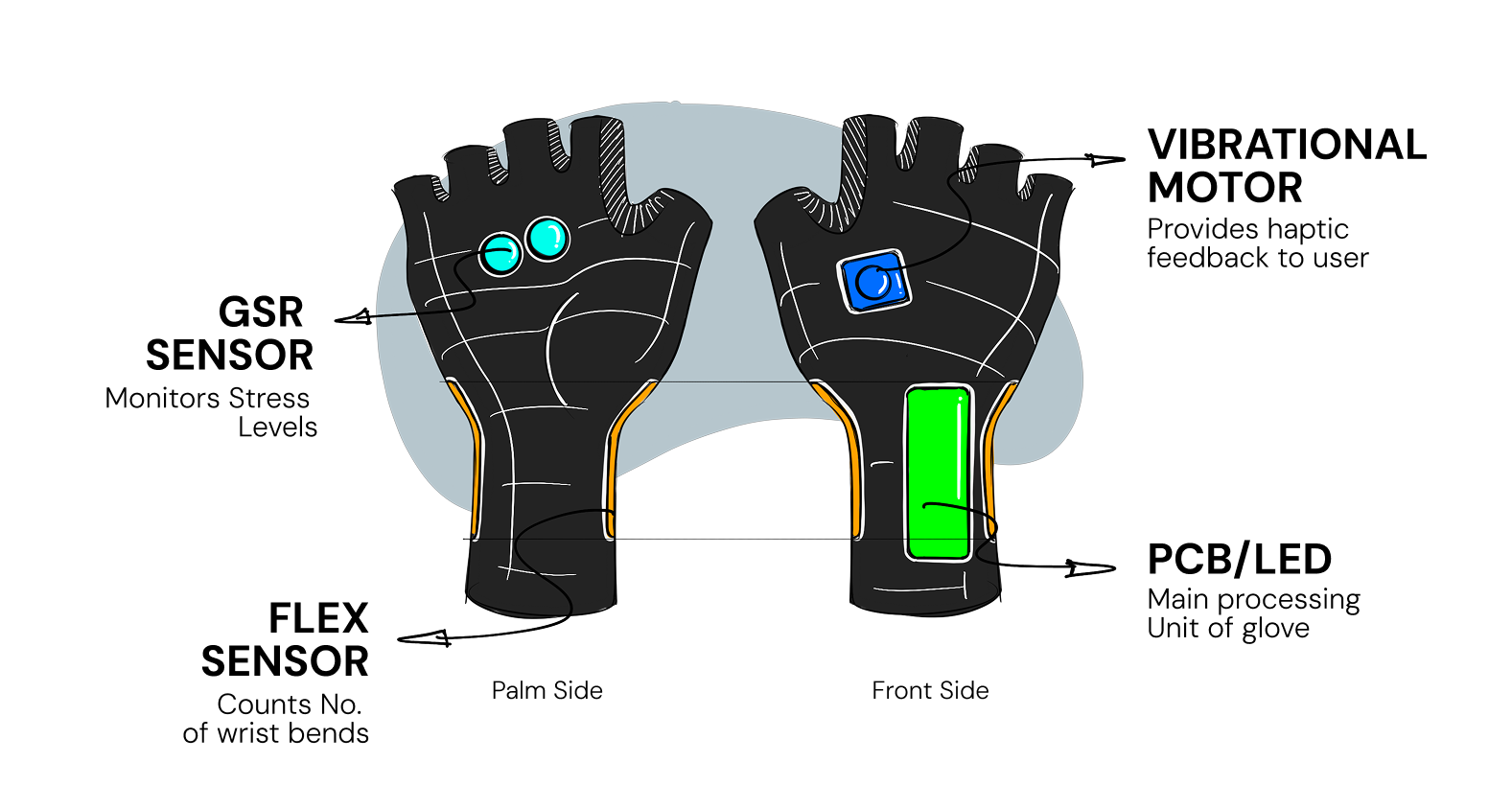
Product Views
A fingerless glove made from thin lycra /spandex material with mesh fabric in palm region, makes it a preferred option for optimal range of motion to the fingers. By tracking your stress levels real time it gives proactive break reminders when reached the stress threshold limit, thus promoting long-term player health.
This product also stands as a bridge between wellness-tech and high-performance gaming, with potential broader applications in high-stress training environments.
Product Features
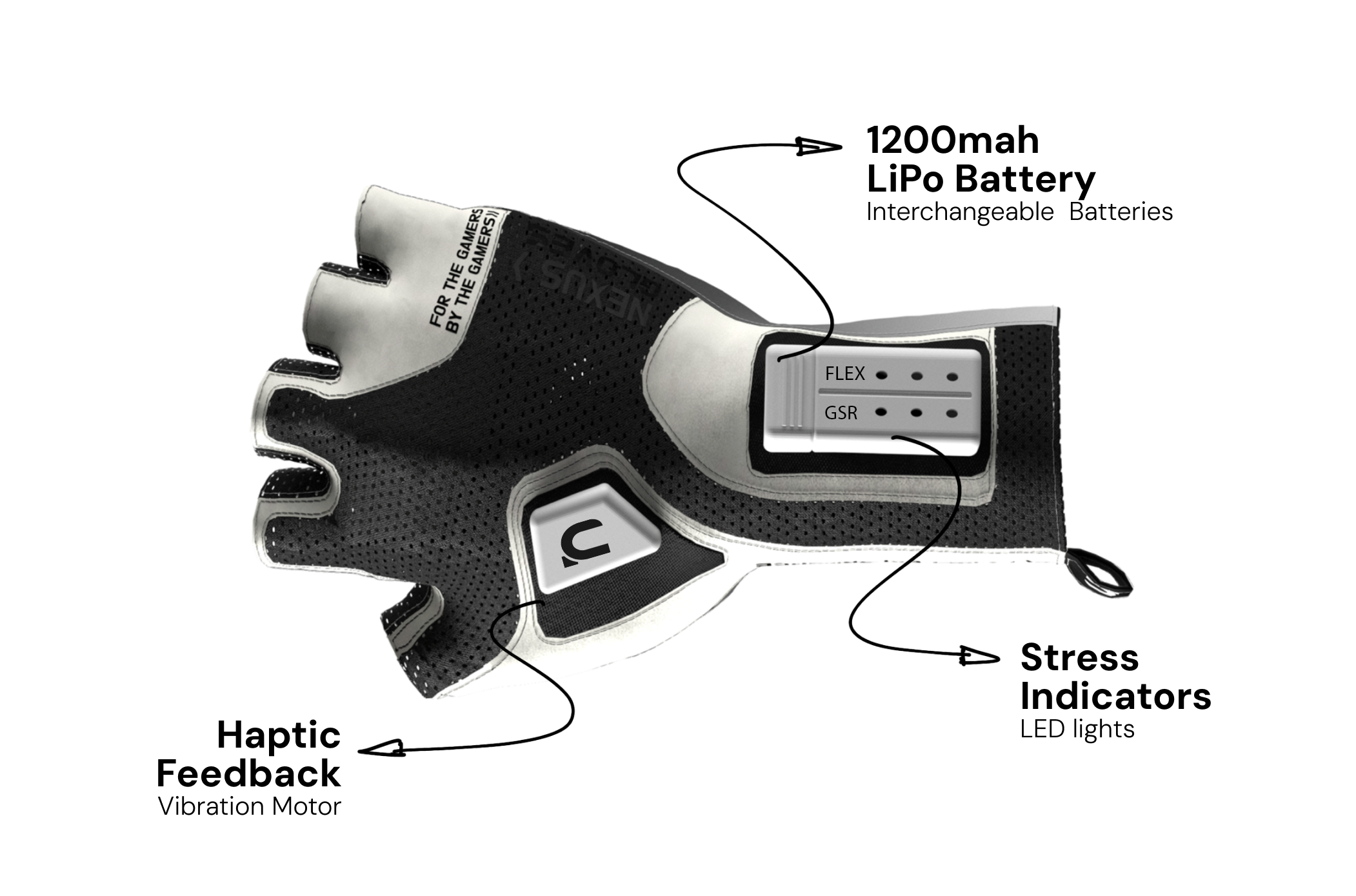
The Nexus Glove raises user awareness by indicating stress levels and wrist strain through LED lights. Once the set limit for a gaming session is exceeded, it notifies the user via haptic feedback. For those who find vibration distracting during gameplay, there are options to switch to desktop or mobile notifications instead.
Main Component Placement
Nexus App
The Nexus Glove is paired with the Nexus App, designed to turn data into meaningful insights. Stress trends are visualised through an interactive calendar view, while each gaming session reveals detailed stats, such as total wrist bends, heart rate patterns, and timestamped stress graphs.
To keep players engaged, the app integrates gamification with achievement badges that can connect to gaming profiles or even unlock in-game rewards. An adaptive alert system also lets users set personalised thresholds for stress and strain, ensuring feedback is not only timely but also tailored to their individual needs.
IDEATION
Throughout the project, a wide range of ideas were explored, from display screens, mesh design layouts, electronic housings parts, graphic patterns, and the overall aesthetic of the glove.
PROTOTYPES
Cardboard Prototype
Cardboard prototypes were also created during the ideation process to explore glove touchpoints and electronic housing parts. It helped in understanding size, proportions, and overall visibility for gamers while gaming.
Stress Tracking Prototype
The stress-tracking prototype was developed using a GSR sensor connected to an Arduino. The sensor was integrated into an early glove prototype and programmed to monitor users stress levels in real time during wear. Showing positive results.
Strain Tracking Prototype
The strain-tracking prototype was built using a flex sensor connected to an Arduino. Integrated into an early glove prototype, it was programmed to count wrist bends and alert users when it’s time to take a break, helping prevent RSI.
User Testing
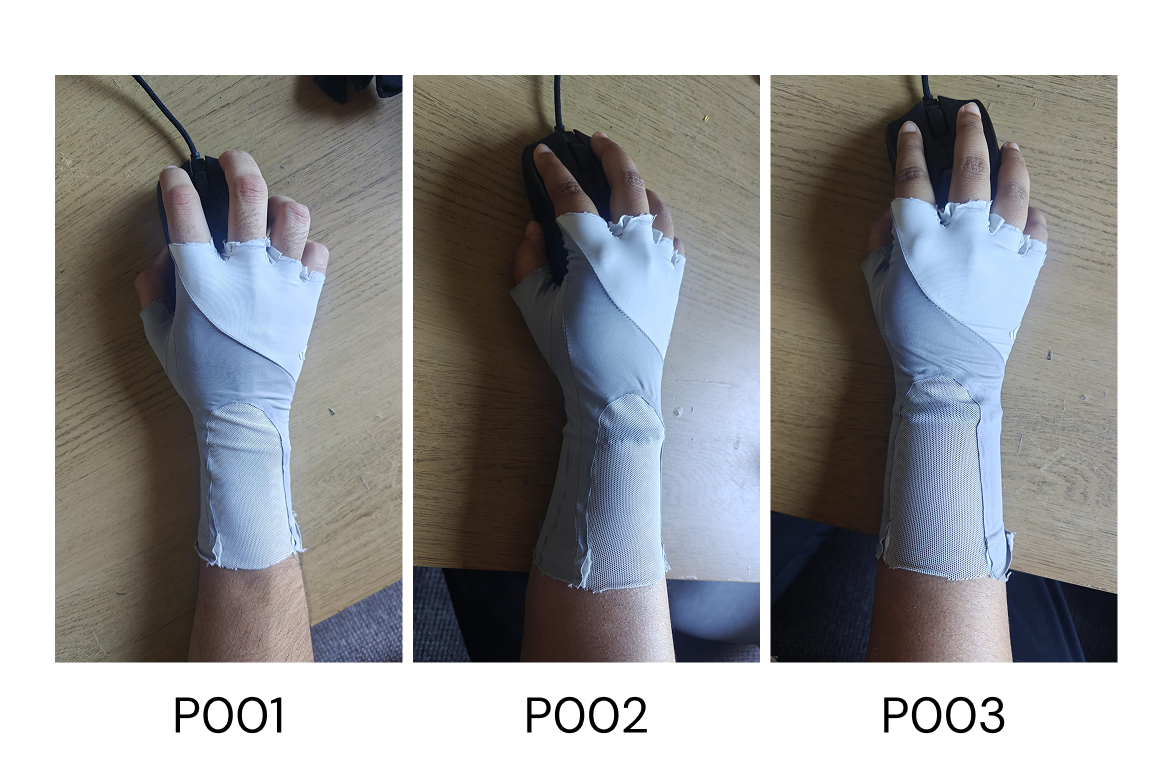
Finally, the prototypes were user-tested with three gaming participants who play RPG, FPS, and Action-Adventure titles. Both the mesh prototype and the stress/strain tracking prototypes were worn and tested, yielding valuable insights and positive feedback on the design.