


I am a curious designer who loves blending technology and creativity, using research and design thinking to craft immersive experiences that engage users and tell powerful stories.
I am a curious designer who loves blending technology and creativity, using research and design thinking to craft immersive experiences that engage users and tell powerful stories.

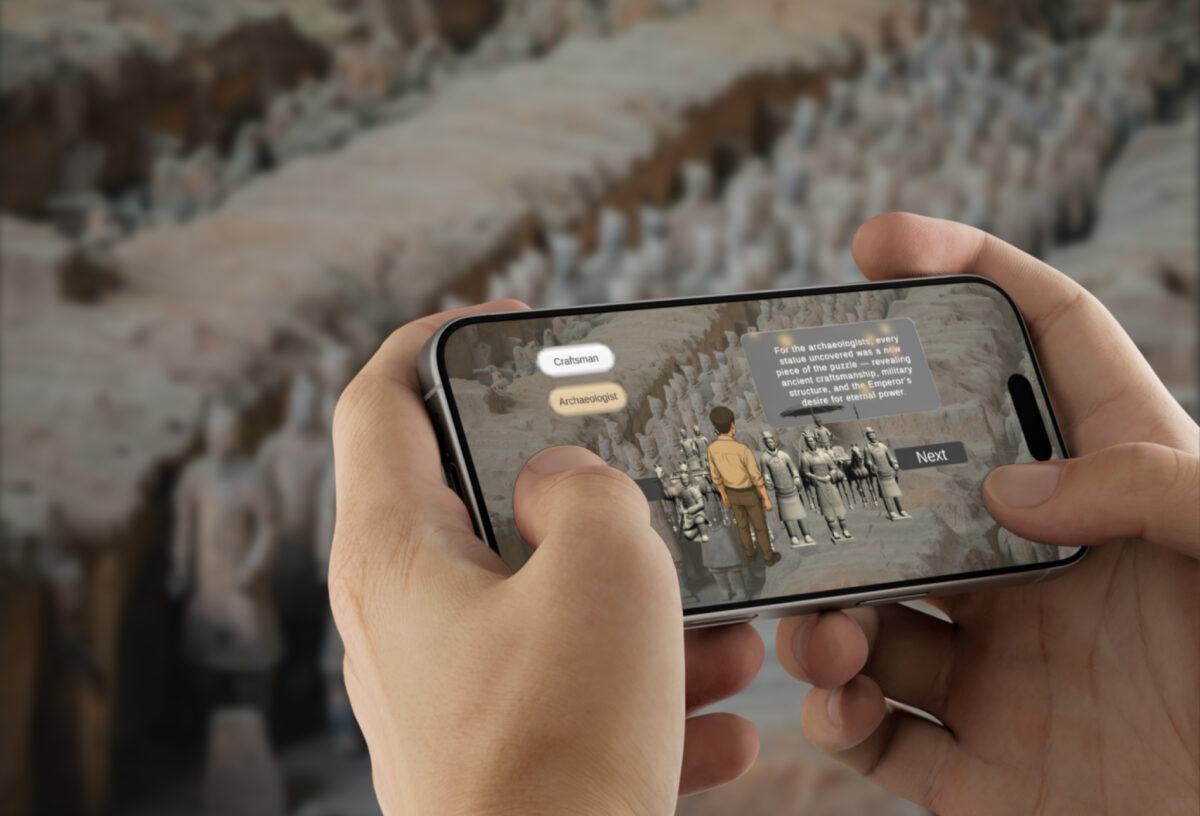
This project focuses on enhancing users’ engagement and emotional connection in AR heritage storytelling. Since narrative perspective is a key factor in how users experience and interpret stories, this study explores how first-person vs. third-person perspectives affect users. I designed two AR prototypes and conducted a mixed-method user study to get some new insights into how perspective influences the quality of cultural experience, offering design implication to create more engaging and meaningful AR heritage applications.
This project aims to explore how different narrative perspectives—first-person vs. third-person—affect user immersion, empathy and understanding in a historical AR experience.
RQ1 How does narrative perspective influence users’ immersive experience in AR heritage storytelling?
RQ2 How does first-person versus third-person perspective affect users’ emotional empathy towards historical characters?
RQ3 Whether narrative perspective influence users’ cognitive understanding of historical content in AR experiences?

In this project, I followed a design thinking approach, moving from user research and problem definition to iterative prototyping, user testing and synthesis, ensuring that the final AR experience was user-centered and evidence-based.

Prototype A:
A third-person AR narrative. Users observed the historical events from an external point of view. This version was designed to support reflective observation and maintain spatial clarity.
Prototype B:
A first-person AR narrative. Align the user’s perspective with the character’s perspective. This version aimed to foster immersion, personal connection.

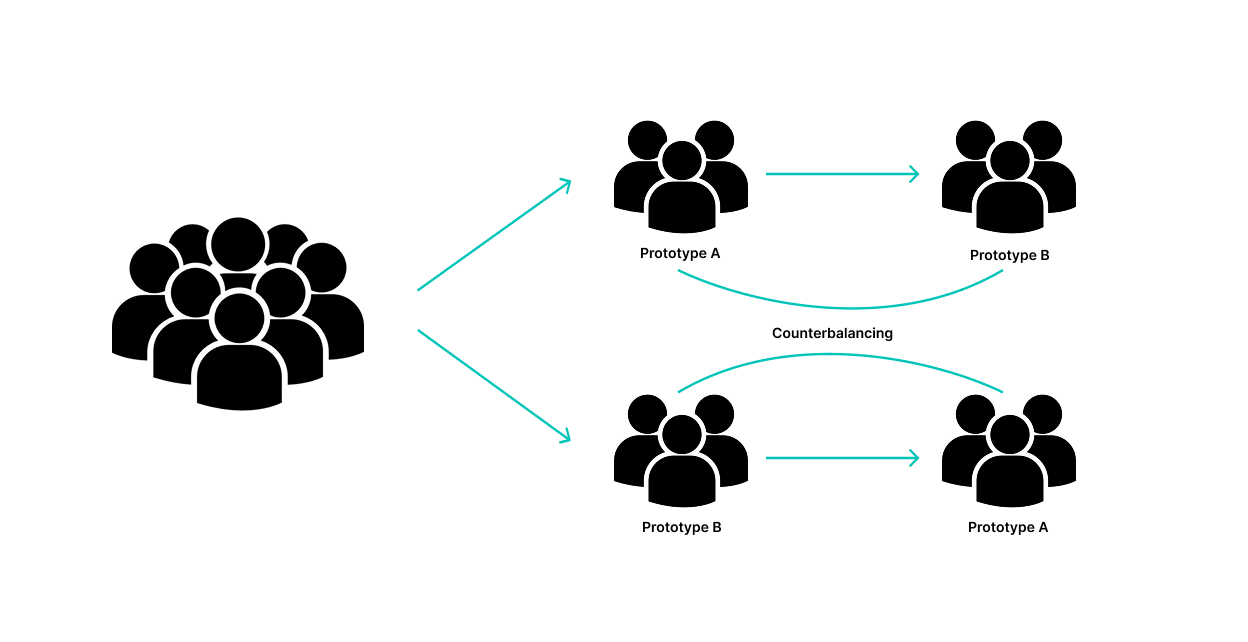
Study design
A within-subject user study was conducted with 15 participants. Each participant experienced two AR prototypes in random order to reduce bias and learning effects.
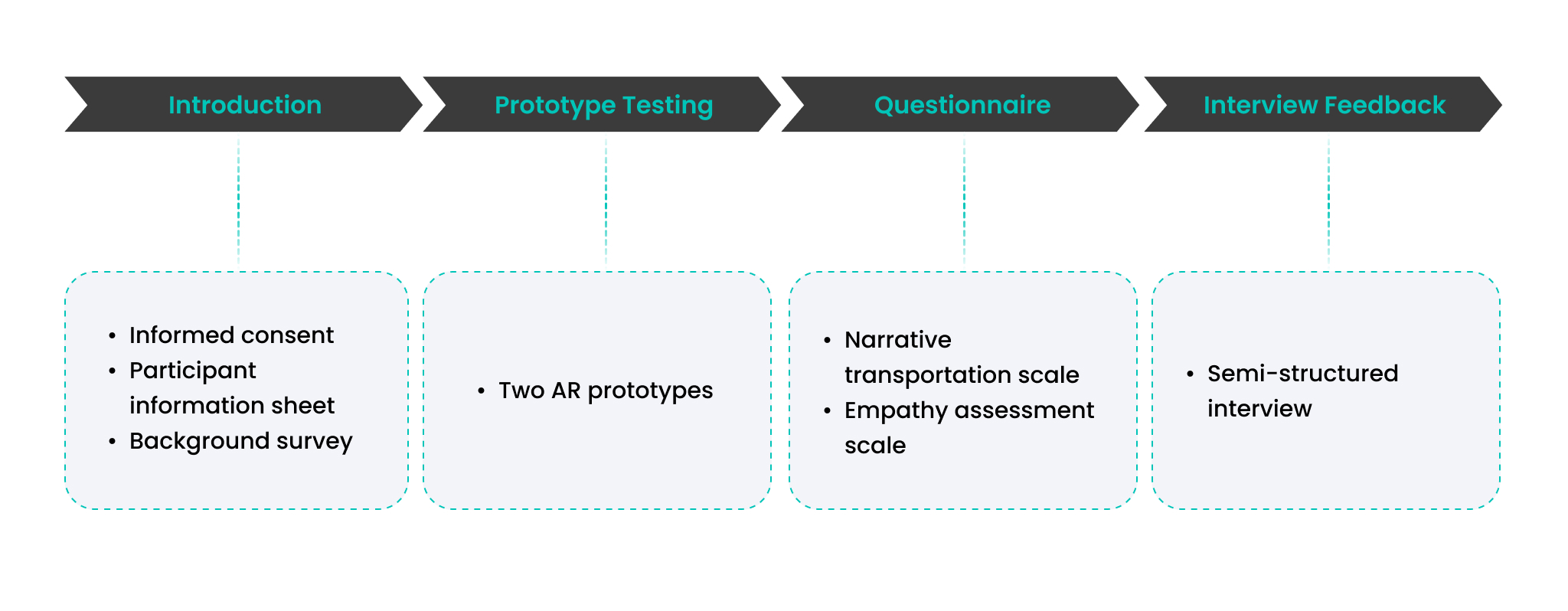
Procedure and materials
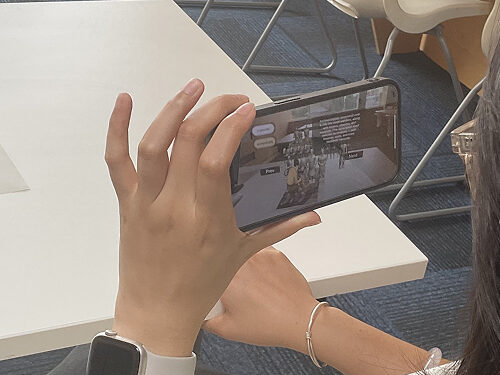
The task involves scanning an image target, experiencing the prototypes, completing narrative transportation and empathy scales after each prototype, and providing qualitative reflections through open-ended questions. Quantitative data was analysed using paired t-tests, while qualitative feedback underwent thematic analysis to identify key themes related to immersion, empathy and understanding.

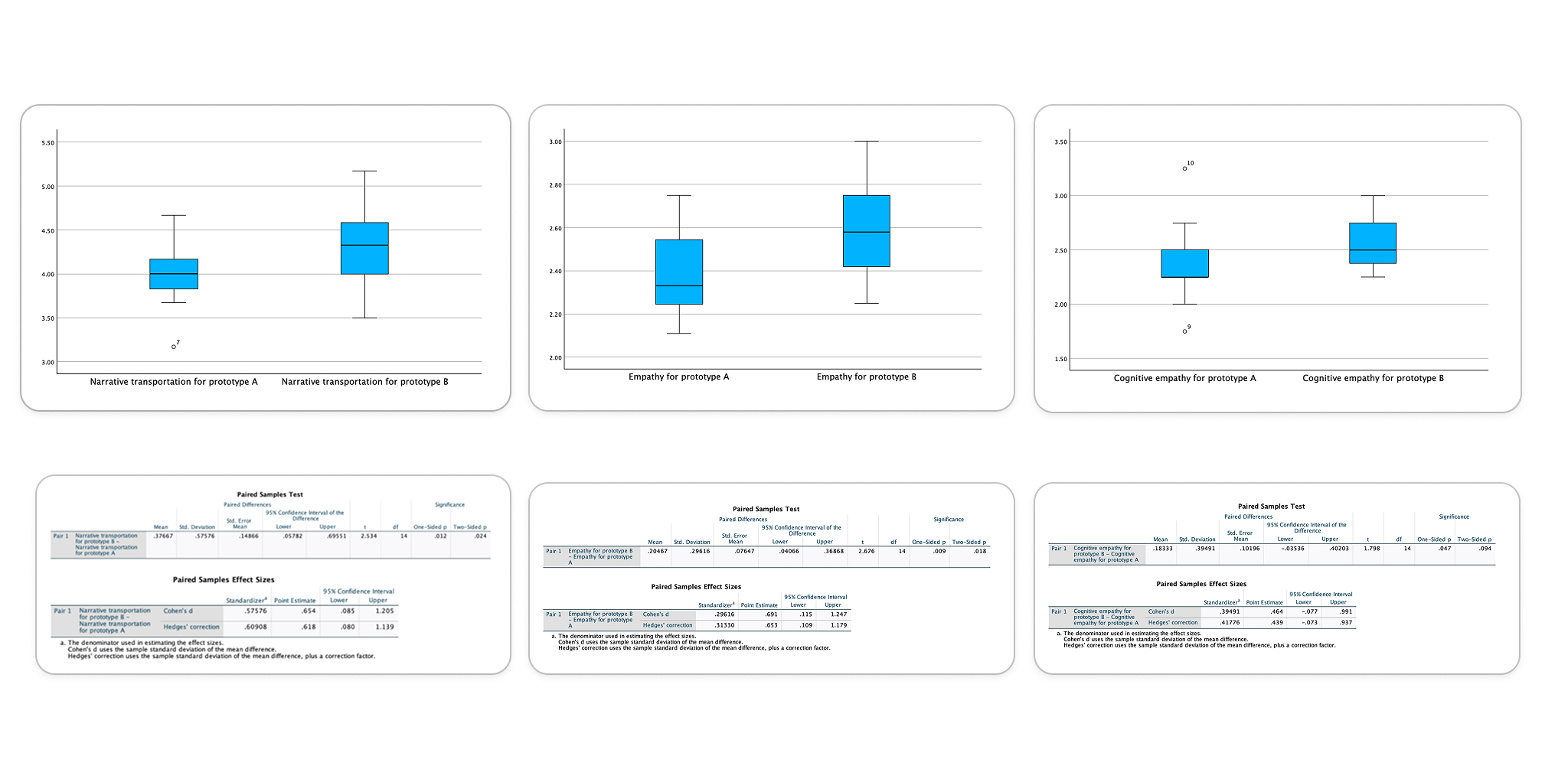
Quantitative data showed that the first-person perspective has the potential to enhance narrative immersion and empathy. Qualitative evidence also showed that the participants’ feedback indicated higher immersion and empathy when they experience the first-person perspective in the AR world.
However, there is no statistically significant difference between the two prototypes on cognitive understanding. Although participants showed slightly higher cognitive empathy scores in the first-person prototype, interview feedback showed that this trend was not obvious. Some participants preferred the first-person perspective while others argued the third-person can provide information from an objective view.
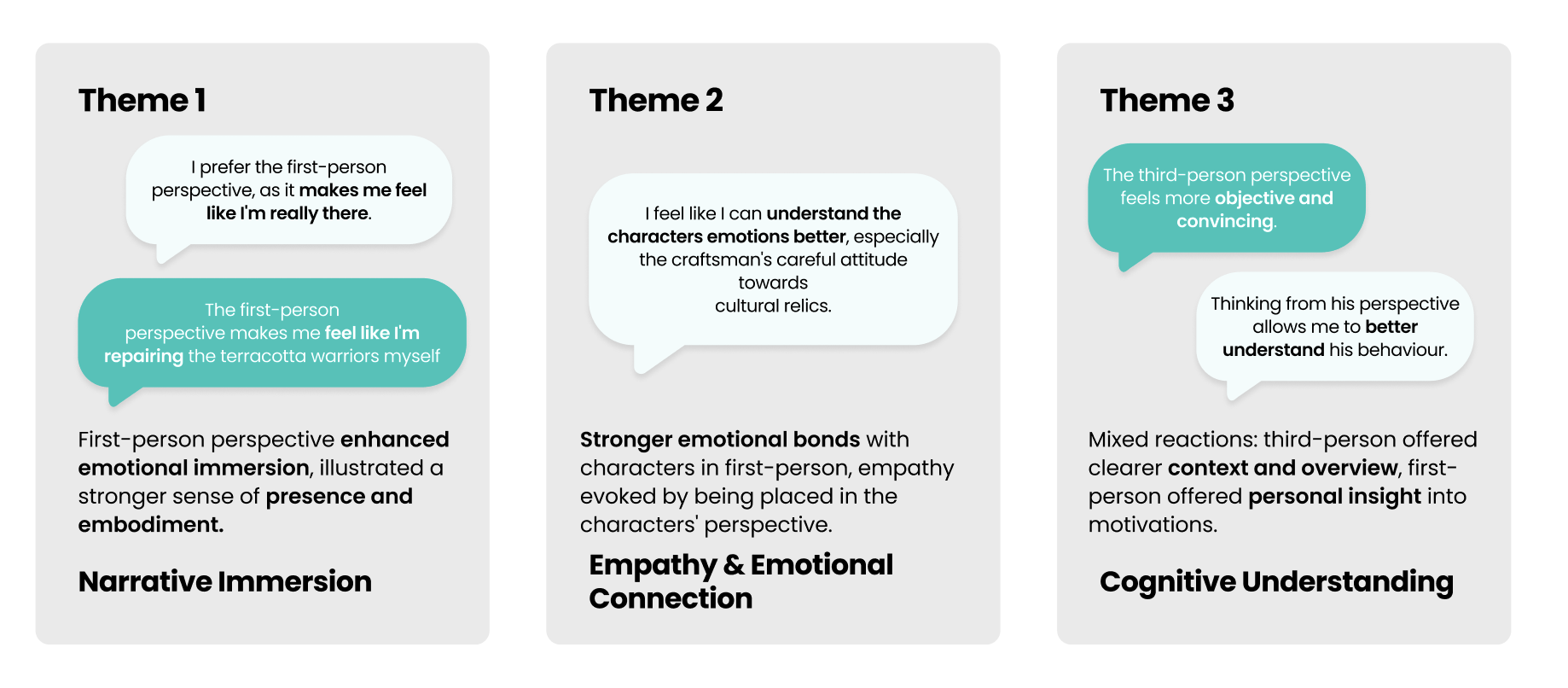
Overall, the results suggested that narrative perspective plays an important role in shaping immersive and empathic user experiences, though its effect on cognitive understanding is less clear and may depend on additional factors such as content or user preferences.
1️⃣ Use first-person perspective for immersion
Showing the story from the character’s own eyes makes people feel more “inside” the experience and emotionally connected.
2️⃣ Don’t only rely on emotional empathy for understanding
Feeling what the character feels is easier with first-person view, but it doesn’t mean people automatically understand all the details of the story.
3️⃣Match perspective with goals
Third-person works better when you need clarity, overview, or historical reasoning. First-person is better for emotional connection and presence.
4️⃣ Add supporting structure
To help users fully understand the story, combine first-person views with extra cues like narration, visuals, or context hints.