
Linyun Yu


I’m a UX designer with interests in immersive and interactive technologies such as AR and VR. My focus is on creating intuitive interfaces and solutions that enhance usability and provide meaningful user experiences.
I’m a UX designer with interests in immersive and interactive technologies such as AR and VR. My focus is on creating intuitive interfaces and solutions that enhance usability and provide meaningful user experiences.

This project compared augmented reality projection with a mobile application in guiding novice makers through fabric-based tasks. The study examined task completion, accuracy, cognitive load, and user experience using both performance measures and interviews.
The research addressed two questions:
RQ1) What is the effect of AR-based versus app-based guidance on novice users’ task performance and cognitive load during fabric-based making tasks?
RQ2) How does AR guidance influence novice users’ confidence and satisfaction compared to mobile app instructions?
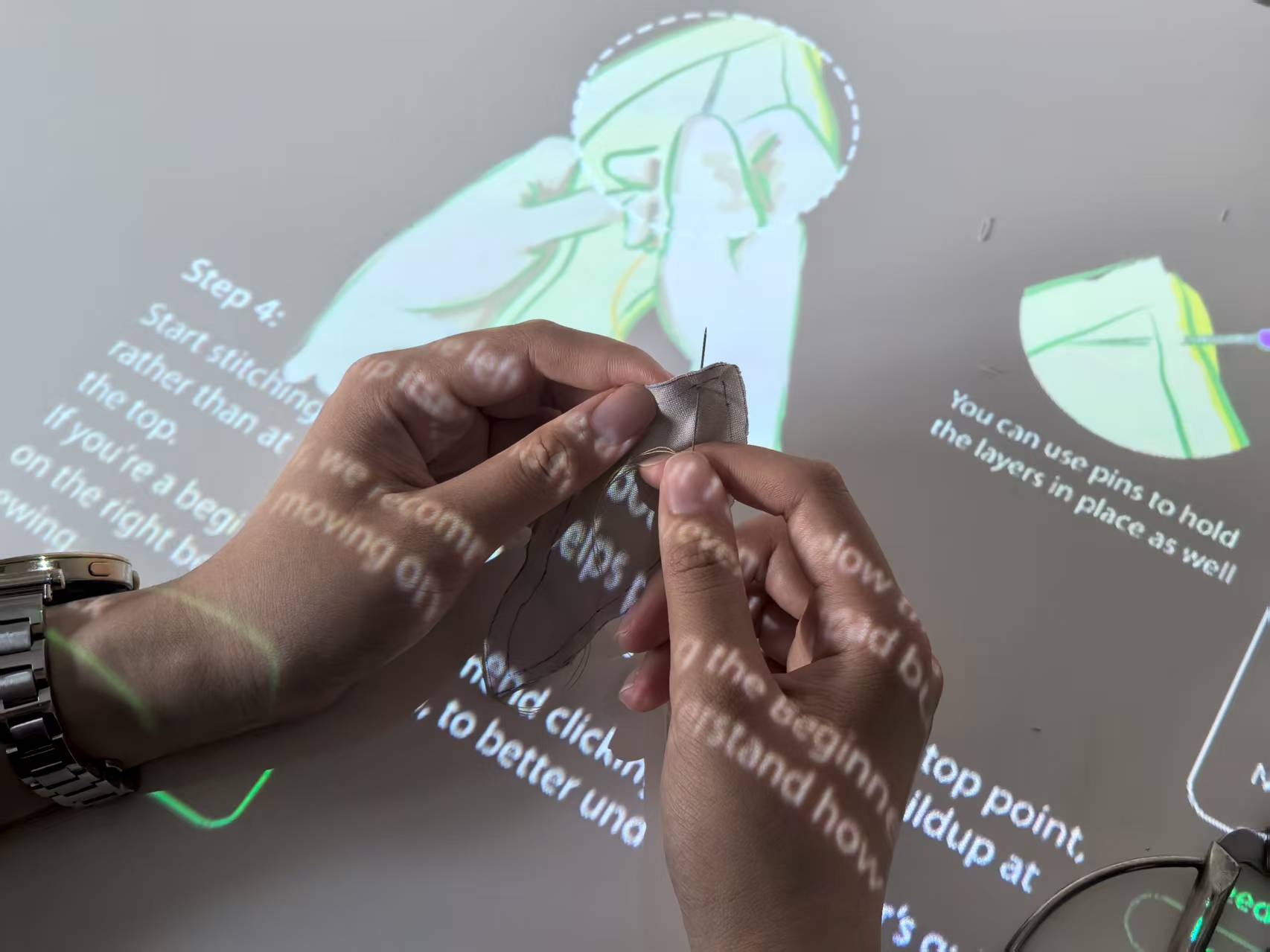
Two prototypes were created for comparison. The augmented reality prototype projected visual overlays directly onto the fabric workspace with added voice prompts.
The augmented reality prototype projected visual overlays directly onto the fabric workspace with added voice prompts.
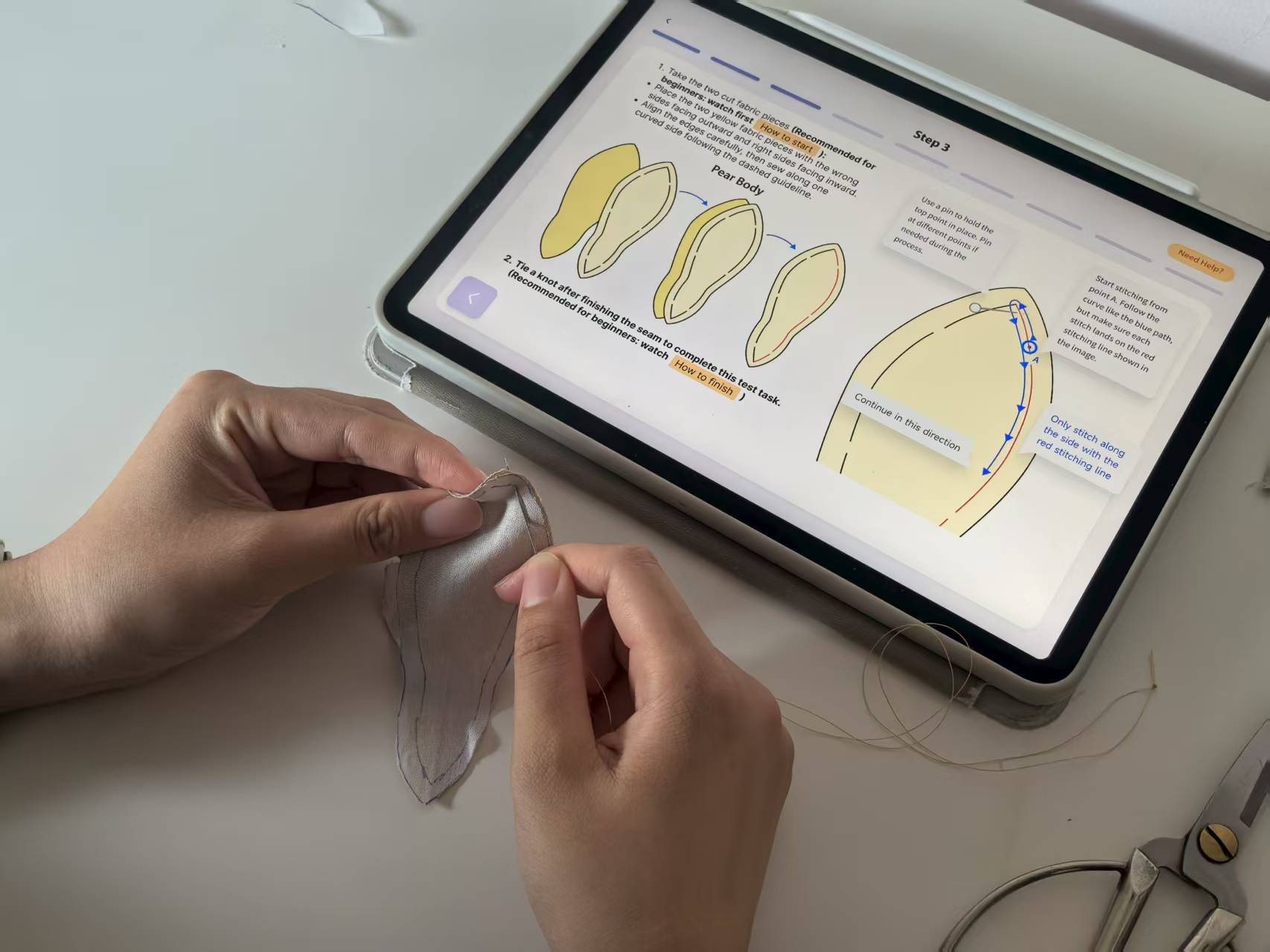
The mobile application provided step-by-step text and image instructions.
Both prototypes went through early walkthroughs and informal tests. Feedback was used to refine clarity of instructions and prepare the systems for formal evaluation.
The study involved 14 novice participants. Each participant completed the same fabric-based task using both systems. The order of conditions was counterbalanced to reduce learning effects.
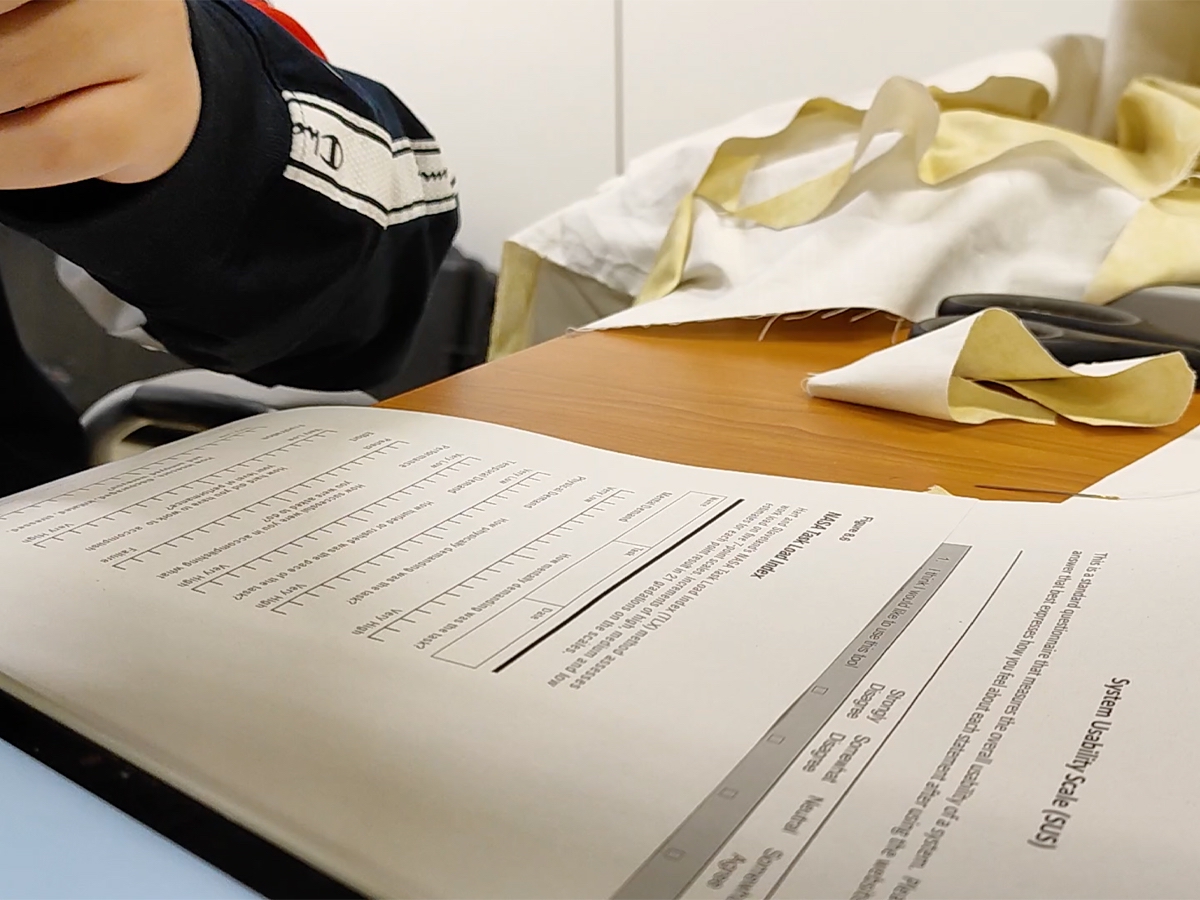
Questionnaires included the NASA-TLX total score, a confidence rating, and NPS. Semi-structured interviews were also carried out to capture user perceptions and detailed feedback.

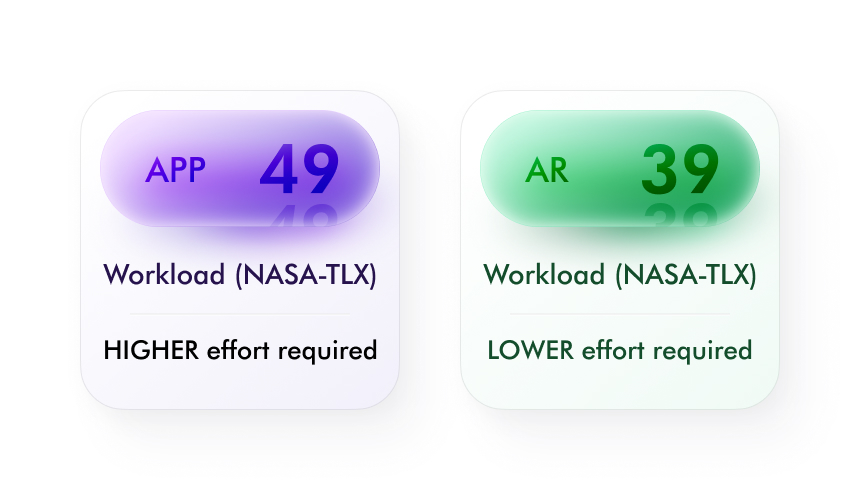
The study found that AR guidance led to a higher task completion rate (94%) compared with the mobile application (85%). The NASA-TLX total score showed that participants experienced lower cognitive load in the AR condition (AR: 39, App: 49). Task time did not show a significant difference between the two systems. These results indicate that AR support improved overall performance while reducing the mental effort needed to complete tasks.

Interview feedback provided further insights. Many participants described the AR system as more engaging and supportive. AR overlays were seen as helpful for reducing memory demand and offering clear spatial guidance. At the same time, some participants valued the mobile app for its familiarity and accessibility. They felt it was easier to adopt because it matched daily use patterns and could be accessed directly on personal devices. Overall, AR was valued for immersive and interactive qualities, while the app was appreciated for being more approachable and convenient.
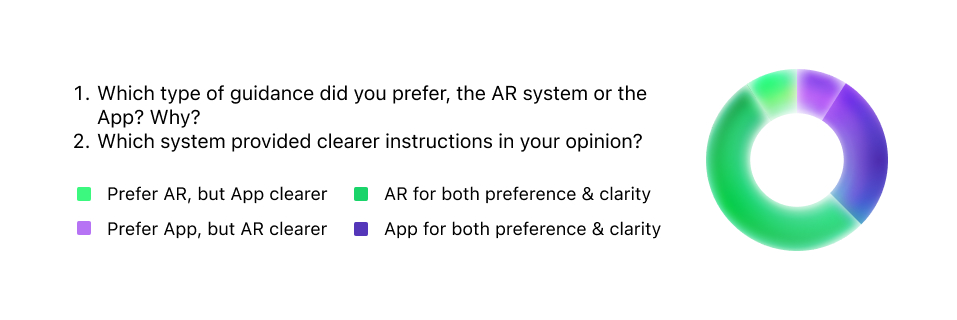
I think AR felt more natural because it didn’t require extra tracing paper, with fewer items needed. –P11
I think the APP’s line and color cues were more visible, which AR could not achieve. –P12
The study found that AR guidance helped novices complete tasks better and with less mental effort. AR did not make tasks faster or give clearer details. Both systems had benefits: AR made the process more engaging, while the App was easier to implement and gave clear information in some cases.
These results show that immersive guidance can be useful in creative learning. But the way information and feedback are designed is just as important as the tool. For UX design, this means finding a balance between clear instructions and cognitive support, and creating systems that give step references and feedback to build user confidence.