My interest in user-centred design began when I was working in Digital Marketing and Communications. Since venturing into Human Factors I have become interested in sociotechnical systems in infrastructure and applying inclusive design principles to safety critical products.
What makes train station announcements effective at changing passenger behaviour?
Background
If you have spent some time in UK National Rail stations you will be familiar with an automated voice telling you where your train will depart from, to report anything suspicious, and stand behind the yellow line. Spoken announcements (SAs) are a tool UK railway stations have been using for decades to make the station more accessible for sight-impaired passengers and to manage passenger safety and security. Yet, there is little research on how effective this tool is in making passengers behave safely. Most passenger accidents and fatalities in 2024/25 happened in a station; the passenger fatality risk at the platform-train interface was 52% and over 3,300 slips, trips and falls were reported to the Rail Safety and Standards Board (RSSB, 2025).
Research Objectives
The aim of the research was to understand passengers’ and industry experts’ attitudes to safety and security spoken announcements (SAs) as a means of identifying features that make them effective. Three research questions were generated to meet this aim:
What SAs do passengers find useful?
What SAs do passengers comply with and why?
What announcement styles do experts and rail staff find effective and why?
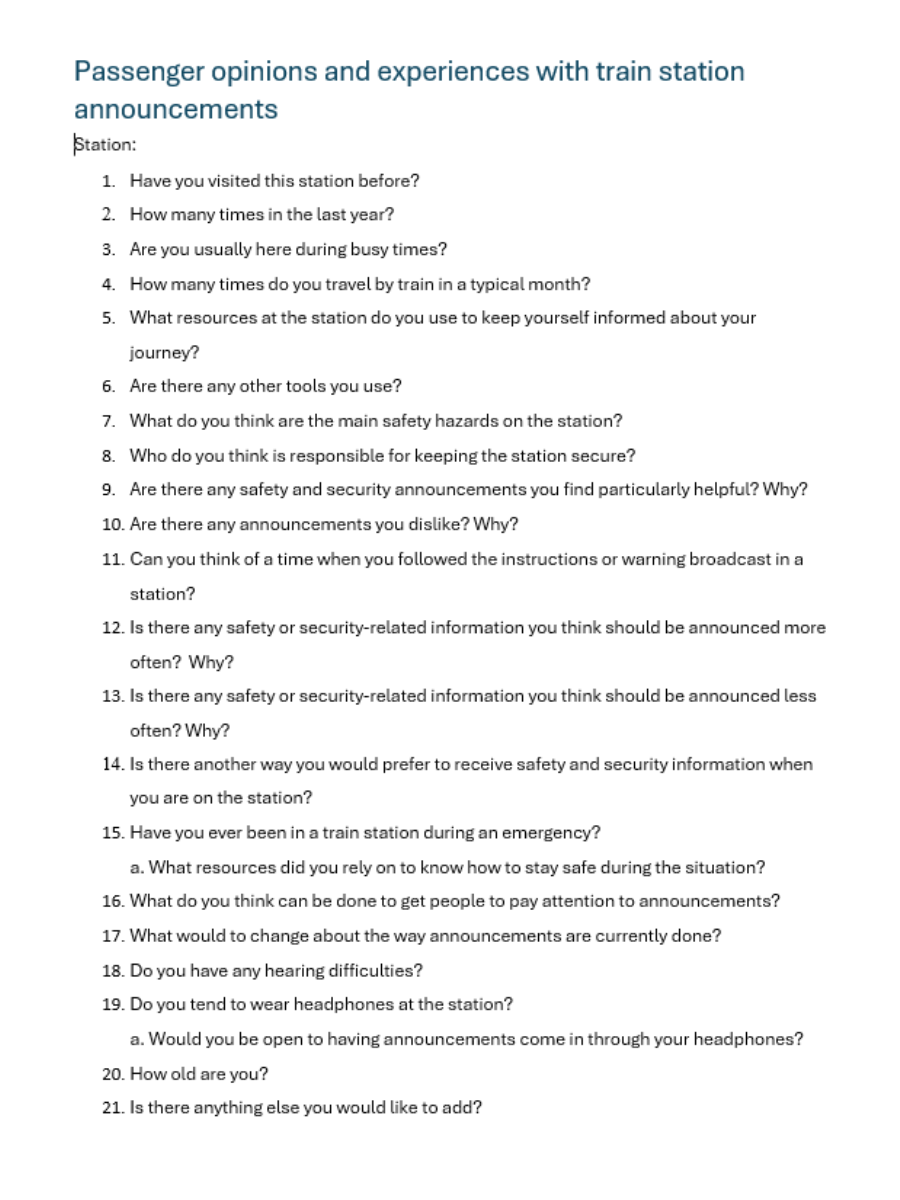
Passenger survey protocol
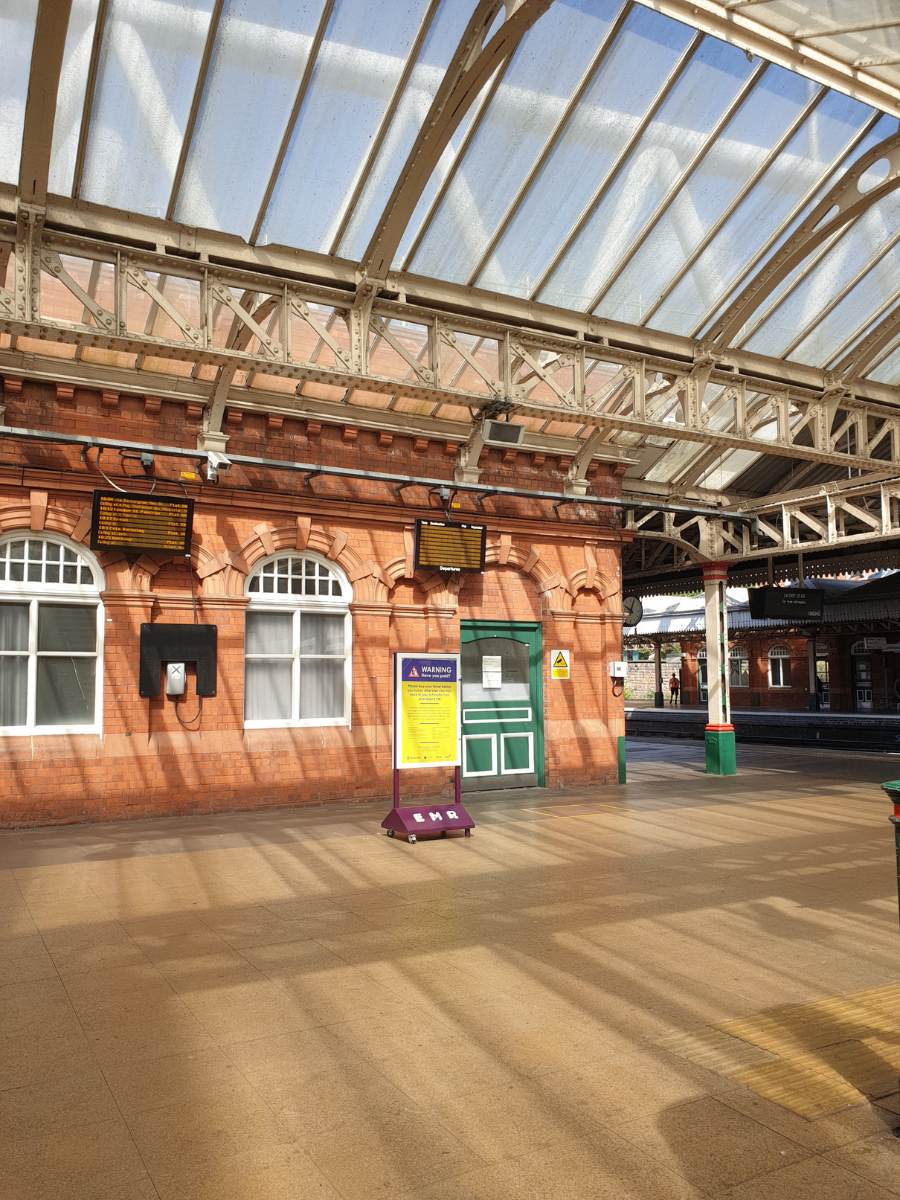
Nottingham Station platform speaker
Methods
A mix of qualitative methods was chosen to explore passenger and expert attitudes toward, and experiences with, announcements. There were 53 participants in this study.
Passenger Survey
Passengers (n =37) at two mainline rail stations, London Paddington and Nottingham, were surveyed. Most questions were open-ended to allow passengers to elaborate on their opinions and experiences. 65% of participants were infrequent passengers, 22% were frequent or very frequent passengers, 13% were causal passengers.
Expert Interviews and Focus Group
Semi-structured interviews were conducted with staff (n = 9) at London Paddington, Nottingham, and Bath Spa stations. Participants were asked about the use of manual SAs at their station, how different passenger groups respond to SAs, the tools they use to manage crowding and protocols for managing emergency evacuations, and what they would change about current SAs. A focus group was conducted with members of the RSSB People on Trains and in Stations Risk Group and Confidential Incident Reporting & Analysis System (n = 7). 50% of participants in the expert group had experience making announcements. The median years of industry experience was 12.75 (range: 3 – 25 years). Thematic analysis of all the data from transcribed interviews, focus group and survey responses was performed using NVivo 14.
Observations
Covert station-based observations were conducted at Paddington and Nottingham. The type, mode, frequency of SAs and behaviour following SAs were recorded as well as crowd density and flows using a modified R.A.M.P analysis.
Findings
The themes that emerged from the passenger survey were: relevance, inspires action, personal safety, personal security. The themes that emerged from expert opinions on effective SAs were: staff authority (which was dominant), style of delivery, tailored address.
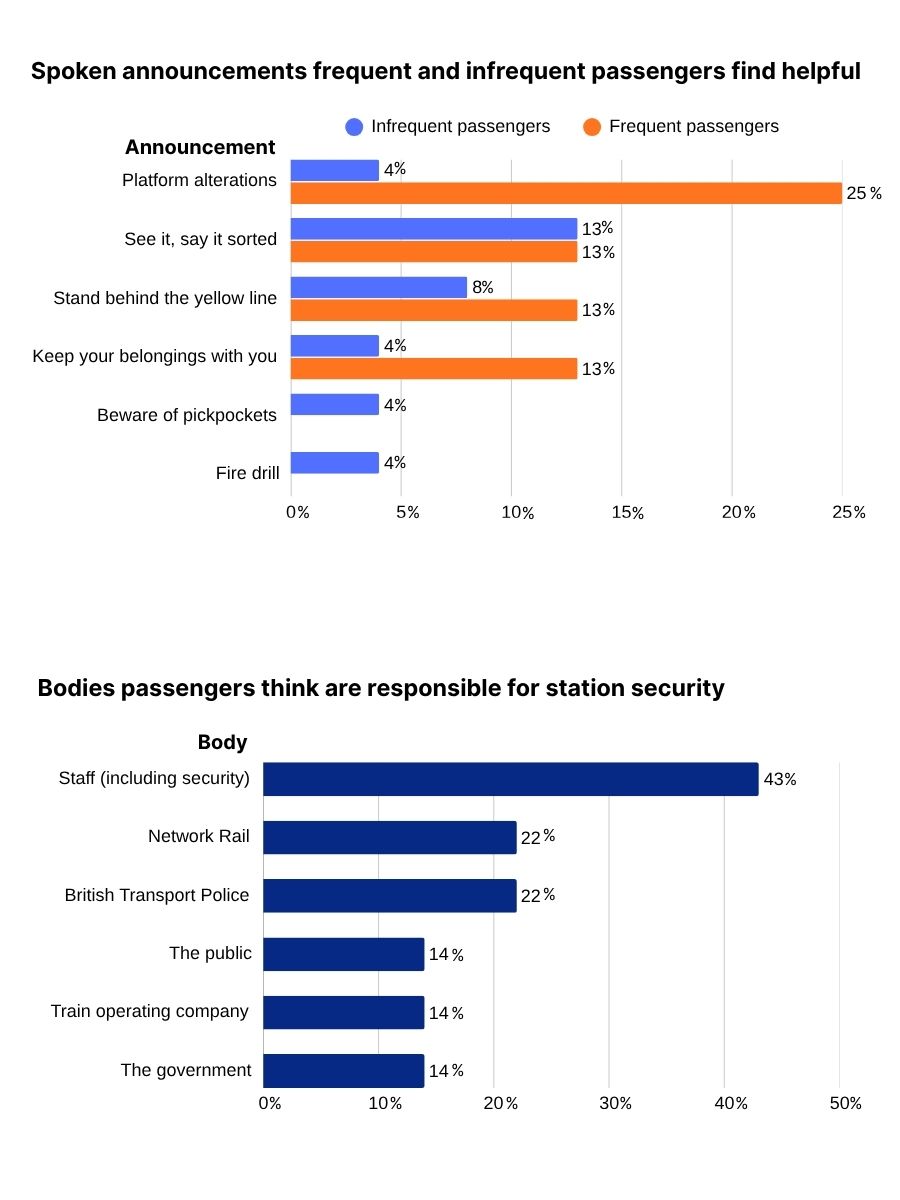
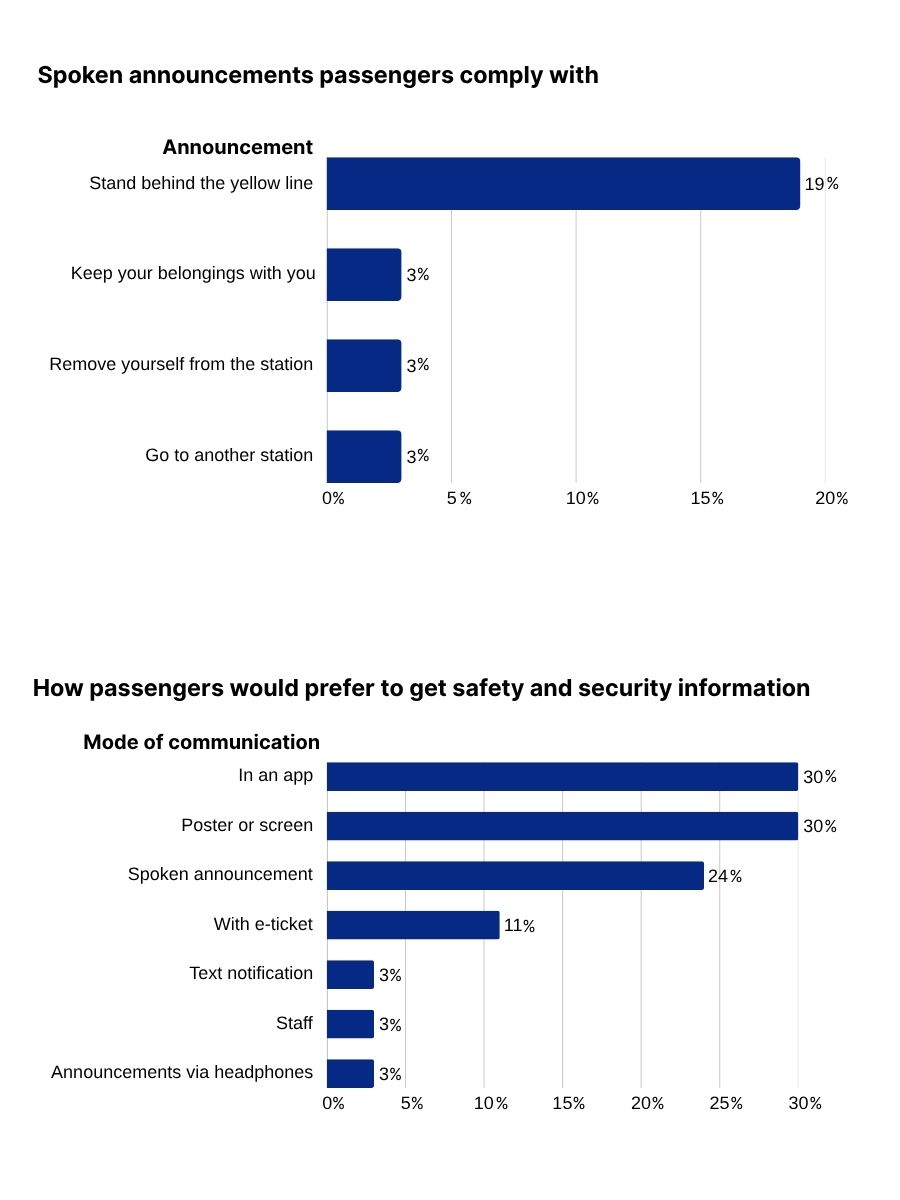
Compliance with an SA was low (27%). ‘Stand behind the yellow line’ was the SA most people (19%) said they followed and it is the only one of the announcements which is exclusively heard where it is directly applicable – when on a platform.
Most (84%) passengers do not ignore announcements and found a safety or security SA helpful if it gave or inspired them to take an action or was memorable.
62% of passengers found at least one SA helpful; ‘See it Say it Sorted’ (22%) and ‘Keep your belongings with you at all times” (11%) were most popular in this group.
Infrequent passengers ignored SAs more than frequent passengers.
More passengers found security SAs helpful than did safety SAs although most (86%) did not think passengers are responsible for station security, possibly because they diffuse responsibility to station management, the authority figure.
Some participants who followed safety SAs had personal experiences that increased their safety consciousness, like being taught to be aware of one’s surroundings or the tracks as a child, or knowing someone who was hit by a train.
Experts thought the physical presence of staff was more effective than manual and automated announcements for curbing unsafe behaviour.
Socio-technical System of Train Station Announcements
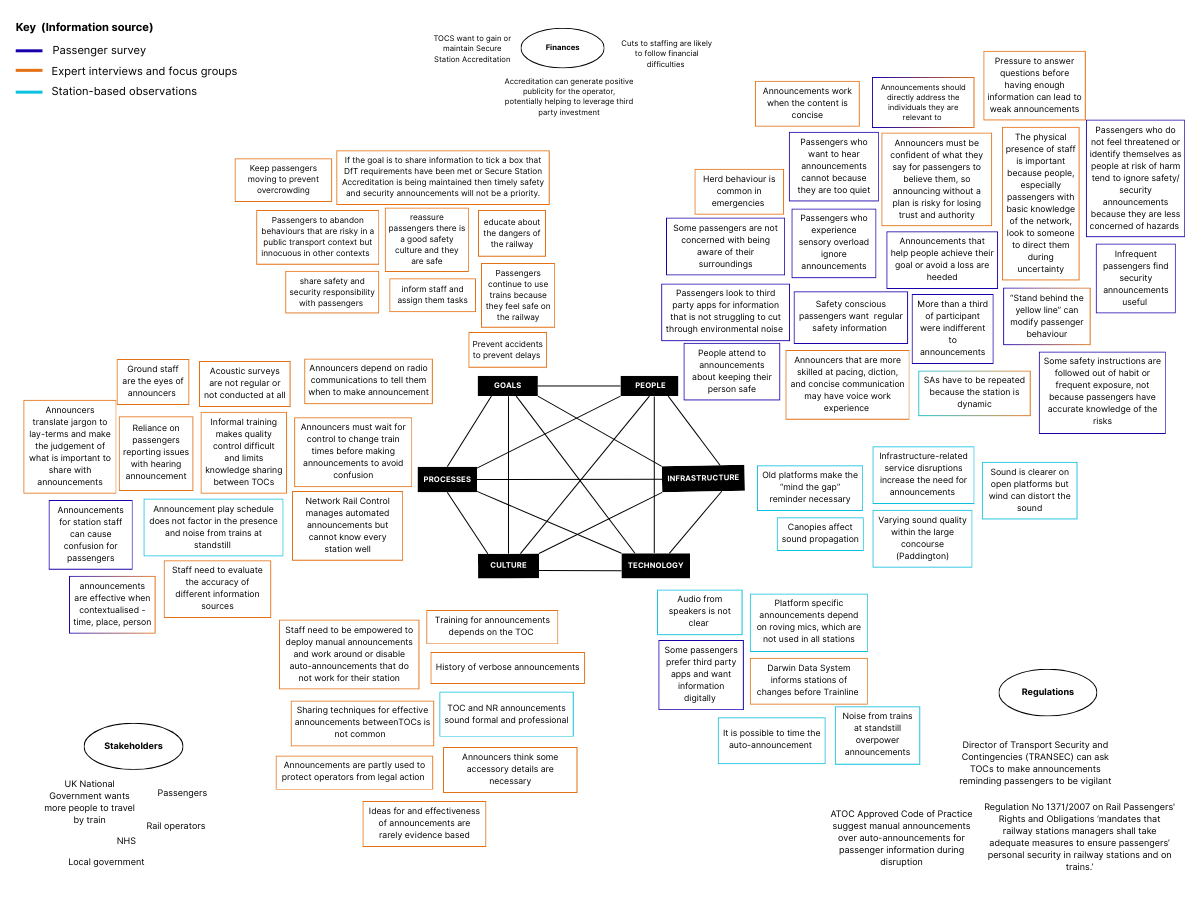
Announcements are one tool within the socio-technical system of a rail station influenced by a broader rail network that is challenged with meeting regulation requirements to remind passengers to be vigilant of danger while reassuring them they are safe so they continue travelling by rail to meet financial goals. The station architecture affecting sound propagation, environmental noise, especially from trains at standstill, and poor speech intelligibility are barriers to engagement with SAs. Station staff having minimal control of automated announcements means there is the potential for conflicting messages from manual and automated announcements during service changes which can lose passenger trust.
The main findings are organised using the socio-technical systems model proposed by Davis et al.(2014) to illustrate the interrelatedness of system elements influencing the reception of spoken announcements.
Conclusions
Passengers find security SAs more useful than safety SAs, though most do not recognise they are also responsible for station security. Passengers and experts agree specific, timely announcements get more attention, which is why manual SAs are preferable to automated safety and security SAs that can fail to be contextually congruent and cause habituation as a result.
Practical Implications
Passengers are more likely to engage with specific, novel and timely SAs they know apply to them. SAs should start by saying who the information applies to.
Operators and the government should be aware that passengers do not always understand how their actions can affect the whole network and should consider highlighting the consequences of not following safety and security advice, for example that objects falling onto tracks and false security alarms can disrupt services, because passengers’ priority is making their journey.
Sighted passengers prefer visual information and use customer information screens more than SAs. Operators should trial making generic safety information visual, and reserving manual SAs for warning about specific hazards, which can help to guide sight-impaired passengers around the station.
Participants recommended using humour, music and more acronyms to make safety and security SAs more memorable. Using regional accents for service SAs can help passengers know which voice to listen to for their destination.
Other Work
A Systems Analysis of the Grenfell Tower Fire
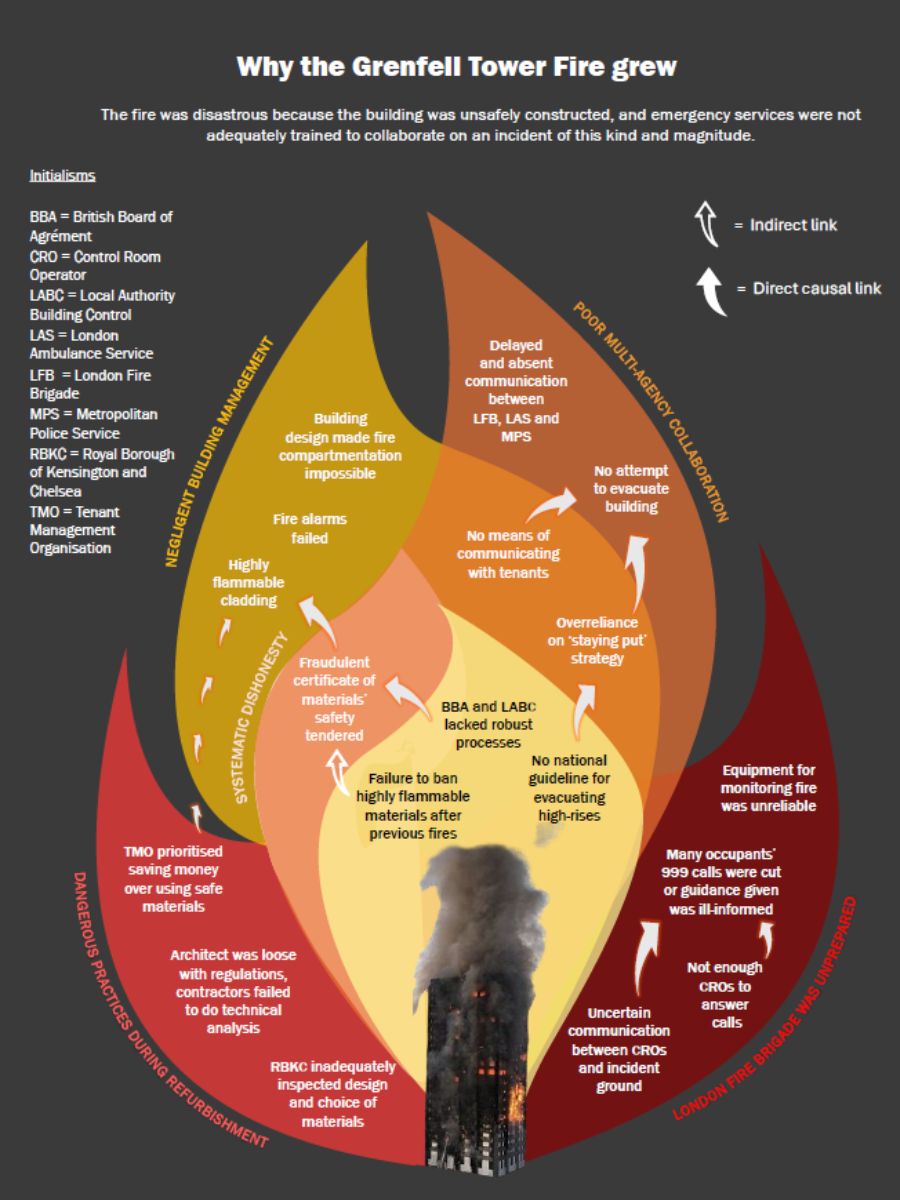
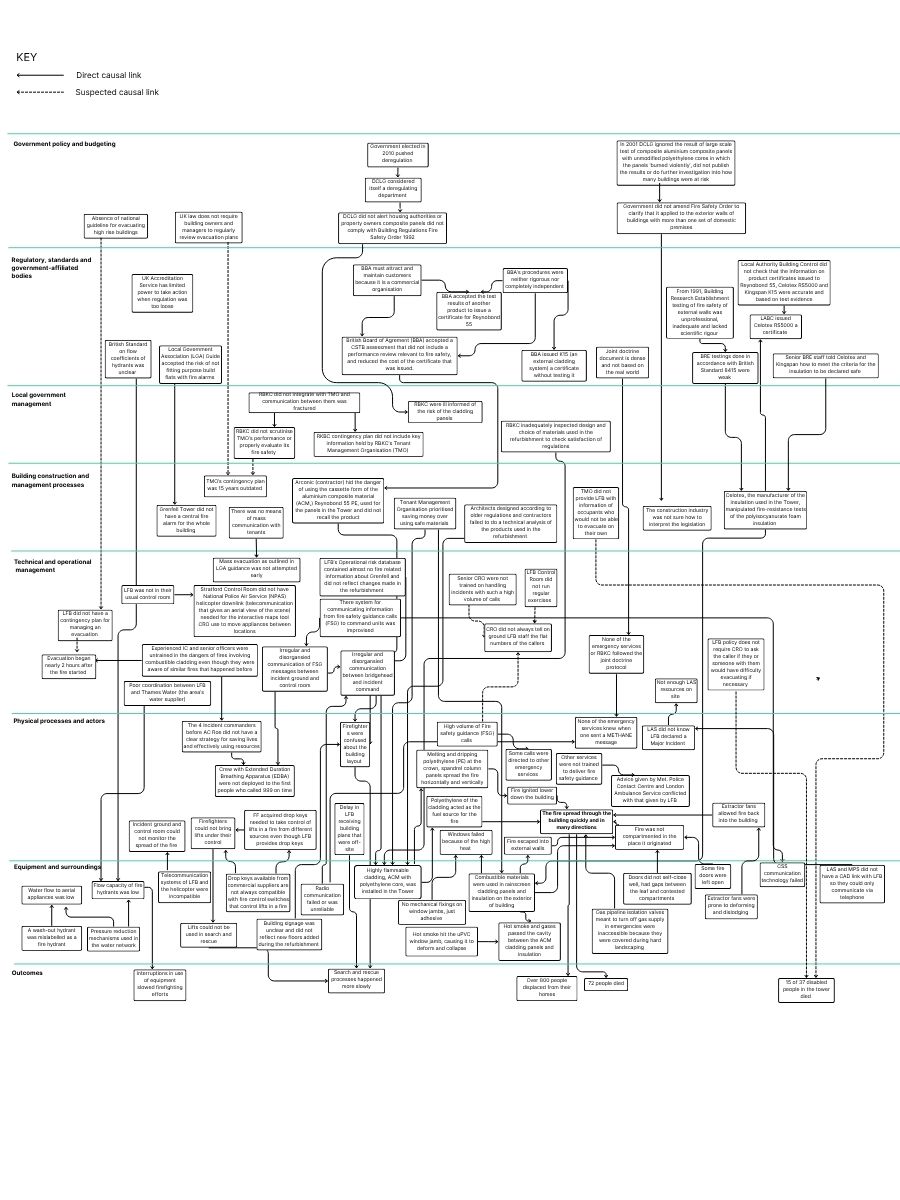
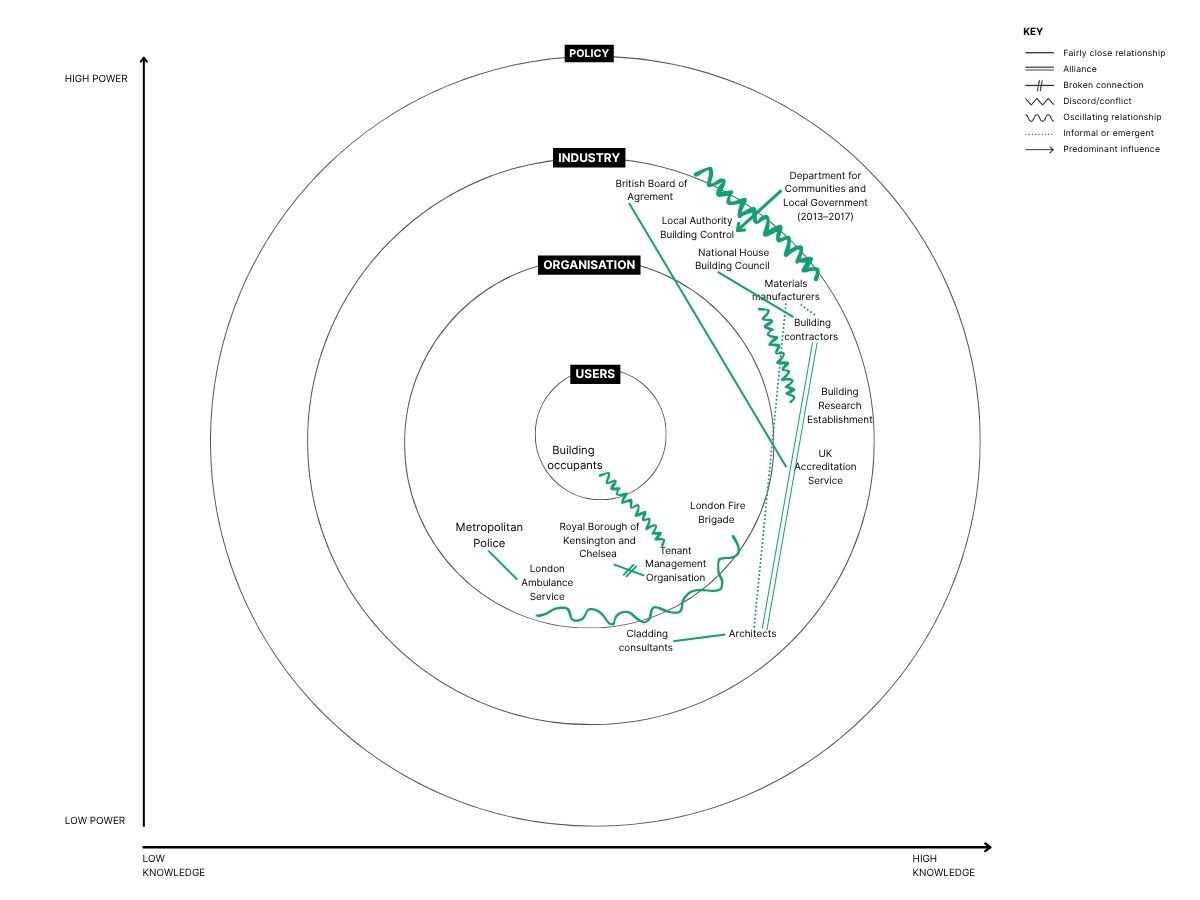
I conducted a systems analysis of the causes of the 2017 Grenfell Tower Fire. Using an accimap and actors map, I analysed the findings of the official inquiry and found the main causes of the tragedy were:
Failure to learn from other fires: unsafe cladding materials contributed to the spread of at least five fires in the UK before the Grenfell disaster, including one at Lakanal House in 2009. London Fire Brigade repeated mistakes it made at Lakanal House at Grenfell.
Deficiencies in infrastructure: weak regulation and monitoring of construction practices were the underlying cause of the use of flammable external wall materials.
Poor communication and preparation: equipment failures and poor training contributed to many of the communication issues within London Fire Brigade and between it, Metropolitan Police and London Ambulance Service.
Commercial pressures: materials manufacturers and testing and certification bodies prioritised their commercial interests over residents’ safety.
Poor safety culture: three manufacturers knowingly sold unsafe materials; a government aware many buildings in the country were not fire safe did not take action to rectify the issue.
Factors Contributing to Grenfell Fire Summarised
Accimap of the Grenfell Tower Fire
Grenfell Fire Actors Map
Physical Ergonomics Evaluation of Dynamic Tasks by Bakers
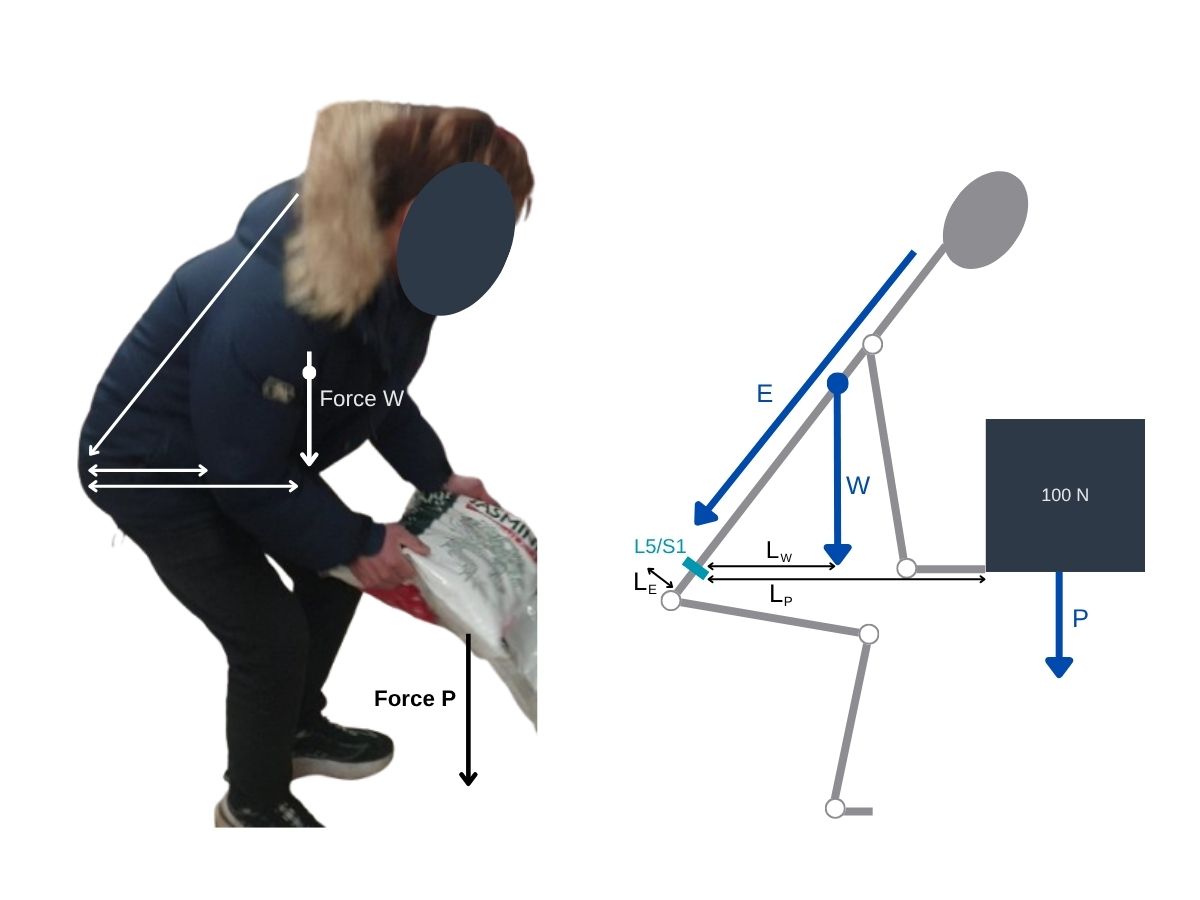
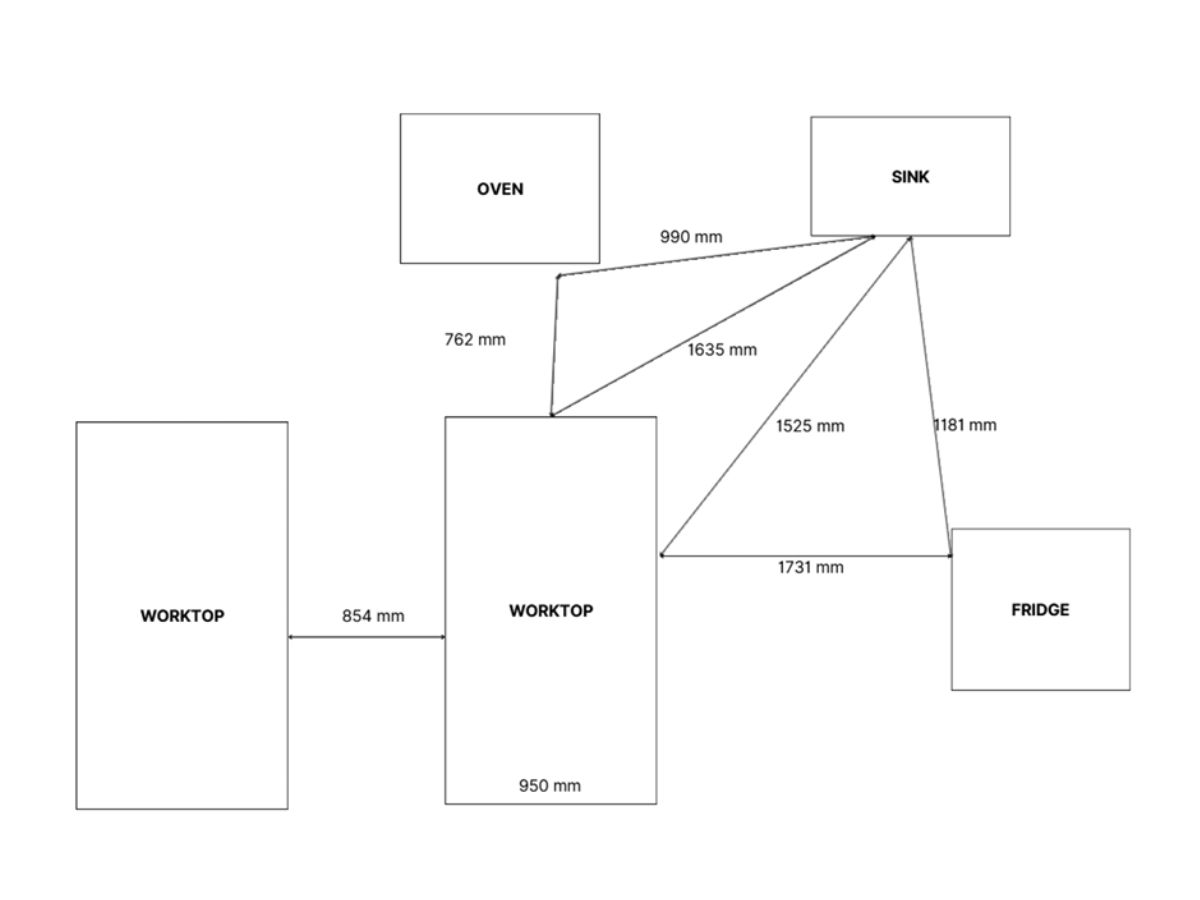
I assessed the physical ergonomics of three tasks by a bread baker: loading large sacks of flour onto shelves, kneading dough and moving goods in and out of the oven, and assessed the risk of developing musculoskeletal disorders. I conducted postural (REBA and RULA), anatomical, biomechanical, physiological and anthropometric analyses. The primary risk to the bread baker was developing lower back pain from standing and bending, and wrist injuries from repetitive motions. I presented the following recommendations:
Mechanise dough processing
Introduce anti-fatigue flooring
Use trolleys to move sacks
Change layout of shelves to reduce frequent bending
Improve clearance between tables to accommodate wider bakers
Free body diagram of the stooped posture while offloading flour sacks.
Bakery kitchen floor plan using measures from simulation.
Fortifund – Mobile Banking App for New Users
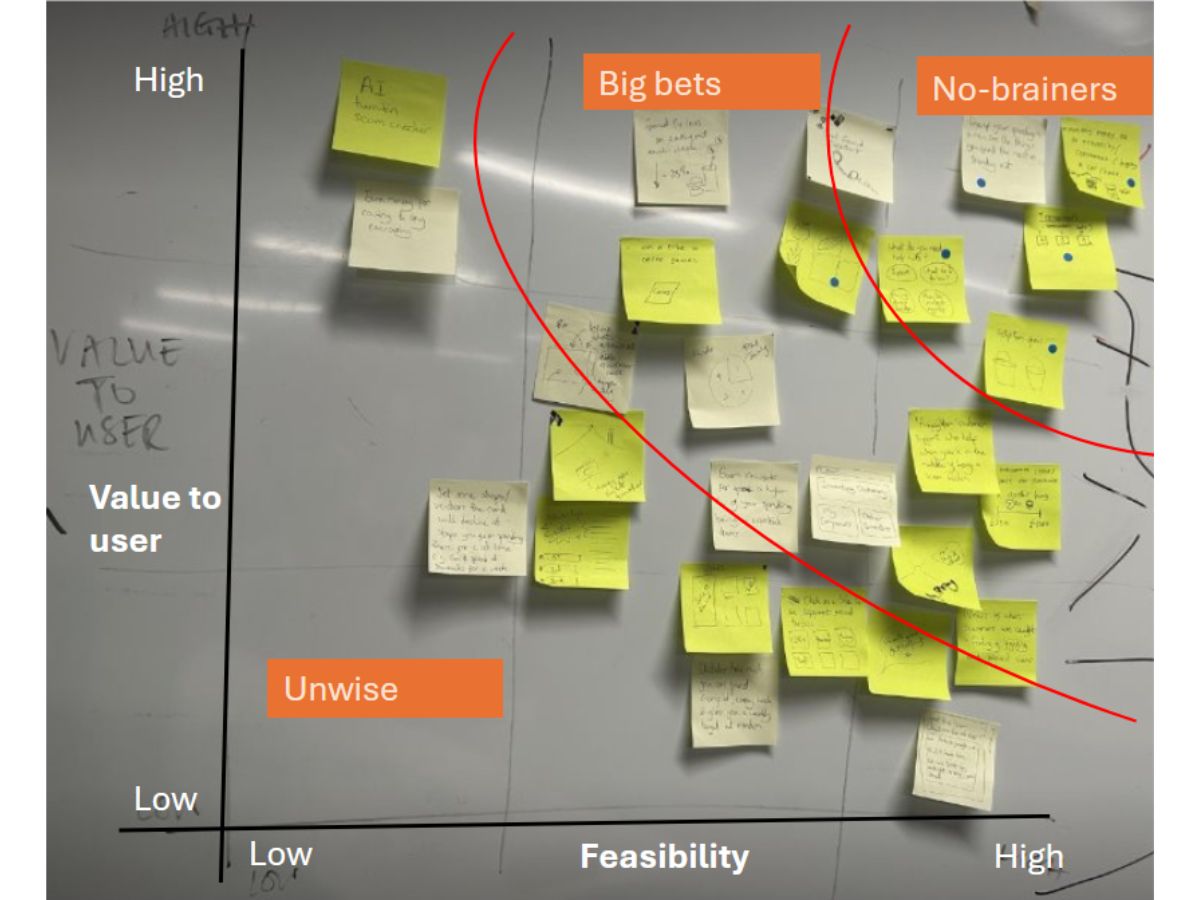
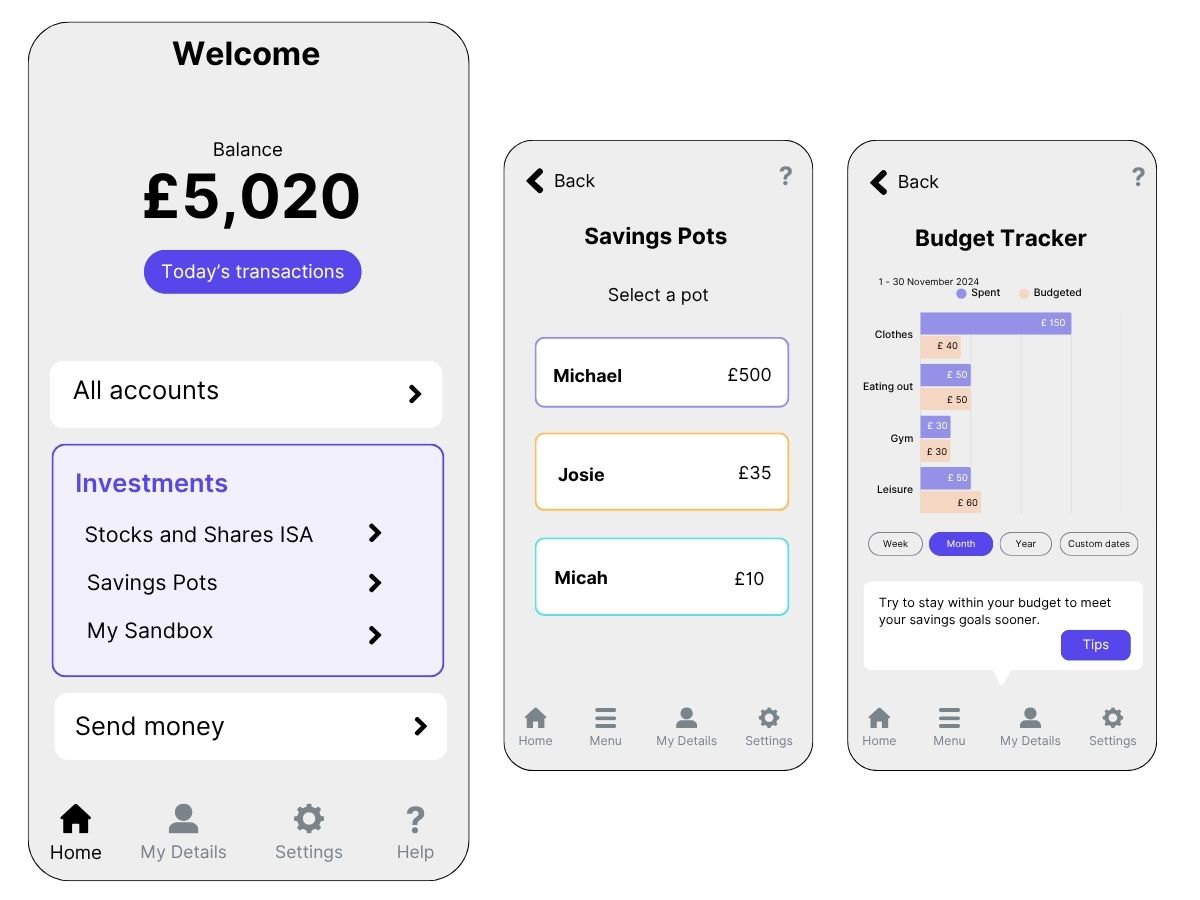
Along with colleagues, I designed a medium fidelity prototype of a mobile application for people who have not adopted mobile banking or investing or e-wallets and find the benefits of using them unclear. The app had a simulated investment section to help users practice investing. I did desk research on the target demographic, created user personas, conducted in-person, moderated usability tests with participants fitting or closely fitting the intended user profile and redesigned elements of the app users struggled to use by improving clickability signifiers and information architecture.