


I am a user experience designer from China with a degree from Loughborough University. I specialise in user-centred design, focusing on improving usability, optimising user experience and solving user pain points.
I am a user experience designer from China with a degree from Loughborough University. I specialise in user-centred design, focusing on improving usability, optimising user experience and solving user pain points.
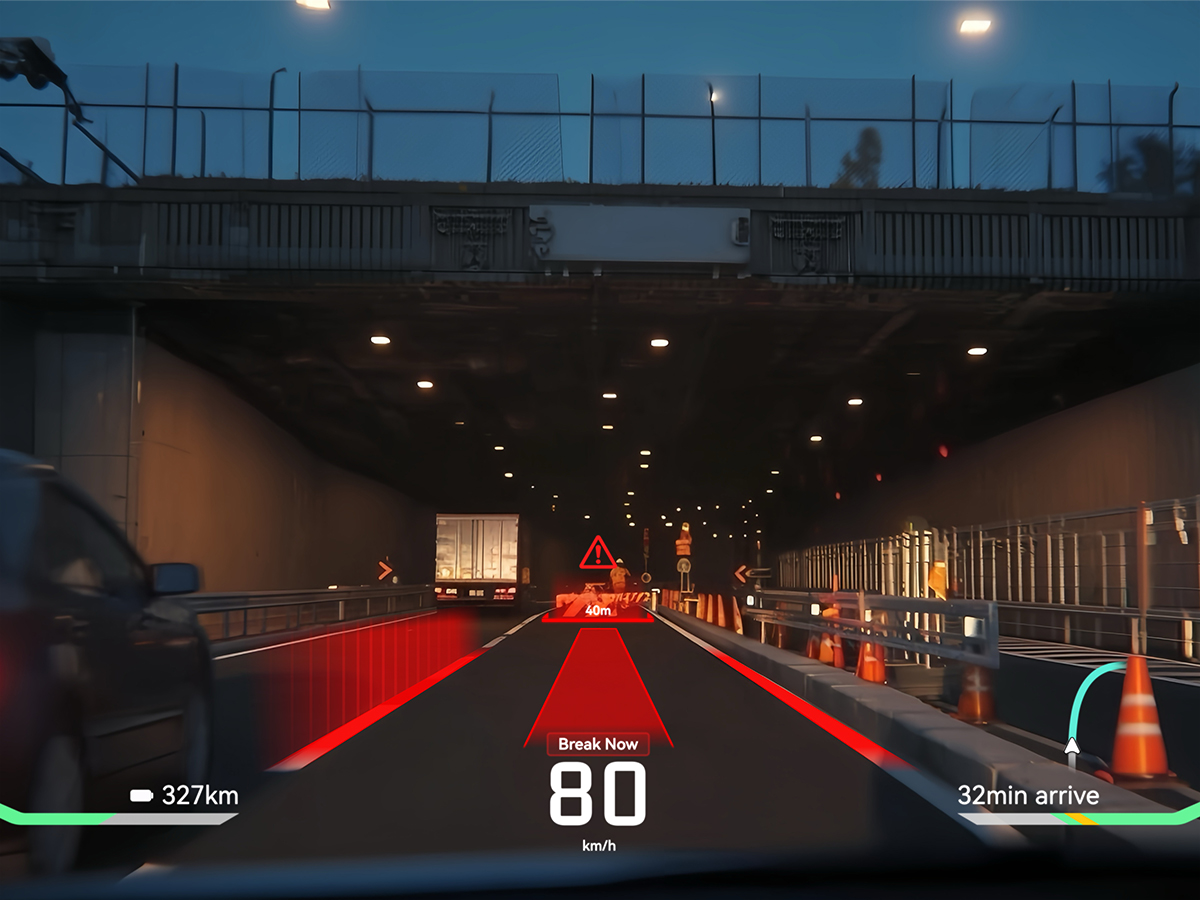
Level 3 autonomous driving allows drivers to do non-driving-related tasks (NDRT), but drivers must be ready to take over at any time. At this moment, drivers may face sudden increases in cognitive load and reduced situation awareness (SA) levels, thereby endangering driver safety. This study focuses on the impact of tailored Head-Up Display (HUD) interface design on driver takeover performance in high-urgency situations.

The prototype design process is based on situation awareness-oriented design (SAOD). The process consists of three stages: first, analyzing situational awareness requirements; second, iteratively designing the user interface based on design principles; and finally, evaluating the user interface display effects through situational awareness metrics. Prototype design went through stages from low fidelity to medium fidelity to video prototypes. This study designed three video prototypes with different amounts of HUD elements.
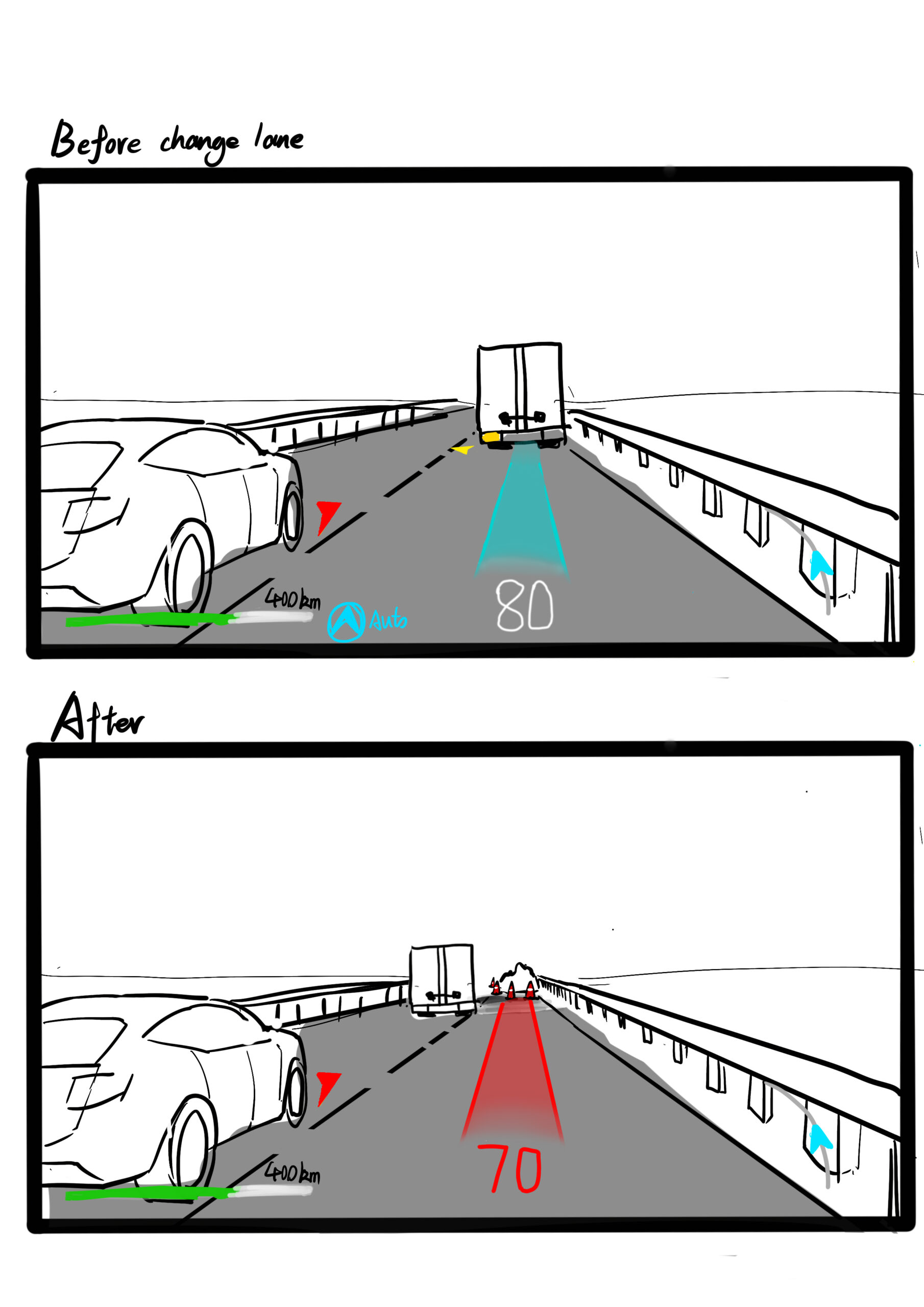

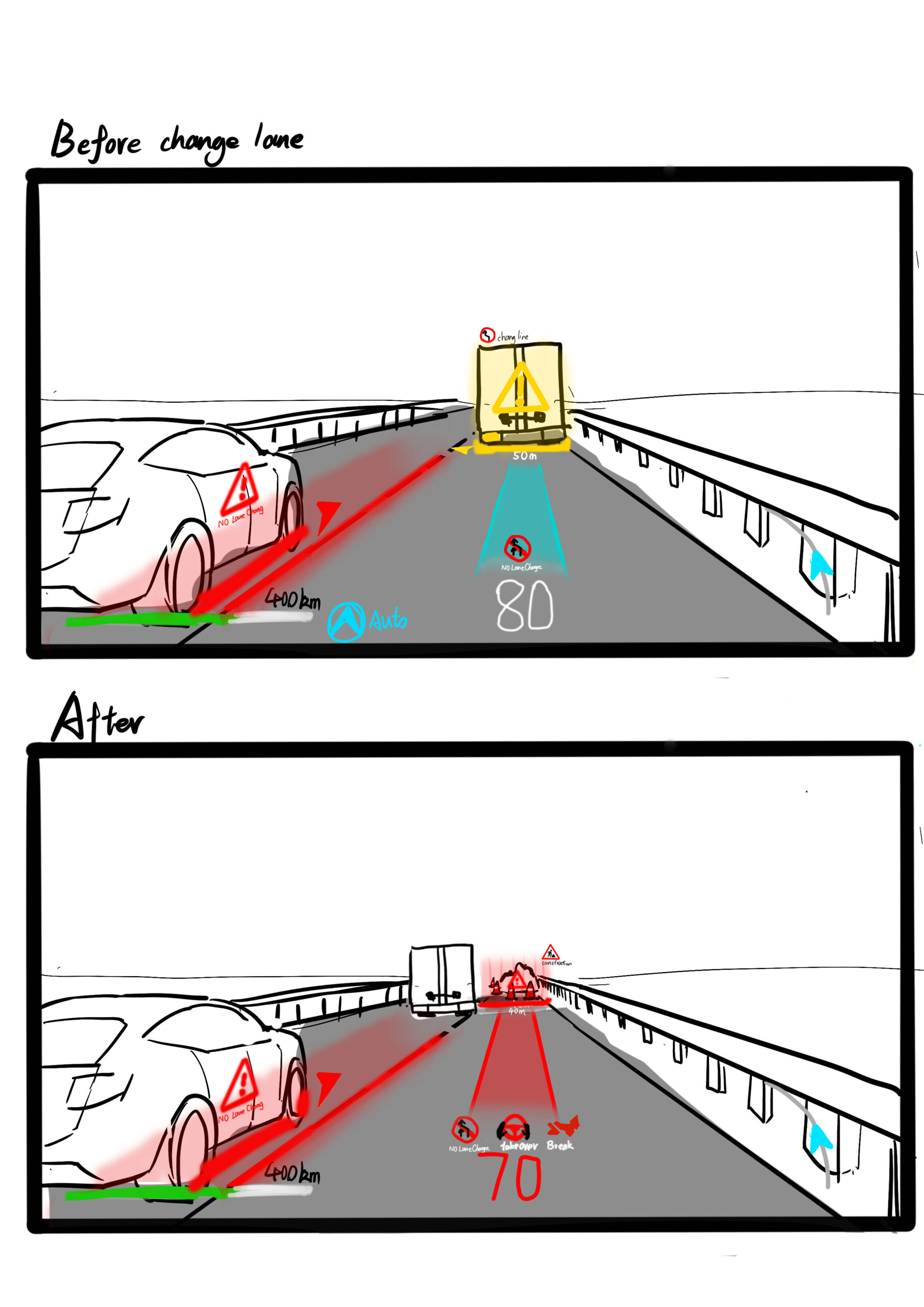
The elements of the HUD interface primarily include colour changes, trajectories, icons with accompanying text, and area markings. To investigate whether these elements have different effects on driver takeover performance in high-urgency situations, three prototypes were designed, each containing varying amounts of information.
Prototype 1: trajectory.
Prototype 2: trajectory and icons with accompanying text.
Prototype 3: trajectory, icons with accompanying text and area markings.
After completing the low-fi prototype, I conduct semi-structured interviews with five designers to iterate prototypes.Then using ChatGPT and Midjourney, scene images will be generated based on the created traffic conditions.Figma was used to design the interface elements and the entire HUD interface.After completing the design of the medium-fidelity prototype, I conducted a heuristic evaluation to test the prototype. Finally, based on the conclusions of the heuristic evaluation, the researcher modifies and produces the final video prototype for testing.

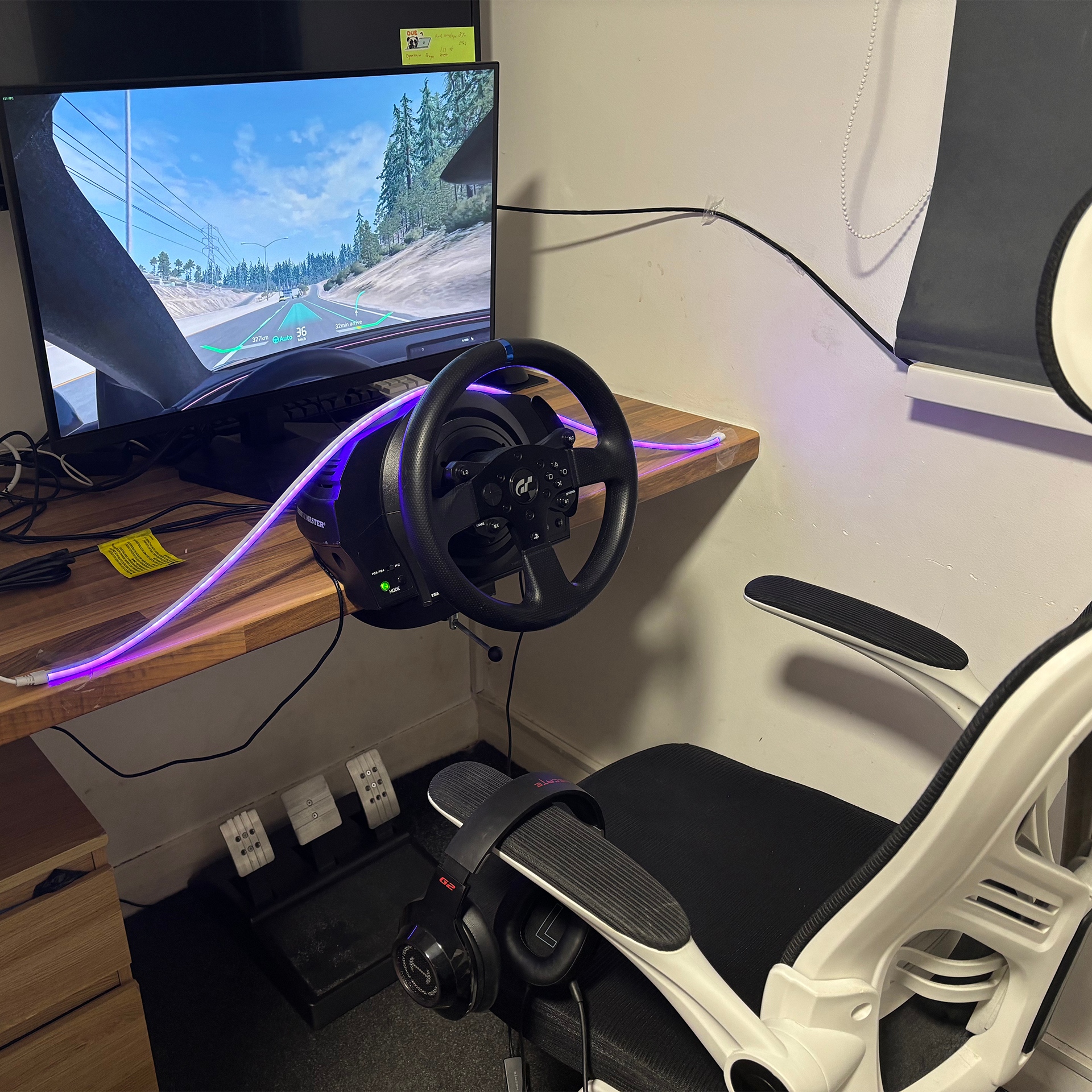
This experiment employed a within-subject design. Participants first signed an informed consent form and completed a background questionnaire, then interacted with each prototype.They were instructed to perform non-driving tasks and take control of the vehicle upon hearing an audible prompt. Then the participants subsequently completed cognitive load and posture perception level scales. During this process, researchers used a mobile phone to record the time at which the brake was applied. After all prototype tests were completed, participants underwent exit interviews, and the testing was concluded.


The research findings indicate that the HUD interface (Prototype 3), which includes trajectory, icon, text, and area marking, can significantly reduce reaction time, enhance situational awareness, and effectively reduce cognitive load. However, it does not necessarily help drivers recover to Level 3 situation awareness. In high-urgency situations with HUD assistance, driving experience does not significantly improve takeover performance but does influence trust and information preferences in the HUD.