ankit-kumar-sinha profile photo

Hello, welcome to an overview of my postgraduate major project completed during my MSc in User Experience Design at Loughborough University. This project reflects my passion for transforming complex, data-driven systems into simple & intuitive experiences that empower small business owners.
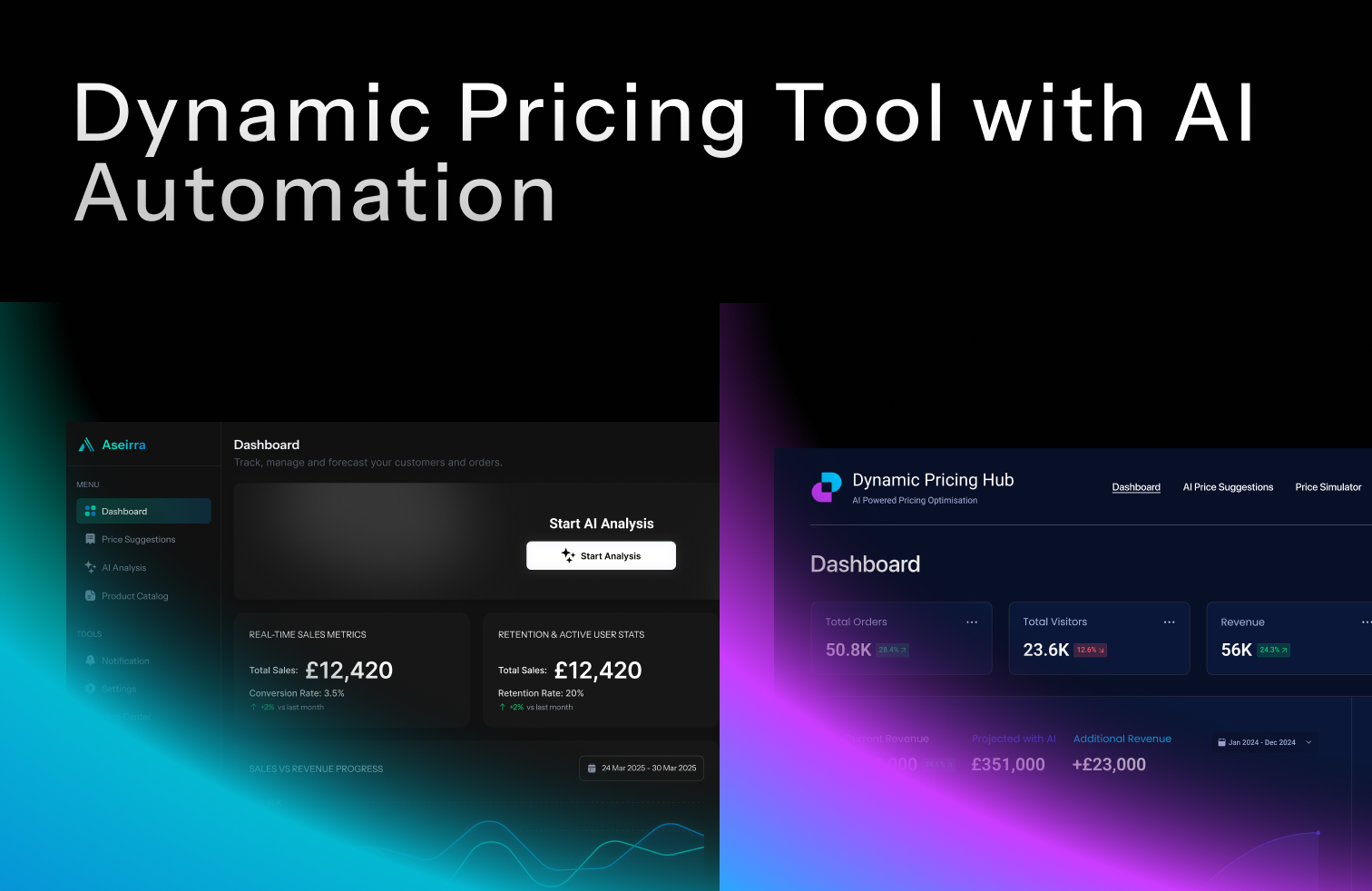
Designing UX for a Dynamic Pricing Tool with AI Automation

Project Overview

This project investigates how AI-driven dynamic pricing tools can support small business owners in making informed pricing decisions. Given the challenges of fluctuating supplier costs, intuition-driven practices, and limited technical expertise, this study focuses on designing interfaces that balance automation, explainability, and user control.

A within-subjects A/B testing design was adopted to evaluate two interactive prototypes of a pricing dashboard, measuring both usability (SUS) and trust in automation (Madsen & Gregor, 2000), alongside qualitative feedback from semi-structured interviews.

Prototype Development

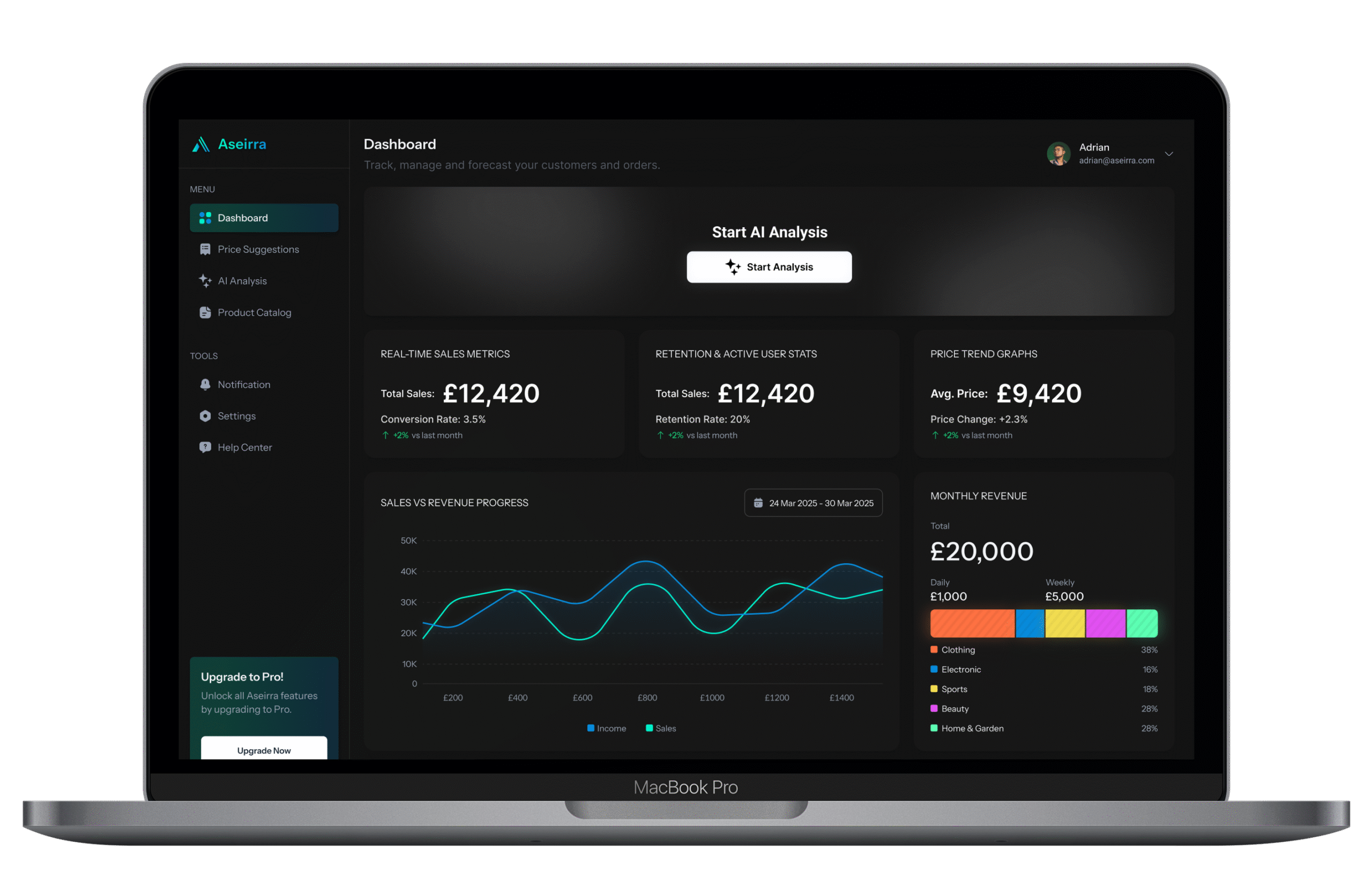
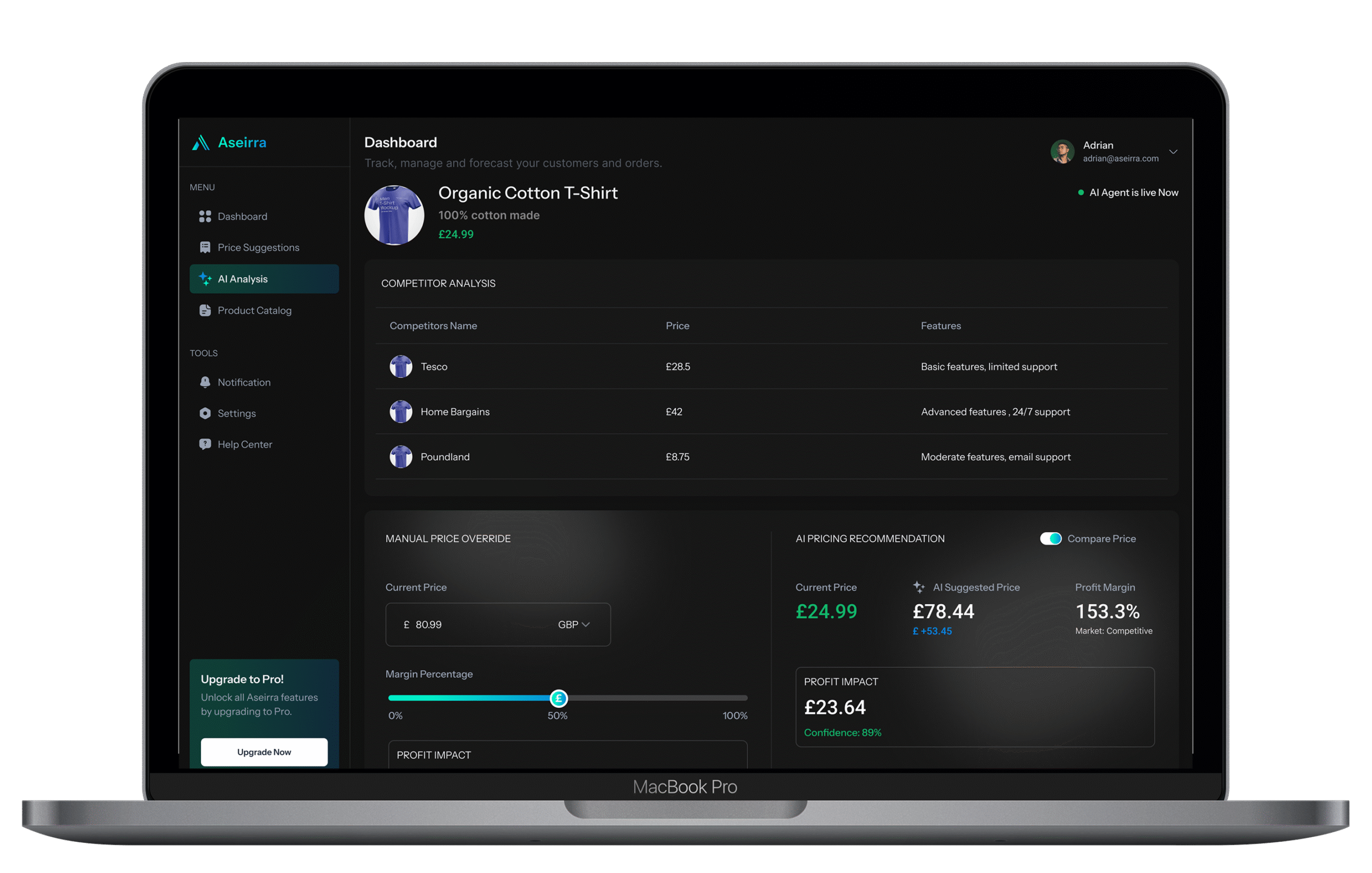
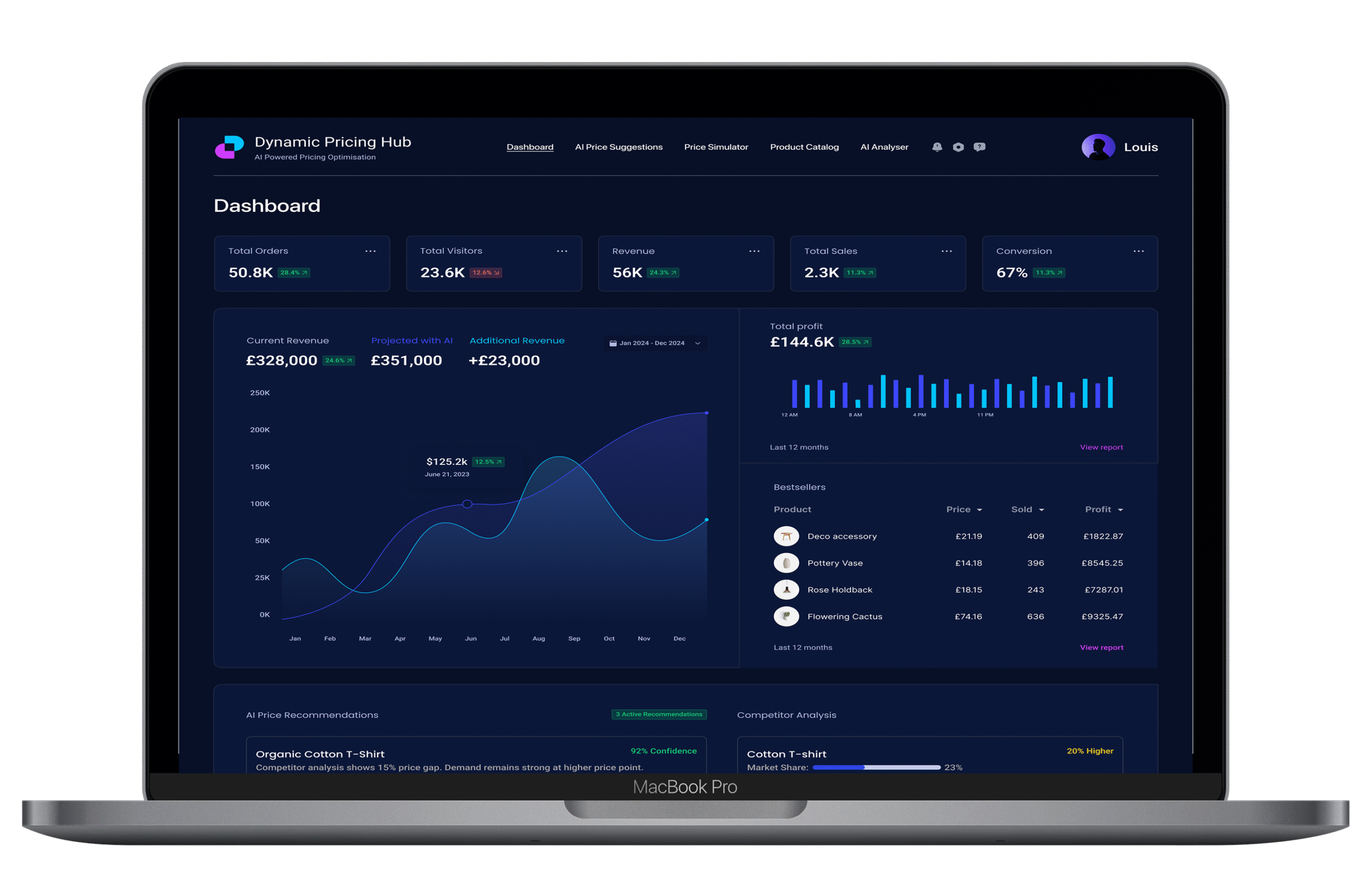
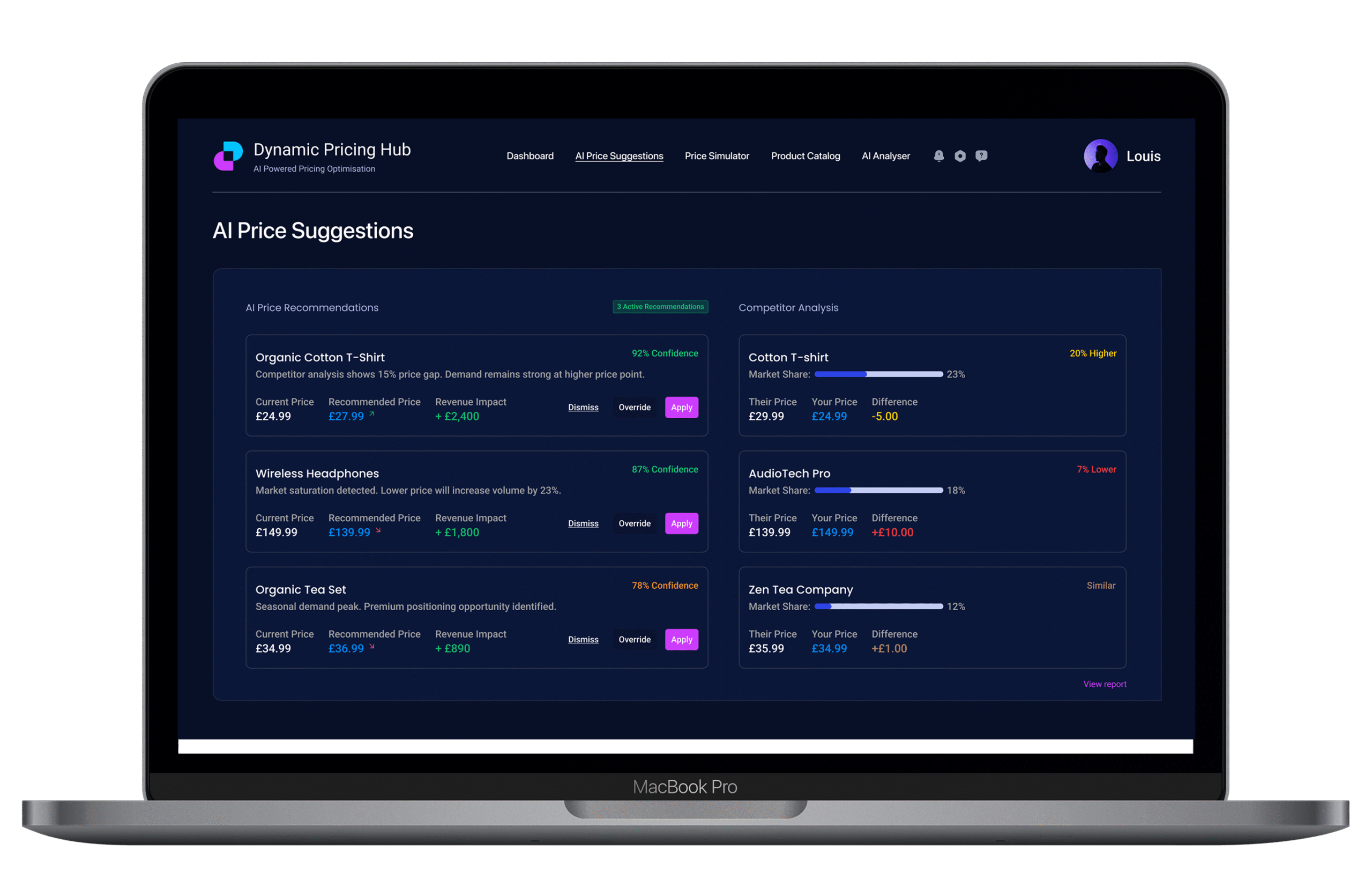
Prototype 1 (Control Group) – Streamlined Automation

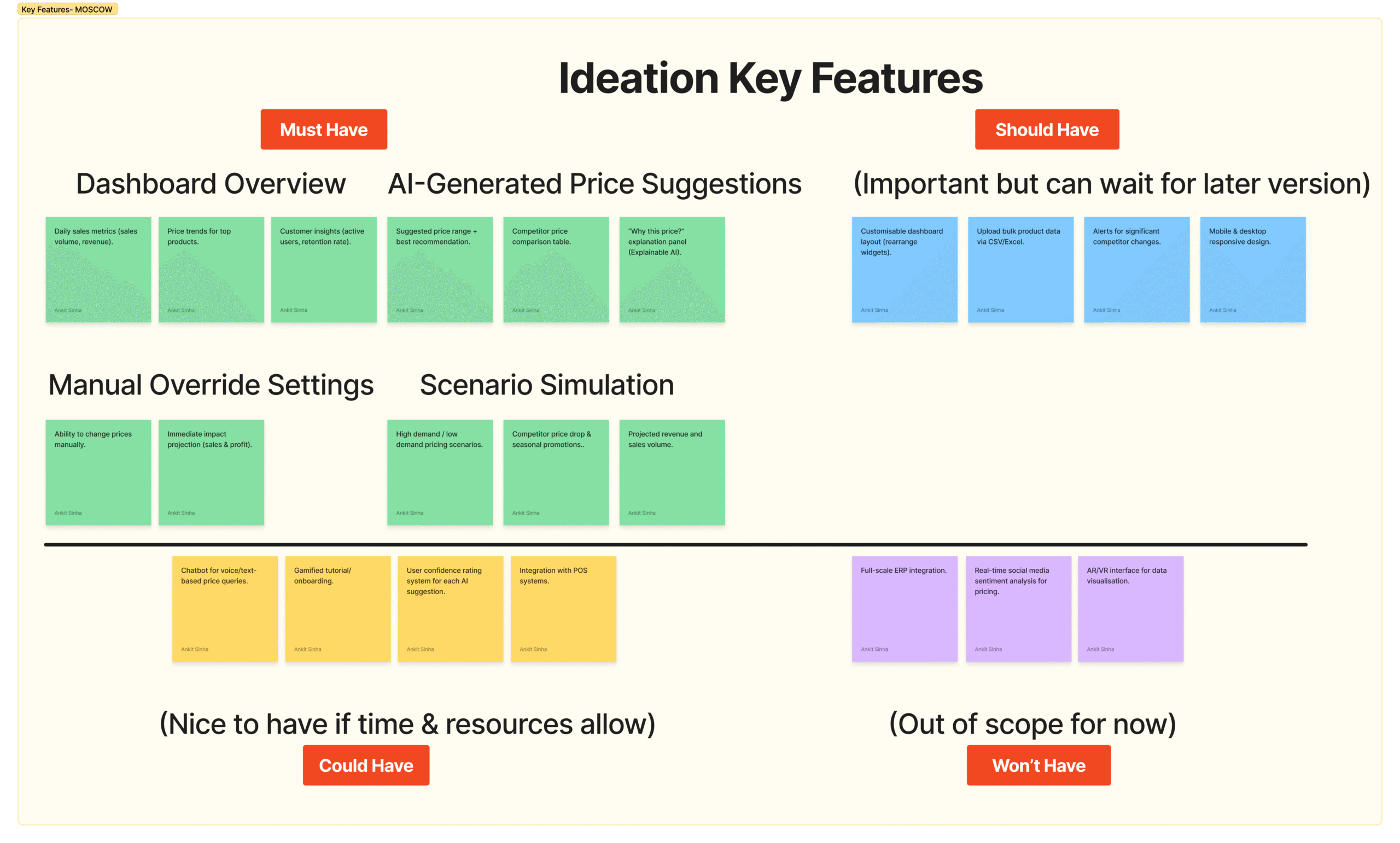
Prototype 2 (Treatment Group) – Explainable AI & Scenario Simulation


Project Results Analysis

Inferential Testing

Paired-sample t-test showed statistically significant improvement in usability and trust between Prototype 1 and 2.

Thematic Analysis

Project Conclusion

For User Experience Design

For User Experience Research

Key Findings

Impact on UX Design

  • Visual explainability drives adoption – Shopkeepers placed the highest trust in pricing suggestions when supported by clear, visual explanations (competitor comparisons, sales trend graphs).
  • Trust improves with aligned logic – Participants trusted AI suggestions more when the reasoning mirrored their own intuitive pricing strategies, highlighting the importance of contextualised explanations.
  • Cognitive overload reduces usability – Overly technical or excessive information reduced trust and hindered usability, reinforcing the need for digestible, well-structured content.
  • Scenario simulations empower control – Features such as demand fluctuation or seasonal pricing scenarios gave participants a sense of agency and foresight, strengthening confidence in the tool.
  • Automation vs. control tension – Shopkeepers welcomed automation but wanted the option to override AI decisions, showing that hybrid human–AI decision-making fosters trust.
  • Transparency as a design principle – Dynamic pricing tools must embed Explainable AI (XAI) in ways that are accessible to non-technical users.
  • Balancing automation with user agency – Providing manual overrides and scenario simulations increases trust and adoption.
  • Reducing cognitive load in AI systems – Applying Cognitive Load Theory ensures users process complex data without overwhelm, supporting usability.
  • Visual-first communication – Graphs, trend lines, and competitor comparisons were more effective than text-heavy explanations, highlighting the power of visual storytelling in UX design.

Thank You!