giridhar-pabbati profile photo

I’m a UX Designer passionate about building intuitive and inclusive digital experiences. I use research, prototyping and testing to turn insights into designs that simplify complexity, improve clarity and strengthen user trust across different products and journeys.

Research Journey

Defining the Problem

From the research, I translated user frustrations into clear design goals: manage cognitive load, improve trust, and give emotional clarity. These became five UX goals (G1–G5), supported by design principles that guided how the system should respond in practice for example, explaining reroutes clearly, reducing overload, and matching tone to stress.

From these principles, I mapped seven potential features (F1–F7). Using a priority matrix, I focused on four with the highest emotional and cognitive impact: reroute justifications (F7), filtering irrelevant info (F2), tone-matched reassurance (F5), and delay pacing (F1).

These features became the foundation for the adaptive prototype.

In the ideation phase

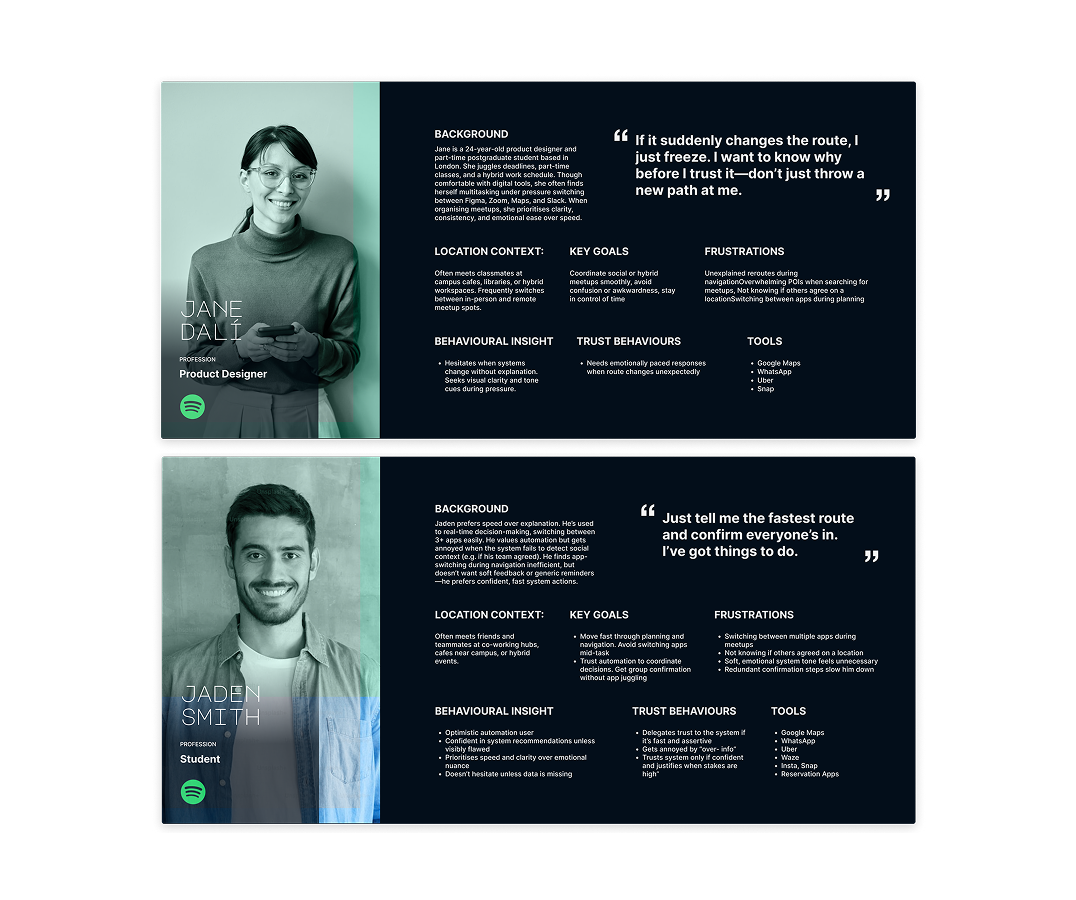
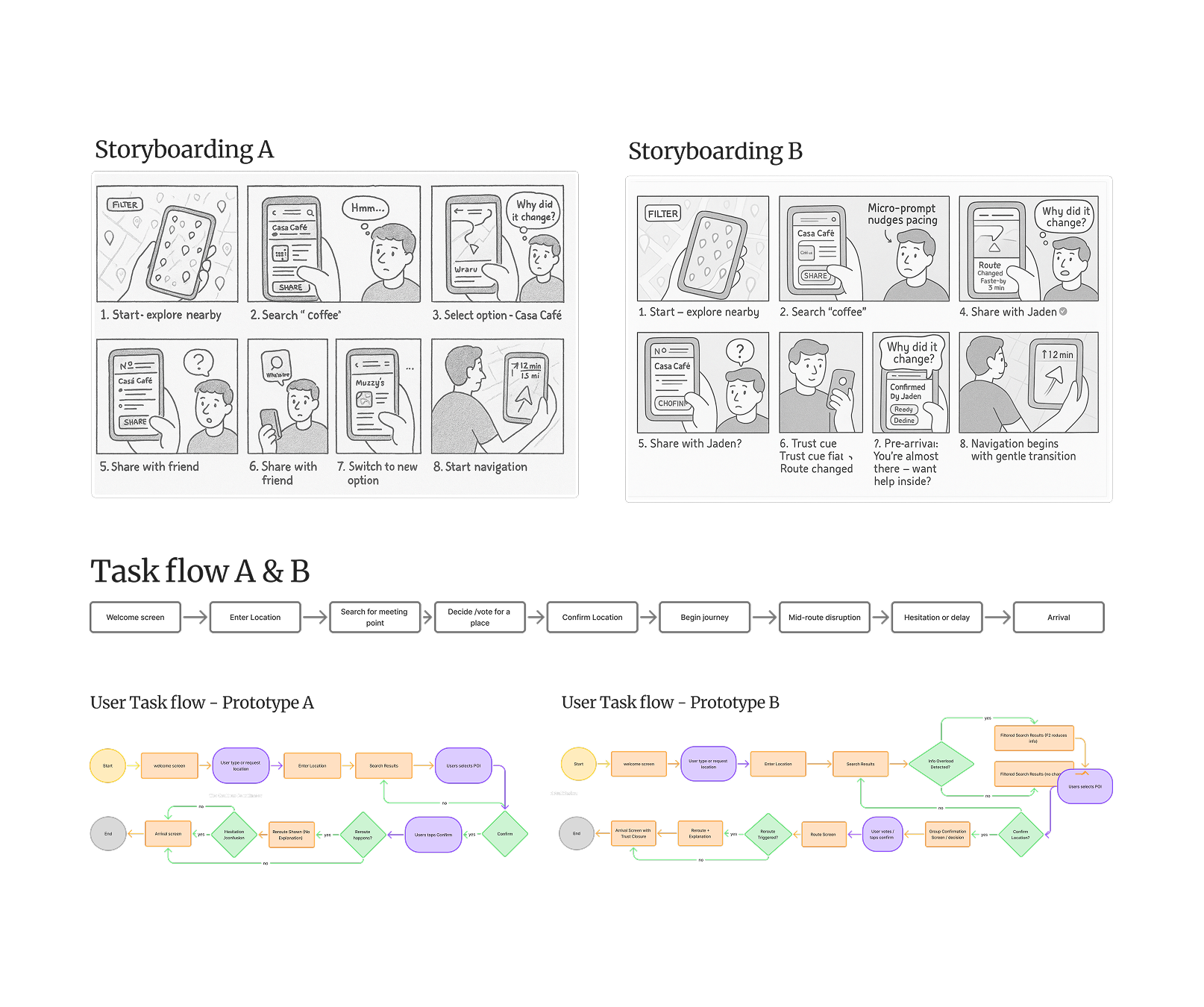
I translated defined goals into design logic. Personas grounded decisions in real frustrations, storyboards and task flows then visualised how the adaptive prototype would differ from a static UI in real scenarios. While the Emotion–Logic Flow Map (ELFM) defines when and what the system should adapt based on user state and Screen–State Architecture (SSA) defines when and where those adaptations appear on screen. Alongside these, I applied IBM’s AI 4-Pillars framework (Intent, Knowledge, Reasoning, Data) to shape the AI assistant’s personality ensuring responses were not only functional but also emotionally intelligent and trustworthy.

Prototyping

I iterated from sketches to low-fidelity wireframes, testing assumptions early. User feedback guided the refinement of key features: reroute justifications, tone-matched reassurance, and adaptive pacing. The final high-fidelity prototype captured these behaviours dynamically. The adaptive app allows users to coordinate meetups, find midpoint venues, confirm group decisions in-chat, and even locate friends via AR overlays. AI supports users with emotional tone, pacing, and clarity throughout.

Prototype A

This prototype mirrored existing tools such as Google Maps for navigation and WhatsApp for coordination. It displayed routes, venue options, and group decisions as static text and images, without any adaptivity. The aim was to create a baseline for comparison.

Prototype B

This prototype introduced adaptivity into the same flow. Through a chat-first UI, the AI assistant suggested midpoint venues, filtered irrelevant details, adjusted interaction pacing based on mood, and used AR overlays to help friends locate each other on arrival. Unlike static apps, it actively reduced overload and reinforced trust.

Testing

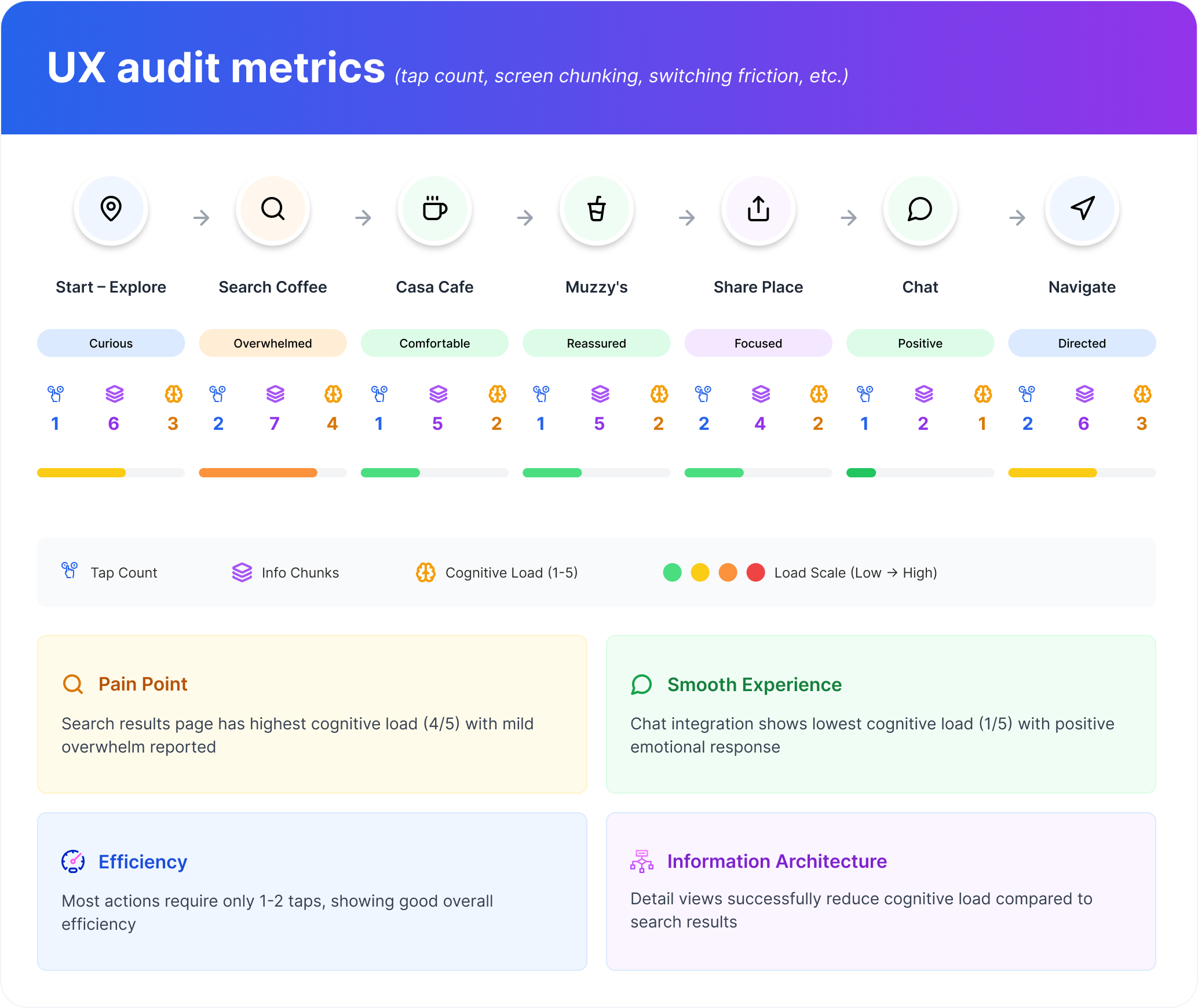
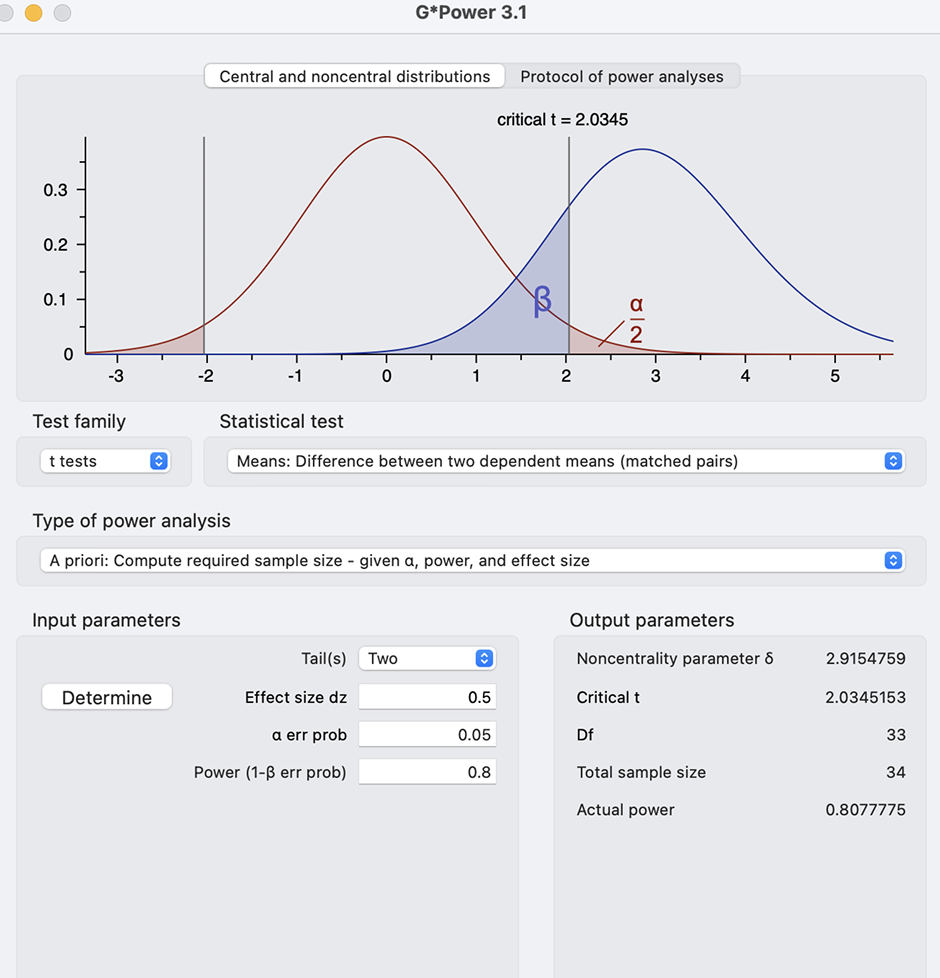
GPower estimated 34 participants, and 25 completed the study. To evaluate impact, I used a within-subjects controlled study where each participant tested both the static and adaptive prototypes, followed by surveys capturing workload, trust, clarity, emotion, and adaptivity. A mixed-method approach combined quantitative measures (NASA-TLX , Trust Scale, Decision Clarity, Affective Slider) with qualitative insights from open-ended responses.

This triangulation revealed not just statistical outcomes, but also how users described their experience in their own words.

Evaluation

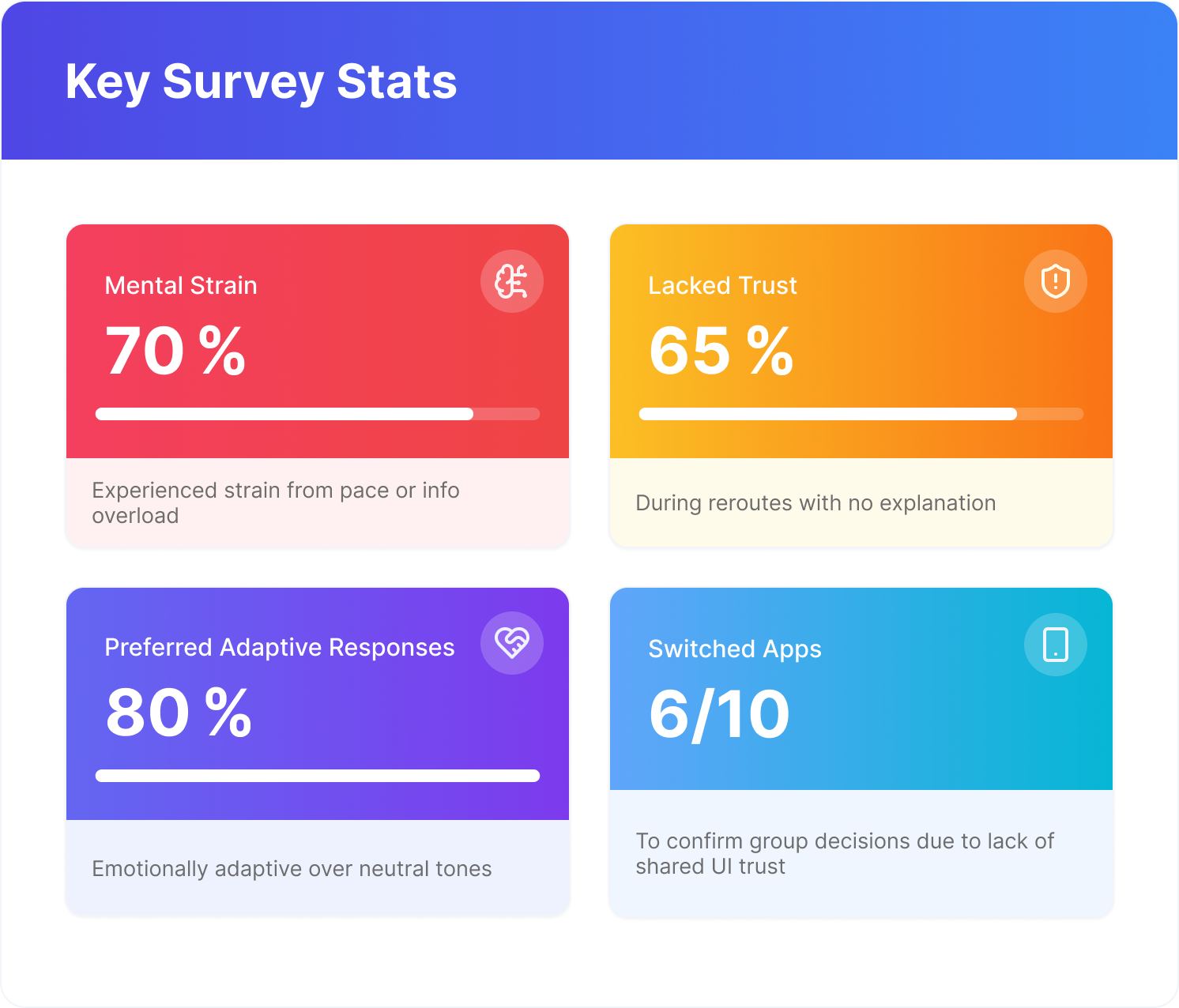
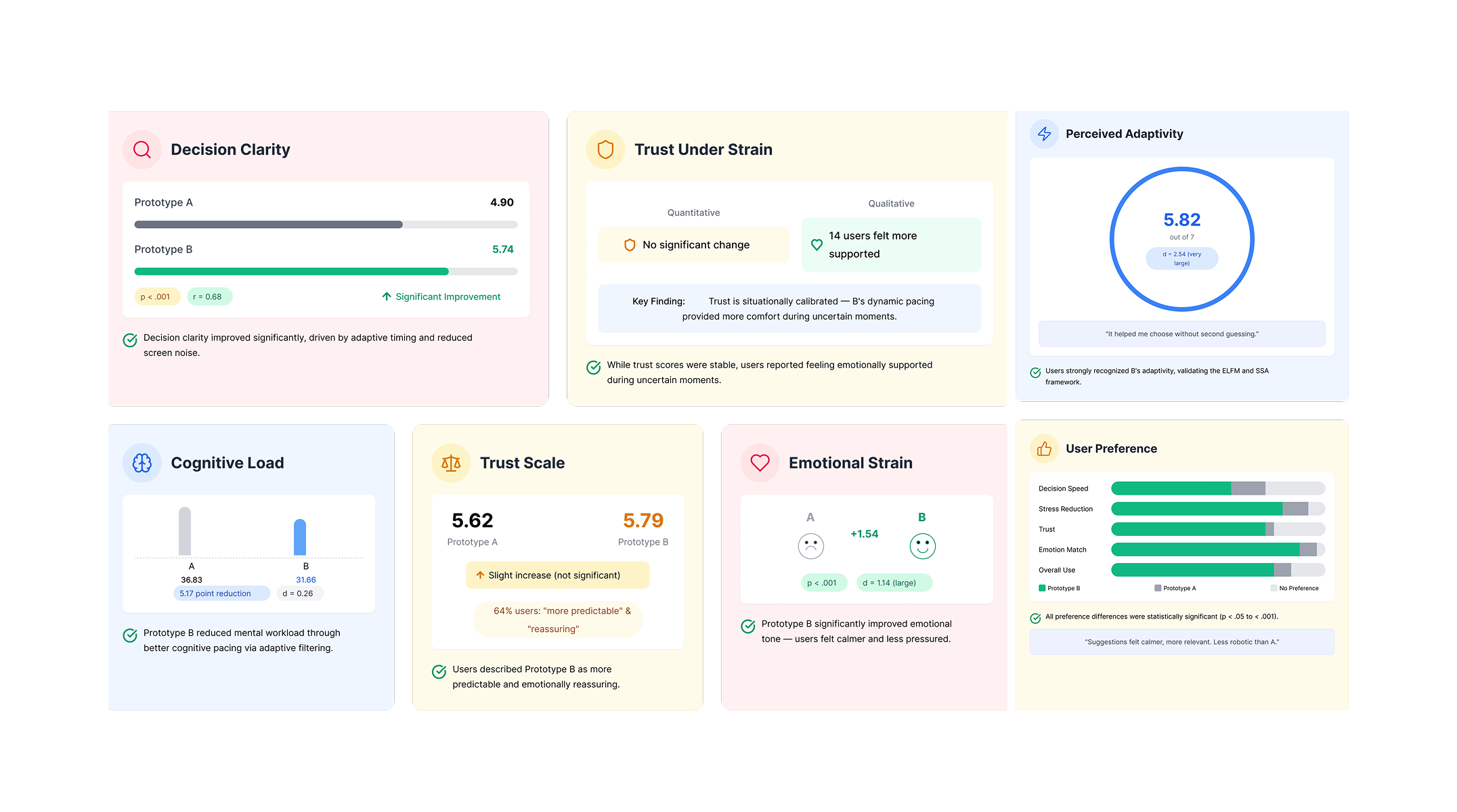
Data was analysed in SPSS using paired-samples t-tests, Wilcoxon signed-rank tests, and thematic coding of open responses.Testing showed that Prototype B outperformed the static benchmark by reducing cognitive load, improving decision clarity and emotional comfort, and being strongly preferred by users.

Key Findings

Impact

This project demonstrates that adaptive UX can transform not just navigation, but the entire process of social coordination. By filtering distractions, pacing interactions, and reinforcing trust, systems can feel more human and supportive under pressure.

Clarity under stress: Adaptive pacing and filtering reduced hesitation.

Emotional support: Tone-matched responses improved confidence and comfort.

Trust reinforcement: Users felt more supported in uncertain moments.

User preference: Over 75% preferred Prototype B for real-world use.

Adaptive intelligence: Validated ELFM and SSA as effective design frameworks.

I’m excited to take these ideas into professional practice. Let’s connect…

THANK YOU !