


I’m a UX designer who loves exploring how people interact with technology. My focus is on VR, interaction, and inclusive design—turning user needs into simple, meaningful solutions through empathy, testing, and creative problem-solving.
I’m a UX designer who loves exploring how people interact with technology. My focus is on VR, interaction, and inclusive design—turning user needs into simple, meaningful solutions through empathy, testing, and creative problem-solving.

Problem:Current VR meditation focuses more on static scenes and medical outcomes, while lacking design attention to cue mechanisms and deeper research on individual differences.
Importance:In VR meditation, cue design matters: the right visual–audio cues can calm the mind, deepen presence, and shape the whole experience.

Empathize: Gathered user insights through interviews and observations to understand challenges in VR meditation.
Define: Refined the research question, focusing on how cue design can enhance immersion and relaxation.
Ideate: Used brainstorming and literature review to generate ideas such as natural scenes and breathing cues.
Prototype: Developed two VR meditation environments (minimal vs cue-based) and refined them through early feedback.
Test: Evaluated the prototypes with A/B testing, questionnaires, physiological data, and exit interviews.
The cue-based VR meditation environment included a breathing tent, a slowly turning moon, a softly flickering flame, and a calm guidance voice. Designed to be simple, low-frequency, and aligned with natural bodily rhythms, these cues provided gentle anchors to support focus, immersion, and relaxation.
The no-cue VR meditation environment was minimal and static, with almost no visual or auditory elements. It served as a baseline to compare how cues influence presence, relaxation, and user differences.
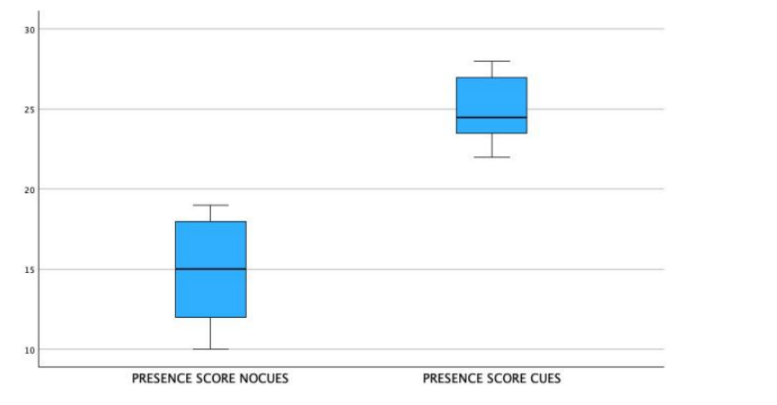
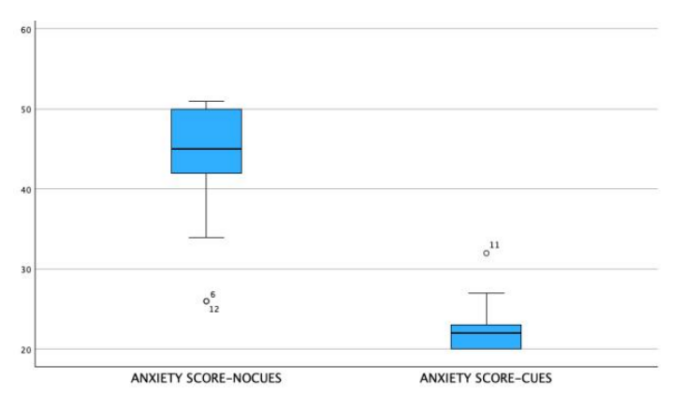
This test results show that adding gentle visual–auditory cues in VR meditation significantly enhanced user experience. Presence increased by around 10 points and anxiety dropped by more than 22 points, with heart rate also showing stronger reductions in the cue condition. These cues worked not by adding complexity, but by offering simple anchors—such as a breathing tent, a slowly turning moon, and calm guidance—that supported focus and relaxation. Novices relied on them to steady attention, while experienced meditators still entered the state faster when cues were present. Interviews revealed individual differences, with some users preferring audio and others visual anchors. Two key design insights emerged: slow, rhythm-aligned cues alone can be highly effective, and systems should allow users to adjust cue intensity or modality as needed. Although limited by a small sample size, the convergence of self-report and physiological data provides strong early evidence that simple, breathable cues can reliably increase presence and reduce anxiety in VR meditation.
a).Keep it simple but meaningful
b).Go beyond physical rules and breaking affordances
c).Towards adaptive & personalised UX
(biofeedback,Adaptive System)