
Yan Jun Tan


Hi, I'm Jun. I'm a product designer with 4 years of experience in UI/UX. I love creating fun, seamless user experiences that bridge user needs and product goals, and always very attentive to design details!
Hi, I'm Jun. I'm a product designer with 4 years of experience in UI/UX. I love creating fun, seamless user experiences that bridge user needs and product goals, and always very attentive to design details!
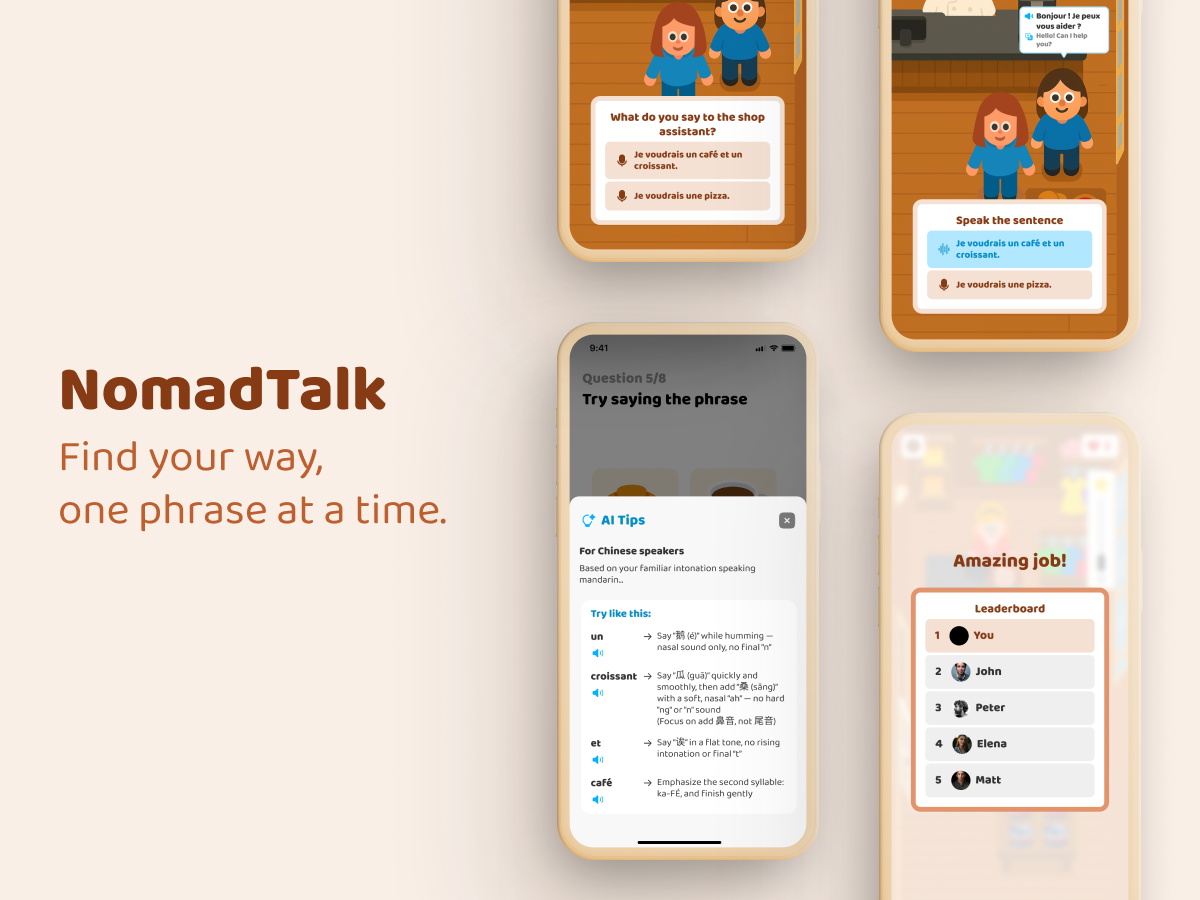
Learning new languages can be challenging, especially when it comes to retaining vocabulary and improving pronunciation. This project explores how artificial intelligence (AI) and gamification can enhance language learning through two prototypes: one text-based and one voice-enabled. The aim is to compare these approaches in terms of usability, user experience, and learning effectiveness, and to see how AI-driven feedback and gamified scenarios can make learning more engaging and motivating.
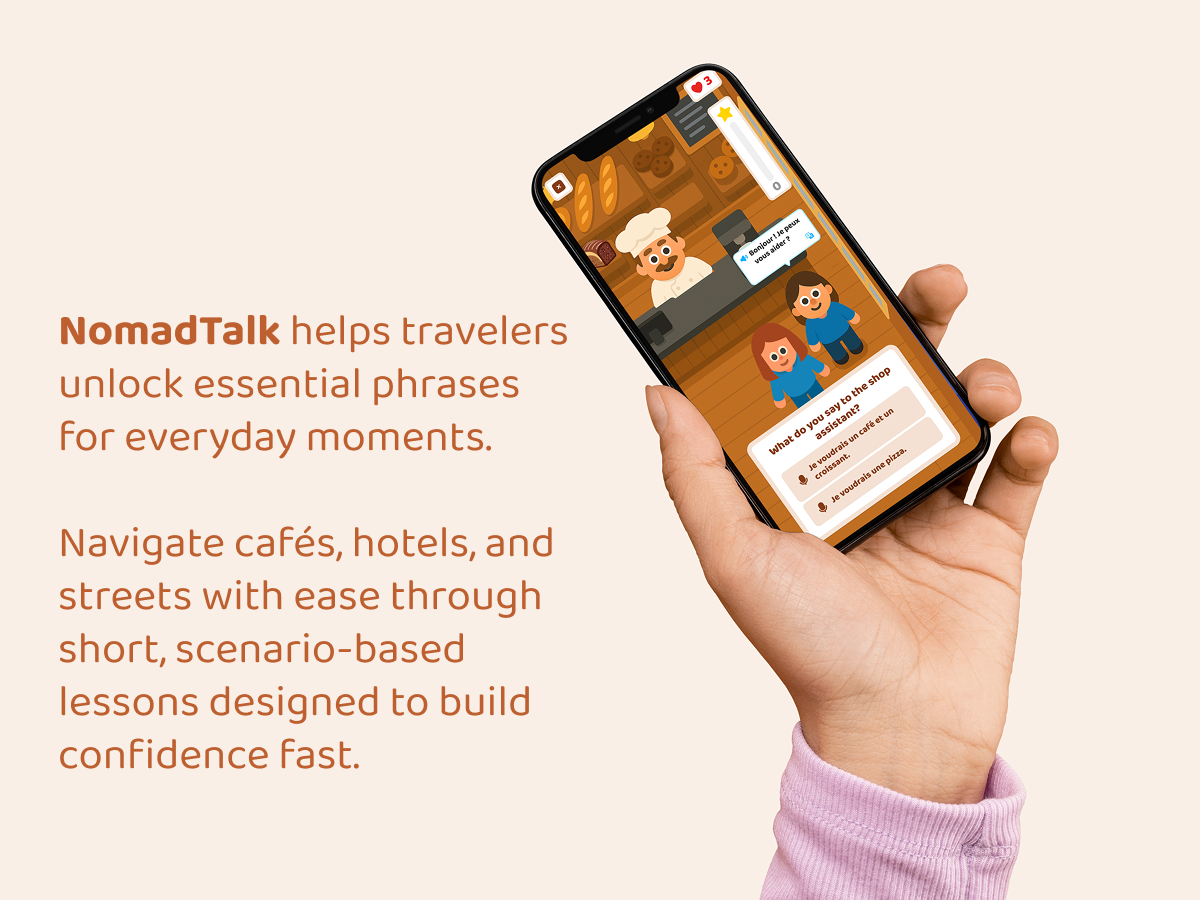
The prototypes focus on French basics from cultural sensitive perspective, tailored for Chinese, Indian, Korean, and Malaysian/Singaporean audiences. The idea was simple: imagine you’re traveling to France and need just enough words to order a croissant or buy clothes in a store.
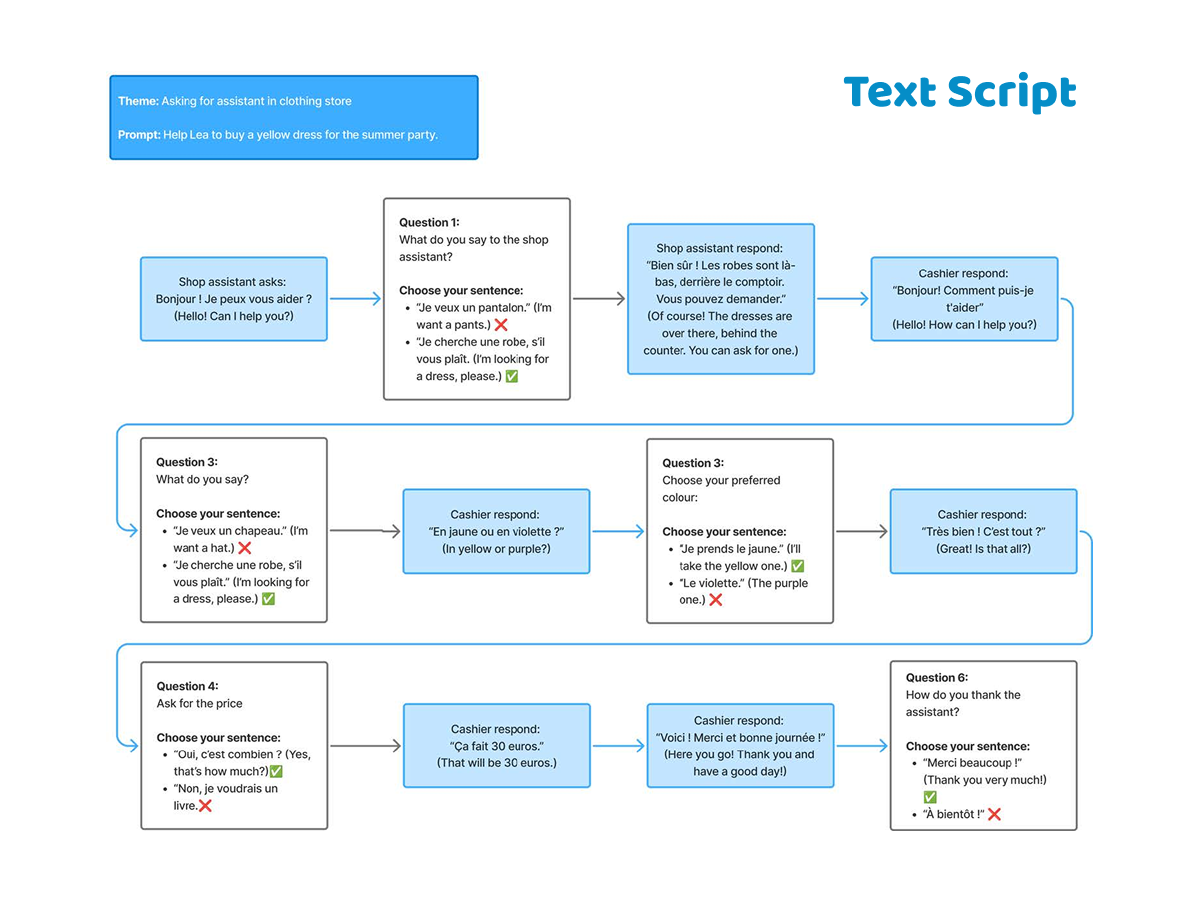
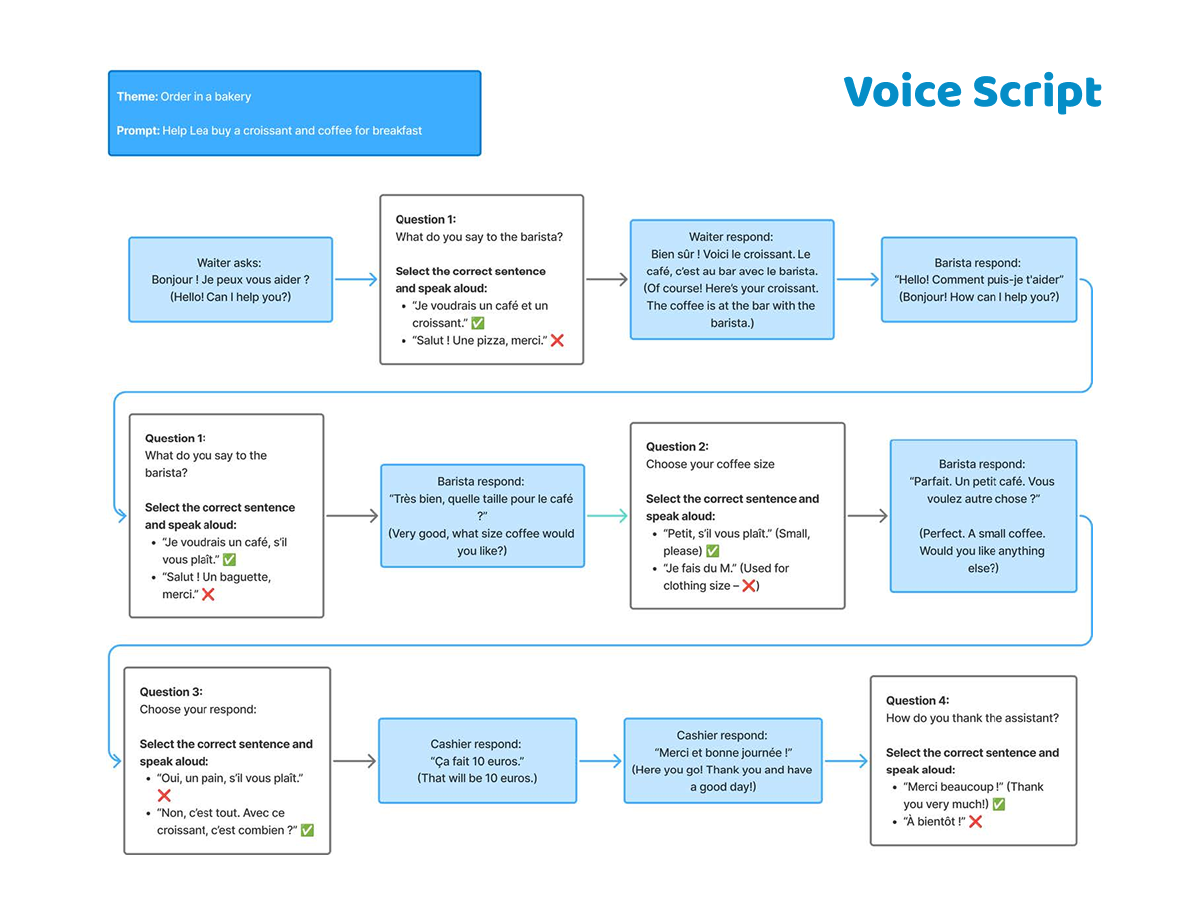
The prototypes are primarily designed using Figma. The illustrated images used are generated using ChatGPT and then adjusted using Adobe Illustrator to fit the prototypes’ requirements.
The low-fidelity prototype outlined the interface and navigation flow of the screens.
As the design progressed into mid-fidelity, the prototypes were evaluated using heuristics evaluation and cognitive walkthrough to spot any missing gaps for improvement.

In the final evaluation, three prototypes were created: Tutorial, Text-Based and Voice-Enabled.
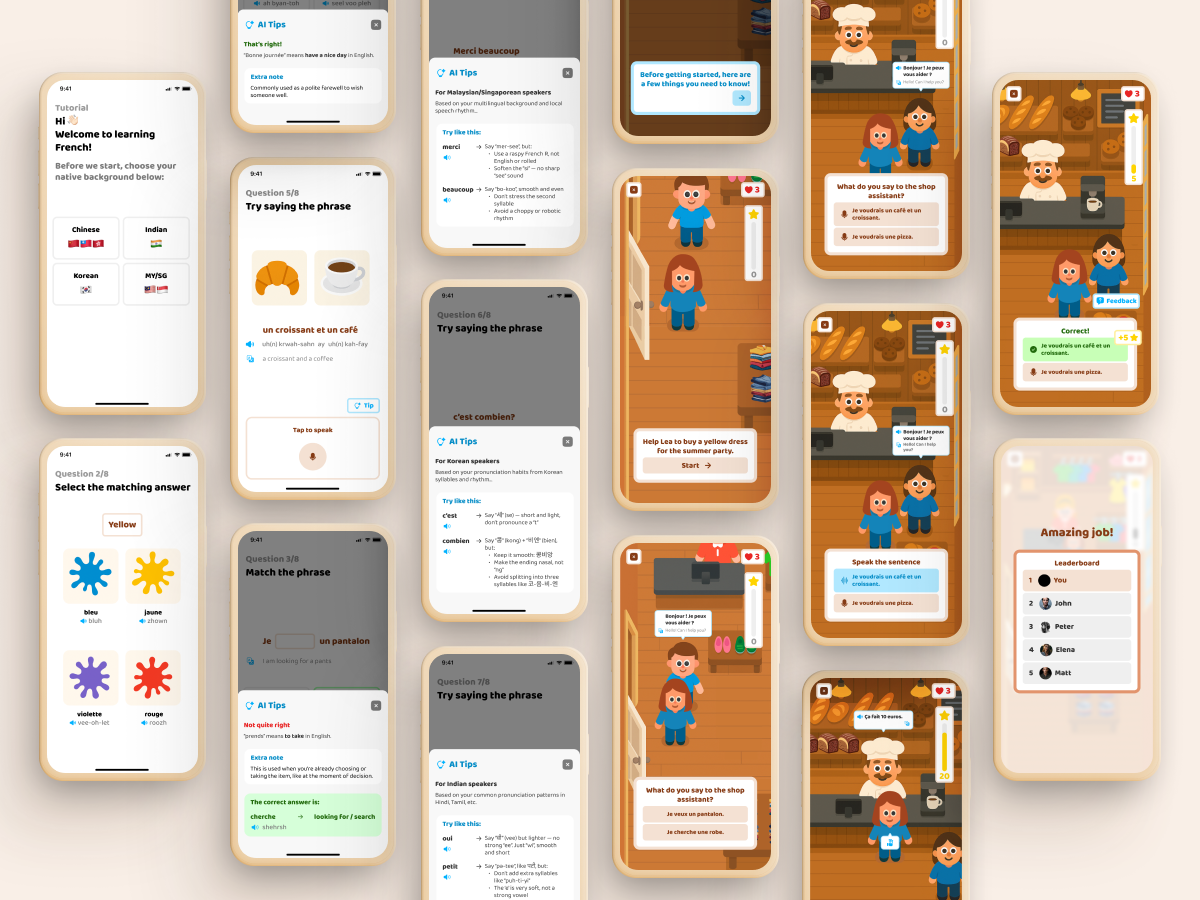
The research is a within-subject study with one factors in two levels (text vs. voice). Block randomisation is used to counterbalance the sequence of interacting the two comparing prototypes.
The study uses a mixed-method approach for assessment. Quantitative data was collected through UEQ and SUS questionnaires, and qualitative data from exit interviews and observation notes.

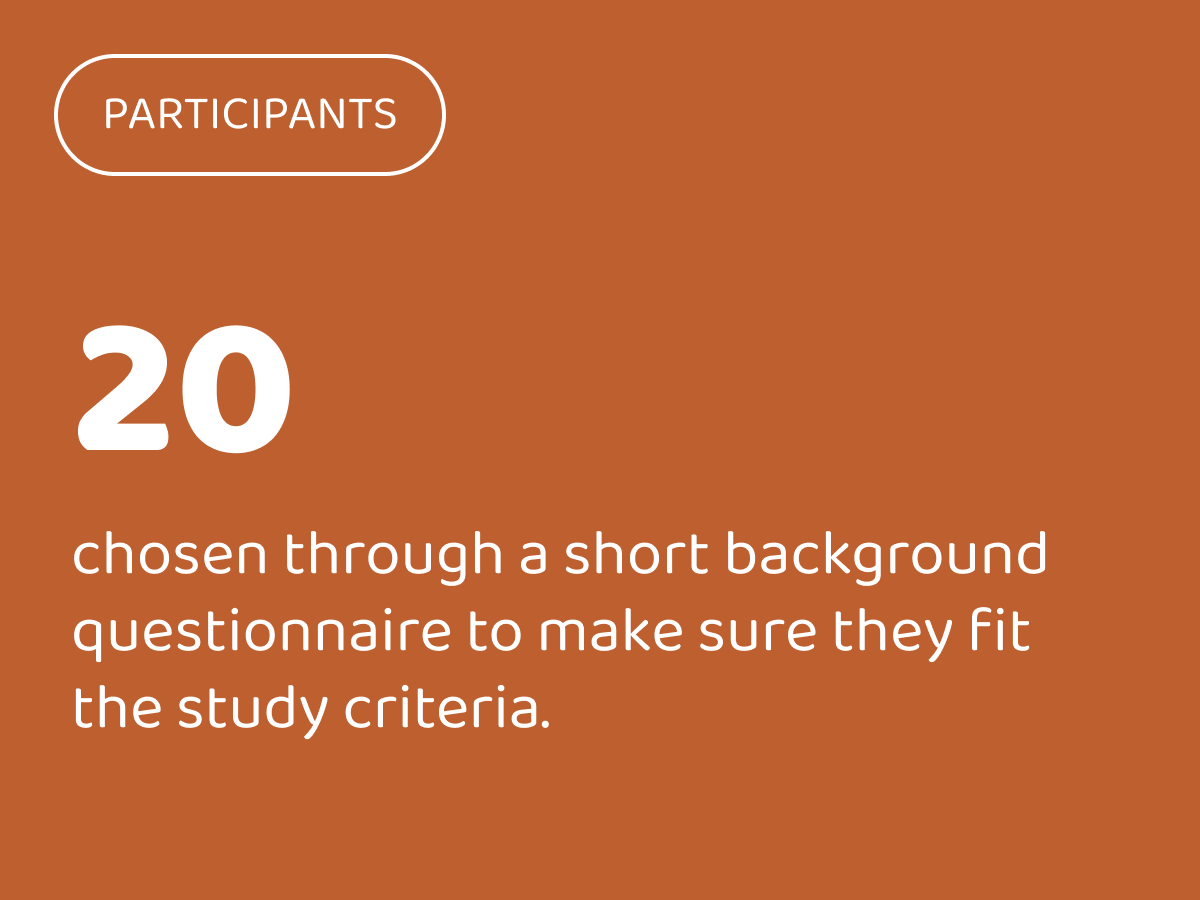
Data was analysed to understand if there are any statistical differences between the two modes of interaction.

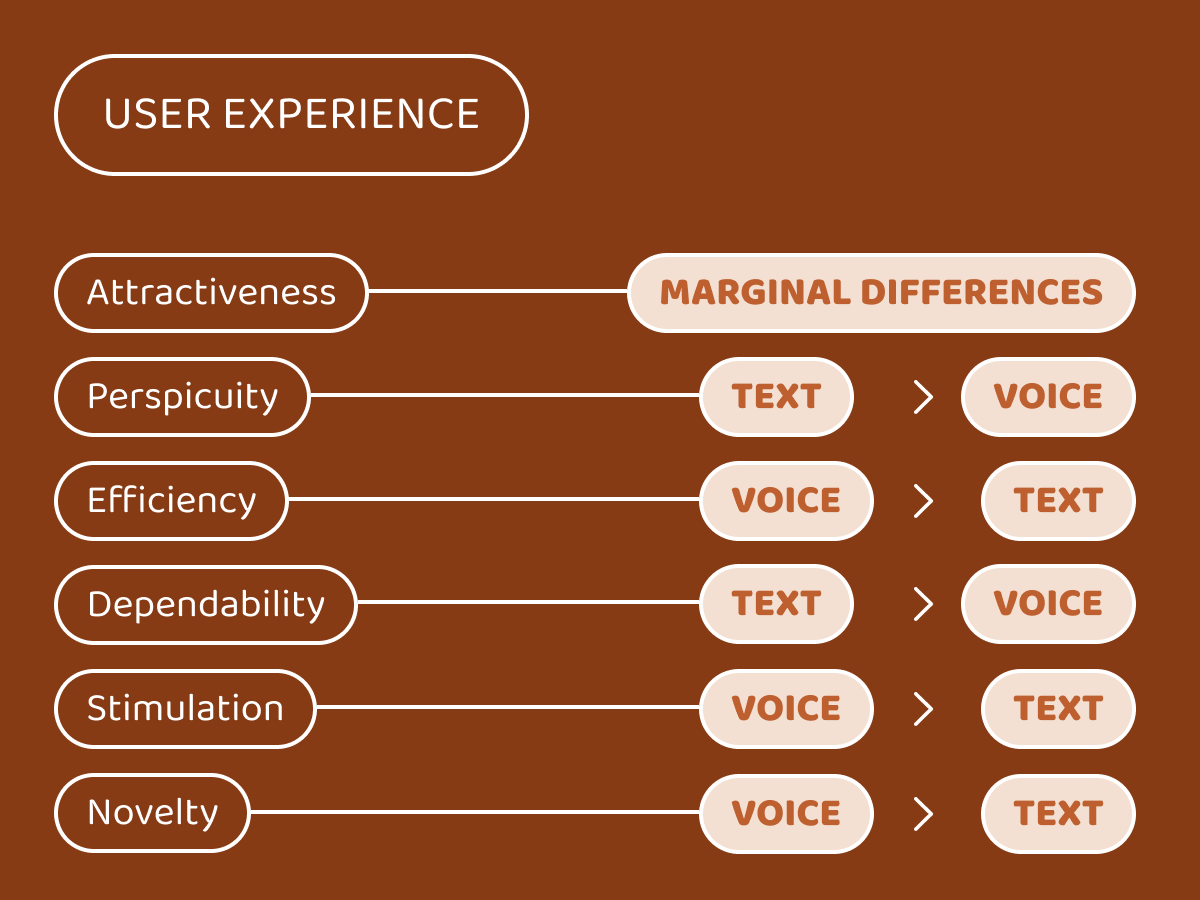
The results show that overall voice interaction is more favoured over text interaction with slight differences.
The findings indicated that text-based learning helped with reflection, accuracy, and reducing anxiety, while voice-enabled learning offered more immersion and pronunciation awareness. Together, they create a more complete learning experience.
When it came to gamification, learners loved the narrative scenarios most—they found them meaningful and motivating. Points and rewards felt secondary, showing that gamification works best when it taps into intrinsic motivation, not just external rewards.
Learners valued AI feedback for giving contextual explanation and pronunciation guidance. Familiar phonetic tones boosted confidence, while clear explanations, pronunciation support, and adaptive pacing proved key to keeping learning effective and stress-free.