I am a UX Design postgraduate focusing on immersive experiences, VR meditation, and women’s digital health. My project explores interactive VR meditation for PMS-related emotional regulation. I aim to design empathetic, impactful digital experiences by merging UX with emerging technologies.
Designing Women Specific VR Meditation: Enhancing Emotional Regulation in Women Using Physiological Feedback
Project Overview
This project investigates how interactive VR meditation can support women in managing emotional symptoms during the premenstrual syndrome (PMS) phase. Two prototypes—a passive and an interactive version—were designed and evaluated using physiological data, self-report measures, and user interviews to explore the emotional benefits of symbolic interaction in VR.
Aim
The primary aim of this study was to examine the efficacy of interactive virtual reality (VR)-based meditation experiences in mitigating psychological symptoms associated with premenstrual syndrome (PMS), particularly anxiety and negative emotions, and to compare them with passive VR meditation interventions.
Significance of the Problem
Premenstrual dysphoric disorder (PMDD) has been shown to have a significant impact on the quality of life, daily functioning and mental health of reproductive-age women(Halbreich et al., 2003). Whilst the efficacy of treatment modalities such as emotion-focused therapy in the alleviation of PMDD symptoms has been demonstrated, such interventions are predominantly clinical in nature (Dehnavi et al., 2024) and rarely incorporate immersive technologies. Concurrently, virtual reality (VR) emerges as a promising model for delivering accessible, self-guided emotional interventions, characterised by elevated user engagement and ecological validity (Somarathna et al., 2021). However, its application in women-centred, physiology-based intervention methods remains in its early stages of development.
Research Questions
Does an interactive VR meditation experience more effectively reduce emotional symptoms of premenstrual syndrome (PMS) compared to a passive VR meditation experience?
Prototype Development
Low-fi Test
Concept
Hi-fi Page
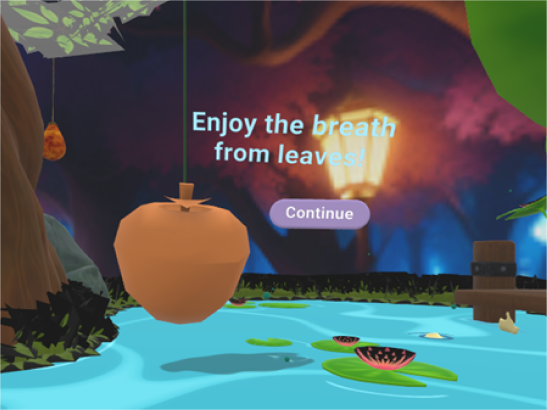
For the design of the prototype, iterative design was carried out from low fidelity to high fidelity to ensure that the usability of the prototype would not affect testing. Low-fidelity prototypes help to quickly validate concepts, medium-fidelity prototypes combine user feedback to optimise functionality, and high-fidelity prototypes deliver a complete immersive and interactive experience on Meta Quest 3s devices.
User Flow
User Test
The study employed a standardised three-stage assessment process:
Pre-testing phase Completion of baseline information collection (including demographic information and stress level assessment) Record participant’s current menstrual cycle phase Baseline assessment using the STAI Anxiety Scale and PANAS Mood Scale Collection of pre-meditation HRV physiological index data
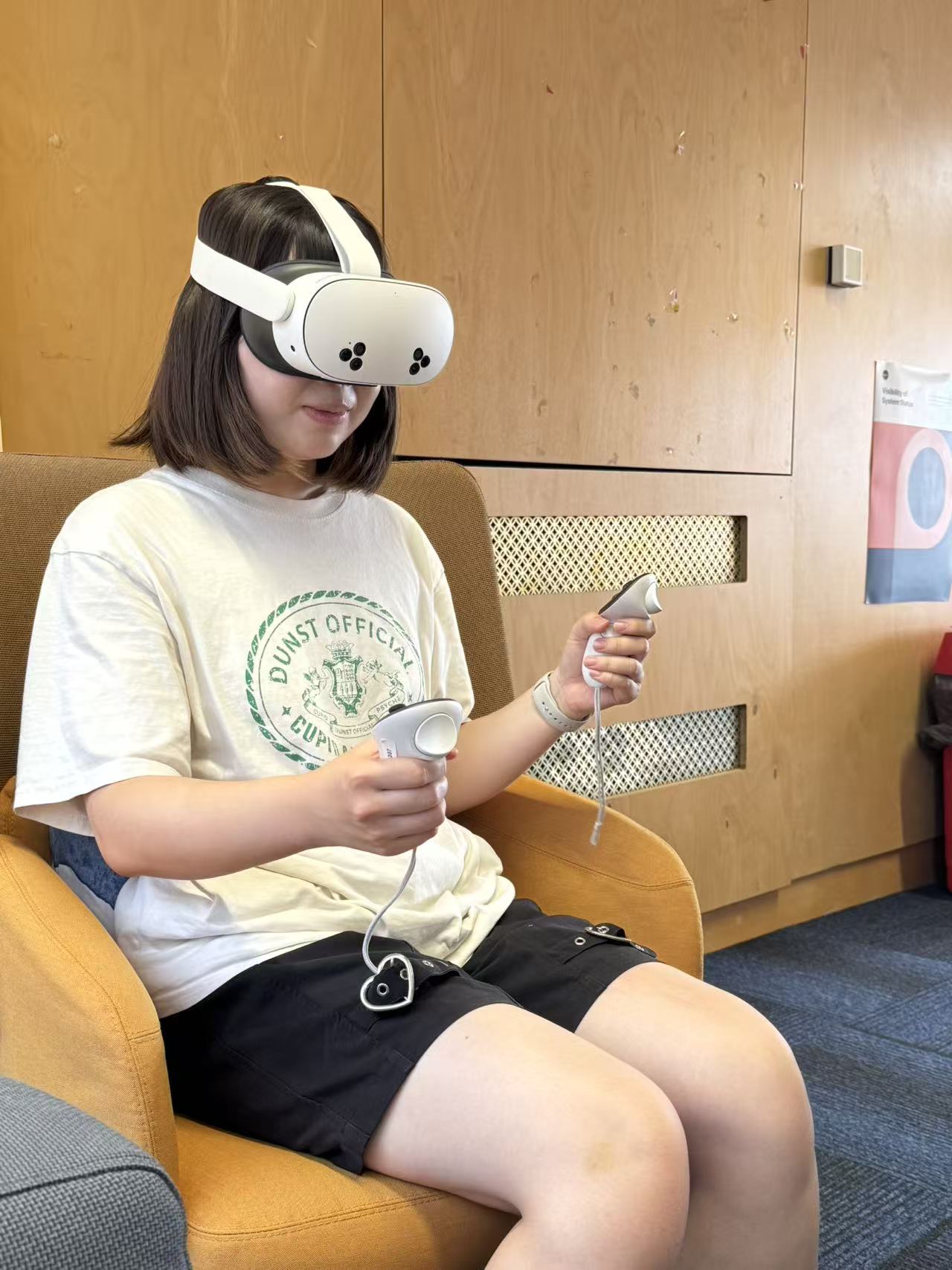
Testing phase Wear the VR device in a quiet experimental environment for the specified prototype experience Monitoring and recording of HRV physiological indexes throughout the whole process
Post-testing phase Repeat STAI and PANAS scale assessments Collect post-meditation HRV physiological data Conduct exit interviews to collect subjective feedback from subjects on their VR experience systematically
Dissussion
This study examined whether interactive VR meditation is more effective than passive VR meditation in relieving PMS in women. A between-subjects experiment with 20 participants was conducted using a VR meditation prototype in a controlled environment. Results indicated that the interactive experience had clear advantages.
First, both groups showed increased HRV after VR meditation, suggesting reduced stress levels, but the interactive group achieved higher, statistically significant improvements and reported greater engagement. Second, although anxiety reduction was not statistically significant (p=0.109), the interactive group showed lower mean scores, supporting the idea that interactivity enhances mindfulness effectiveness. Third, no significant change was found in negative affect (p=0.081), though qualitative feedback suggested relaxation and highlighted the need for longer interventions. Finally, qualitative data showed that the interactive group experienced less distraction and stronger immersion, aligning with prior research that links interactivity to emotional regulation and a sense of control.
Overall, interactive VR meditation appears more effective in improving HRV, lowering stress, and enhancing user engagement, though larger samples and longer interventions are needed.