dilara-ozcan profile photo

I am a designer based in the UK, passionate about user-centred design and holistic thinking. My expertise lies in creating new user research methods tailored to problems and using a zoom-in/zoom-out approach to uncover existing opportunities within the bigger picture.

Still In: Turning Injury Into Connection.

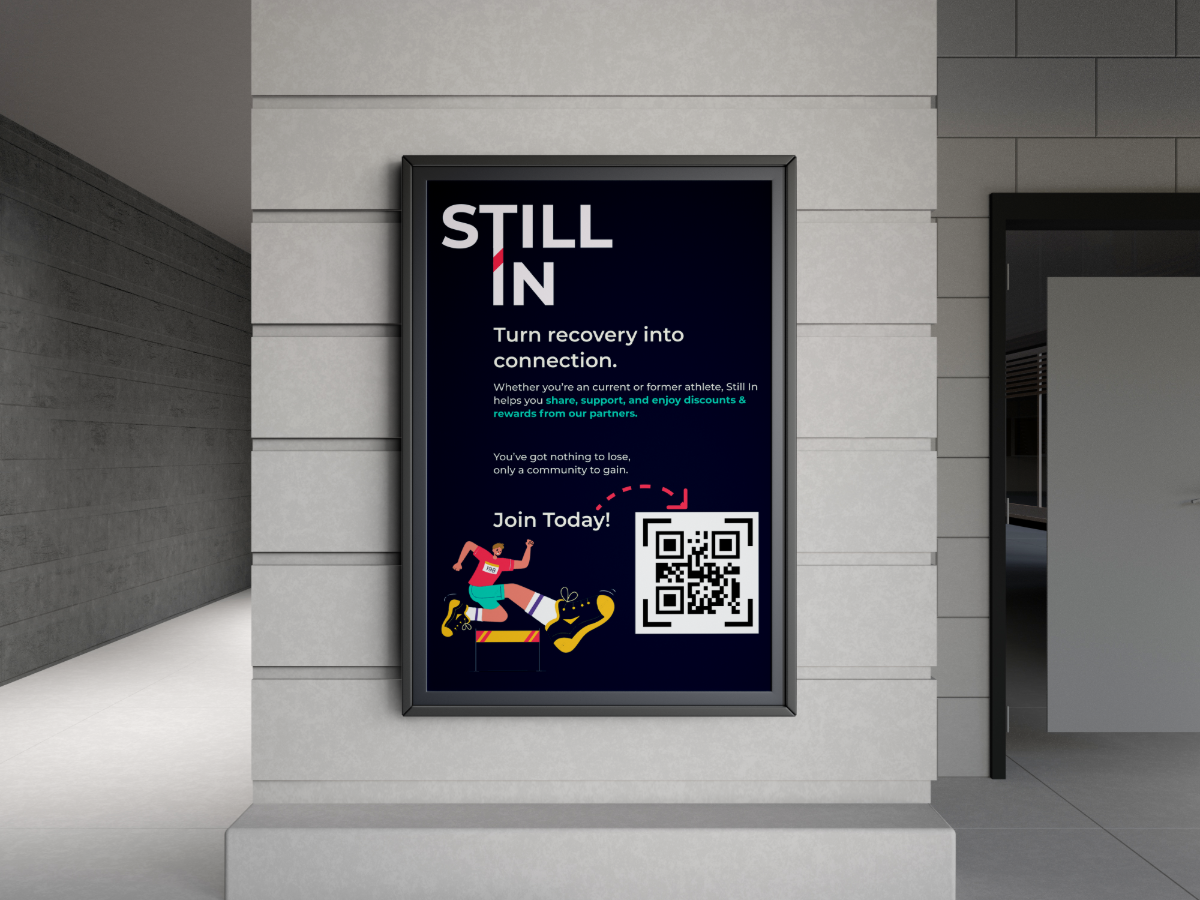
Still In is a community interest company that supports injured student-athletes by connecting them with a supportive community. It brings together the individual athletes who have recovered from injuries with those who are currently going through the same experience.

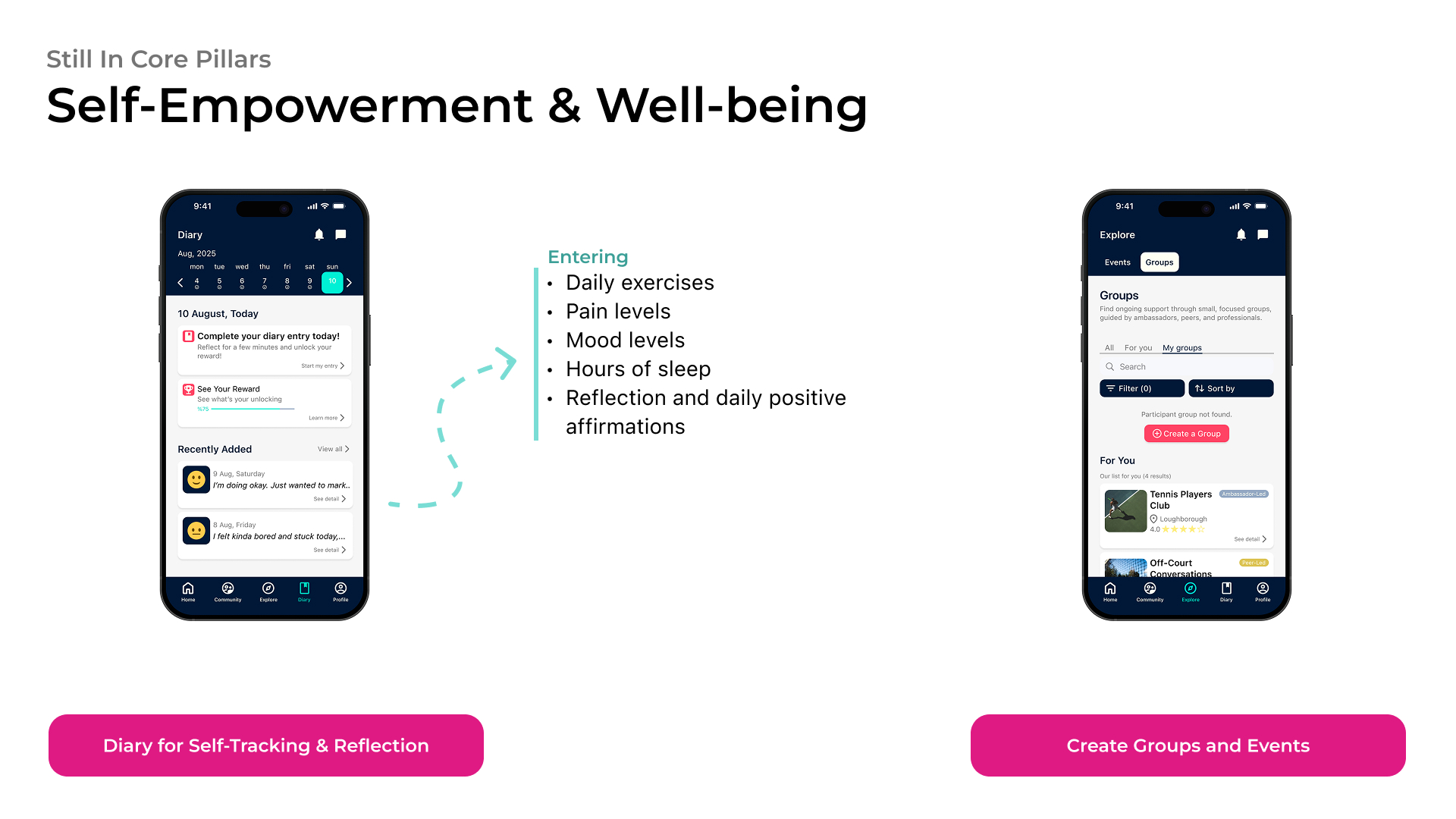
Still In Core Pillars

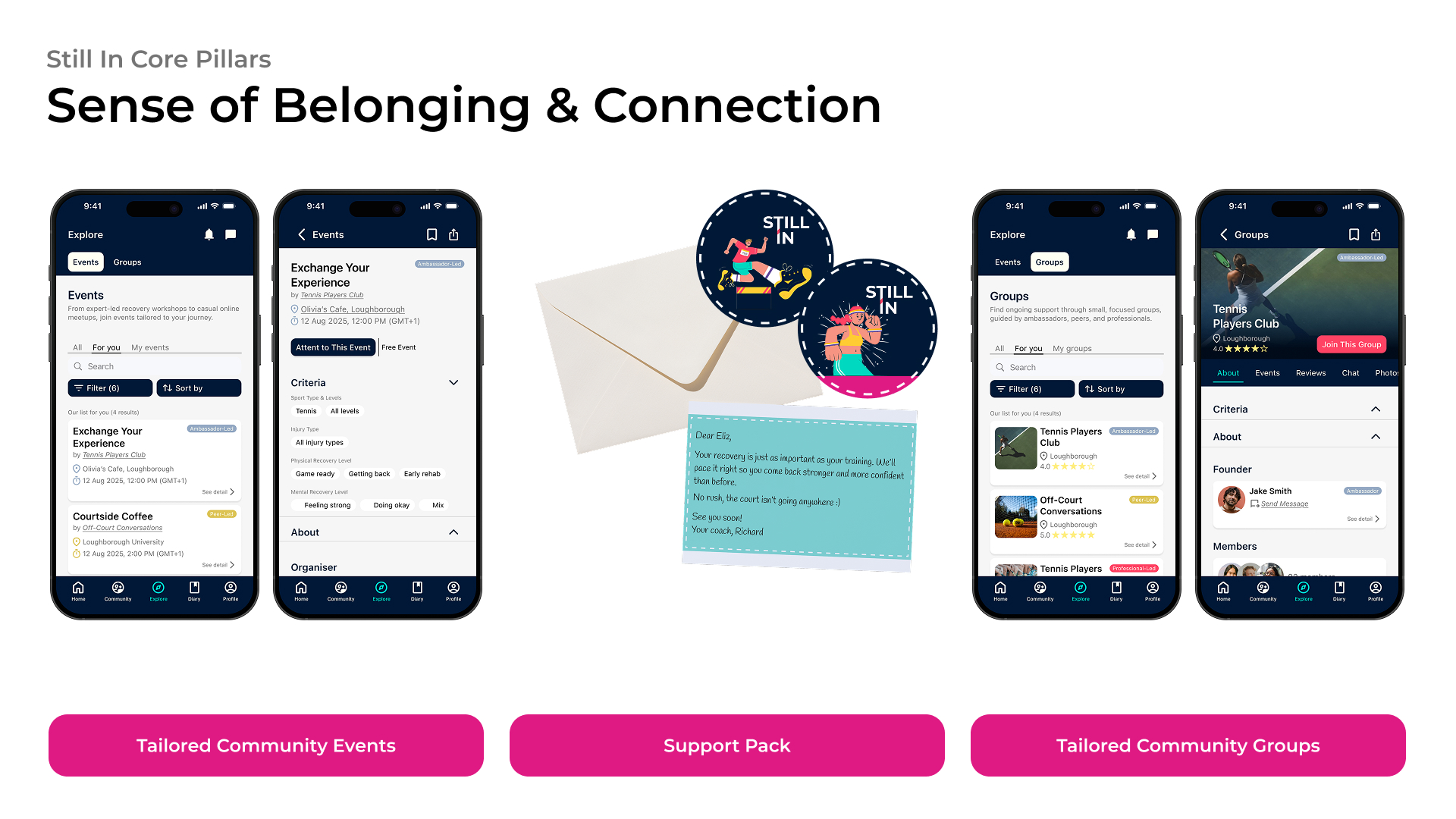
Connection with Experienced Peers Is Key

  • Join groups and events tailored to your recovery stage.
  • Create your own group based on your own interests and criteria.
  • Host online or in-person events to connect with people who share your experiences.
  • Receive a recovery support pack with a personal letter from your coach or ambassador.

Tailored Peer and Professional Support

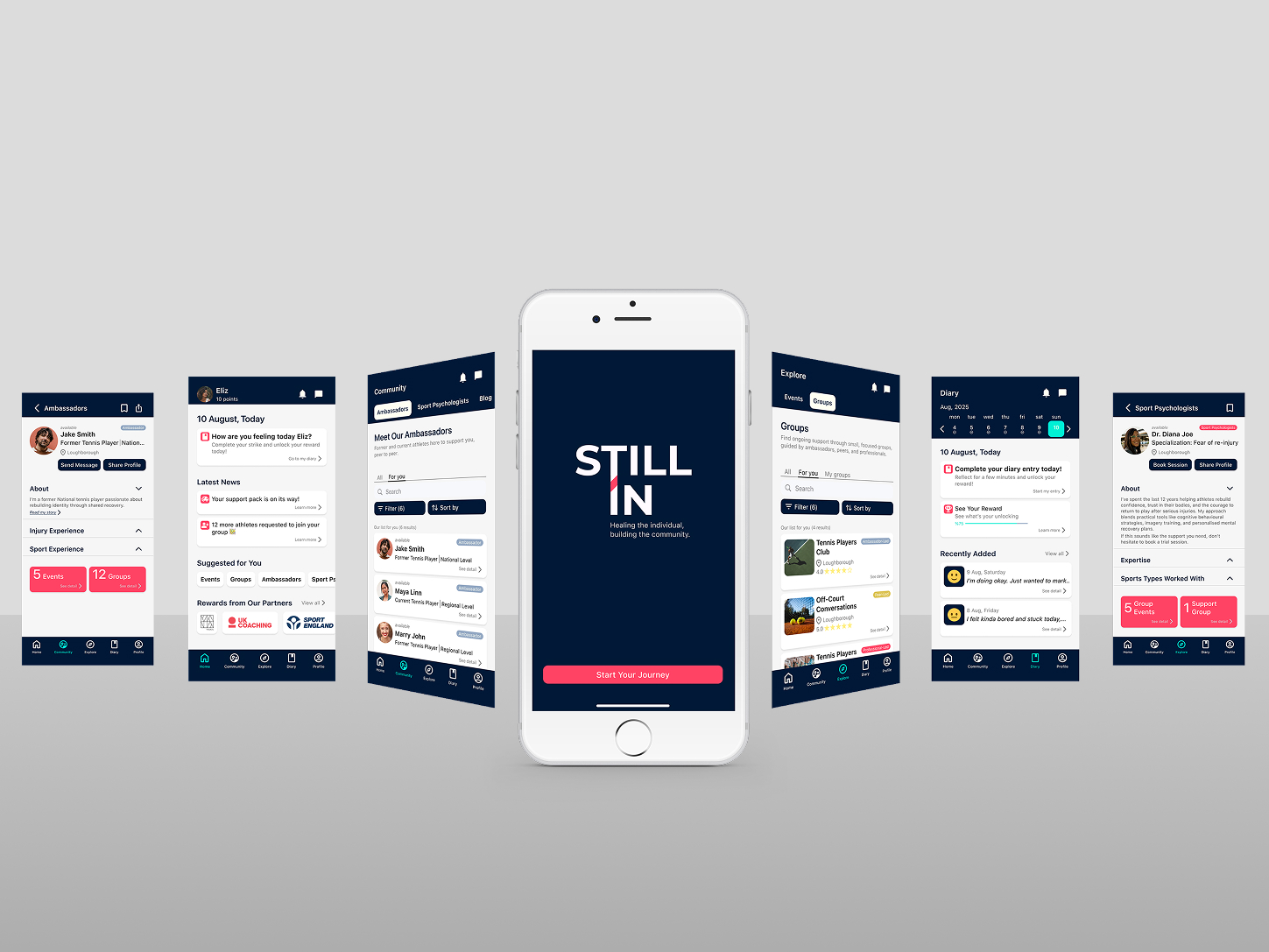
  • Reach out to ambassadors who have experienced similar injuries.
  • Attend the ambassadors’ events to connect in person with like-minded people.
  • Book sessions with sports psychologists tailored to your injury and sport type.

Track, Reflect, and Unlock Your Support Pack

  • Track your recovery journey and reflect on your progress.
  • Share your diary with peers and your coach for feedback.
  • Earn rewards from partners for each weekly streak.

How Does the Service Work?

The Business Model

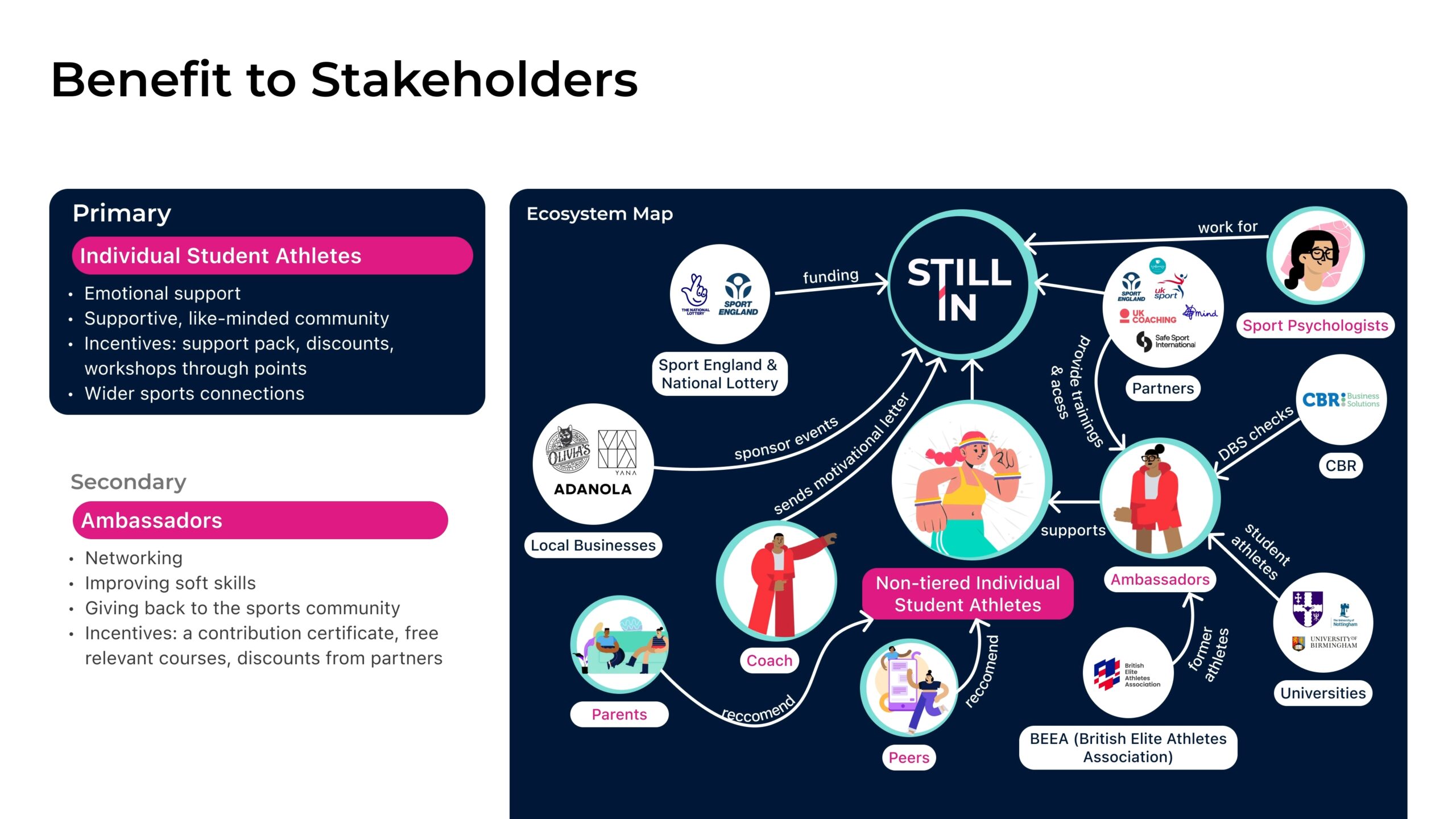
The Ecosystem Map

The Outcomes & Future Steps

As a service designer, being able to see the bigger picture, identify possible collaborations, and utilise what was already there instead of building everything from scratch helped me think more deeply about practicality, feasibility, and beyond.

The Problem: Injury Recovery Without Support, the Reality for UK Student Athletes

In the UK, individual student athletes who aren’t in top-tier “world-class” programs face injury recovery with no structured emotional support, which directly affects their well-being. Without this support, many lose confidence and even stop competing.

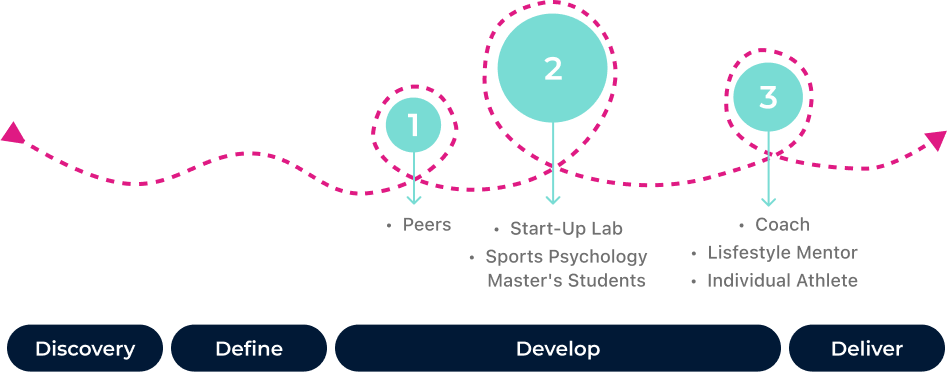
My Approach: I Iterated 3 Times Based on Testing with the Key Stakeholders

I followed the Double Diamond methodology combined with an iterative approach. I iterated 3 times during the ‘Develop’ phase based on testing with the key stakeholders and my peers.

Discovery & Define

User Research

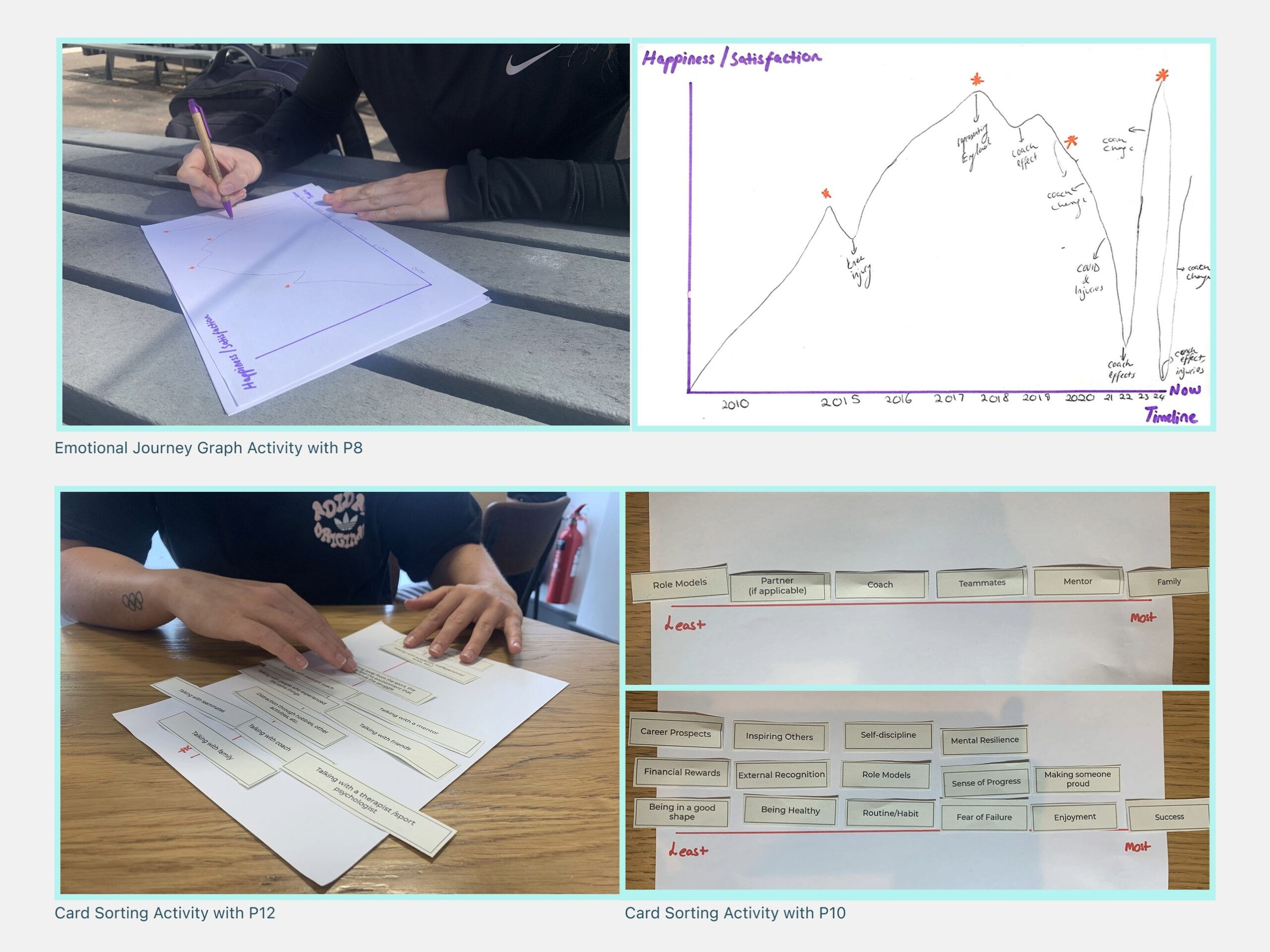
I conducted semi-structured interviews with athletes, coaches, and support staff at Loughborough University using various methods, such as card sorting and an emotional journey graph, to identify pain points in the athletes’ sport journey. Experimenting with new methods showed me that as a designer, I am not limited to conventional approaches; on the contrary, I can create tools tailored to the questions you want to answer.

Analysis

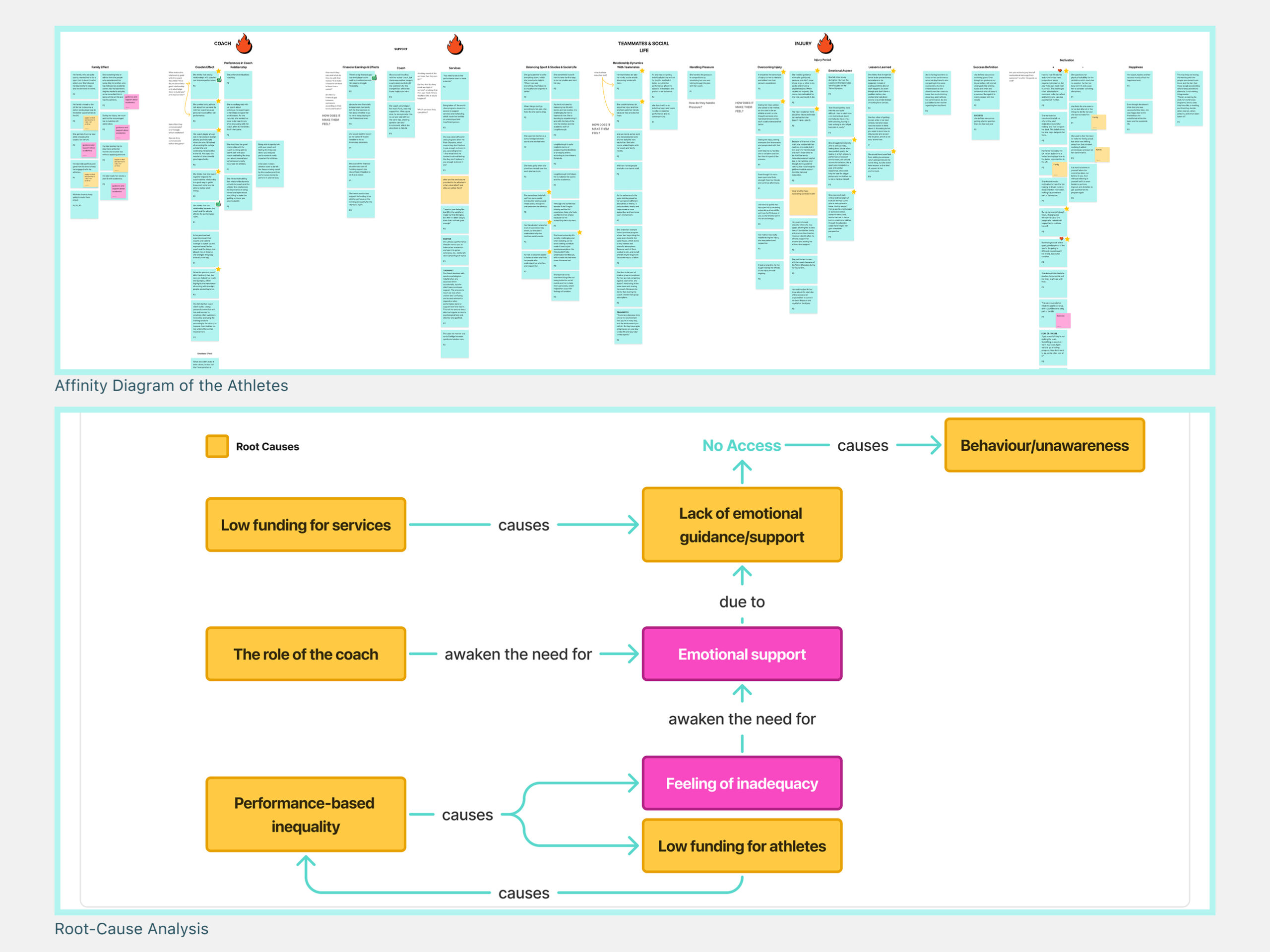
During the analysis, the emotional and structural gaps in individual sports revealed through patterns led me to focus on individual athletes. At the end, I created three separate affinity diagrams for athletes, coaches, and mentors to identify patterns for each participant type. And continue with extracting insights.

Before prioritising the insights, I used the laddering technique to uncover the root causes behind each insight, which revealed a link between them and led me to map out how they relate to one another. Then I prioritised these root causes using an Emotional Impact × Design Opportunity matrix.

Key Insights

I divided the insights into two: problem-oriented and solution-oriented ones. The solution-oriented insights are the ones that I wanted to include in my design solution.

Develop & Deliver

Idea Development

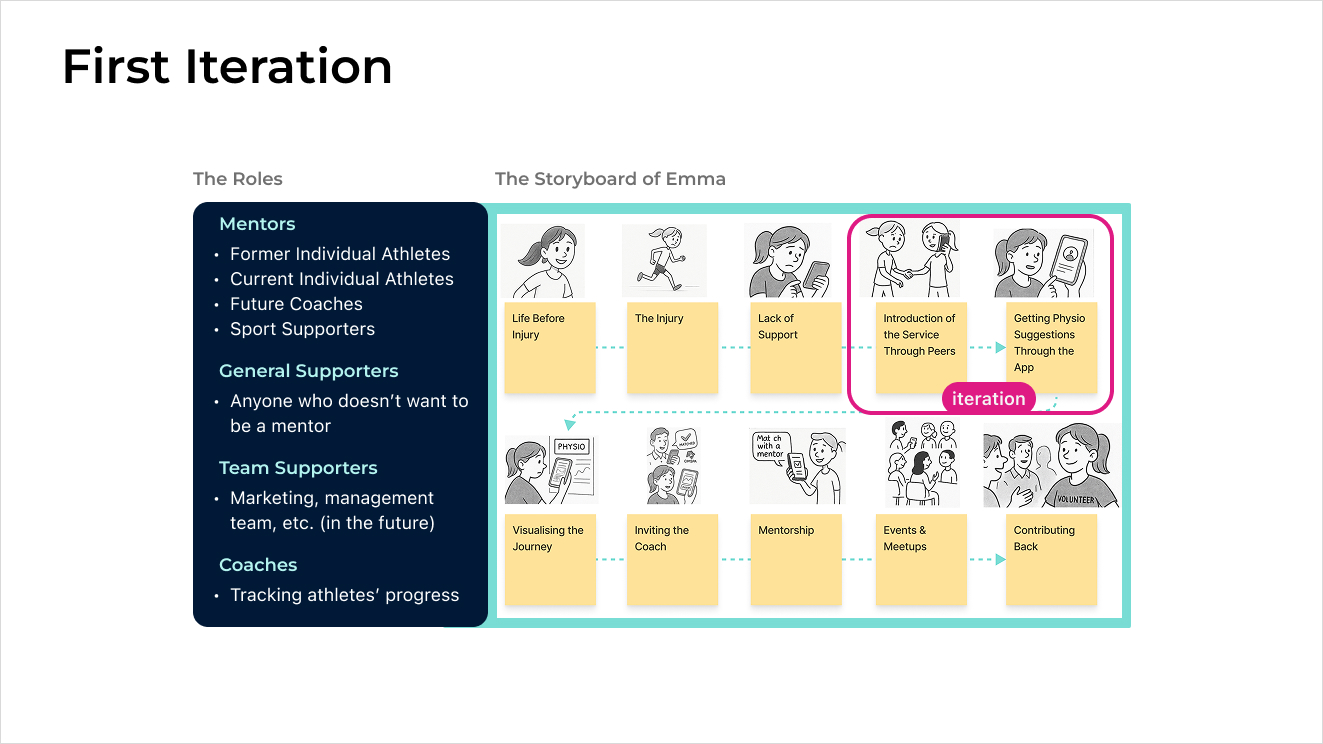
During the ideation process, I mostly used the Fantastic 5 method as it enabled me to come up with more creative ideas. I used storyboards to communicate ideas and began defining roles and structures. This then guides me to find ways to create value for these roles through the value proposition canvas. And I continue to explore opportunities through the ecosystem map.

Iterations-Testing with Key Stakeholders

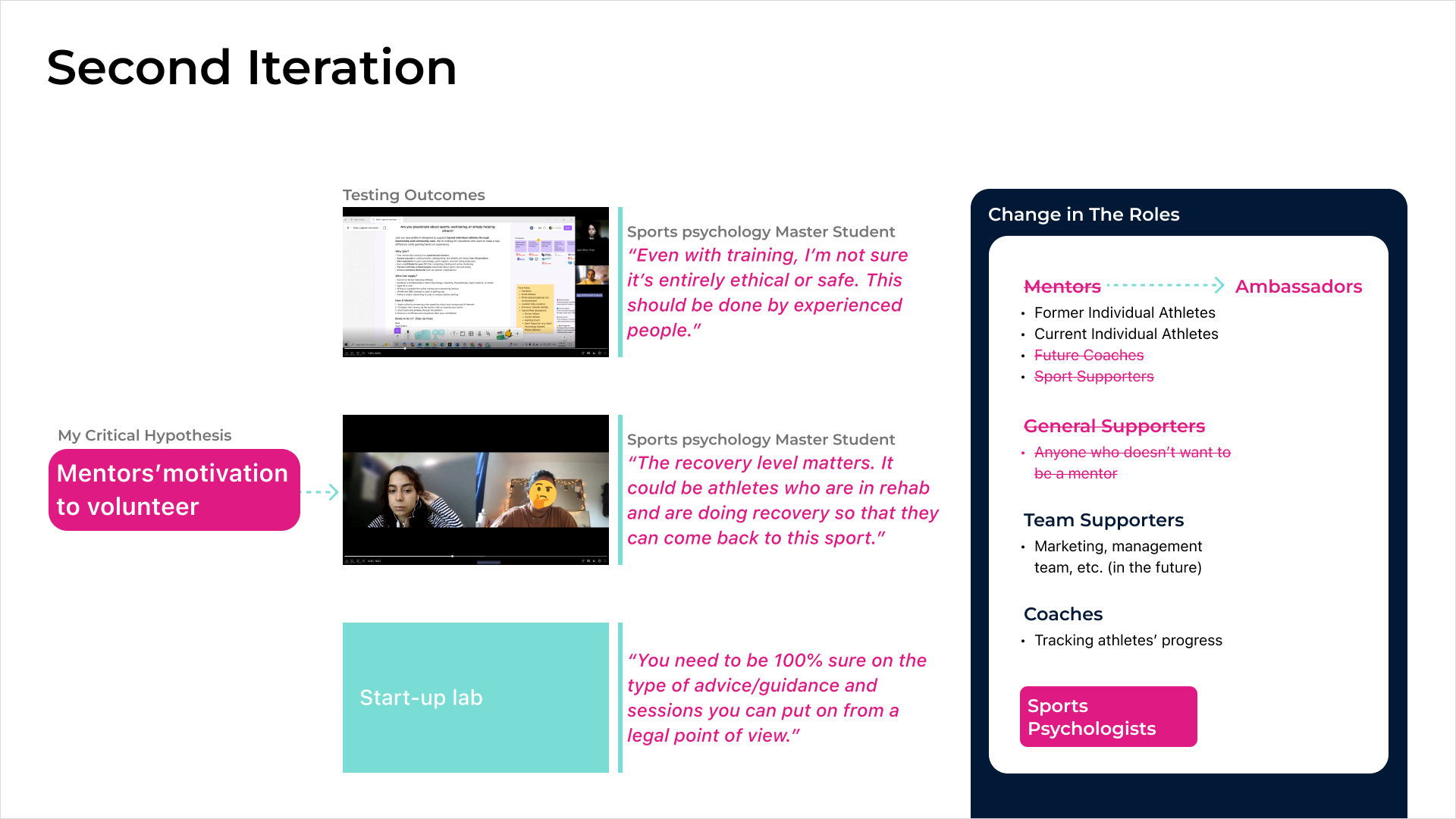
The biggest iteration came when I tested my concept with the sport psychology students and the startup lab. It was stated that one-on-one mentorship with injured athletes has a big ethical risk, and providing training to the mentors won’t be enough, which led me to revise the roles.

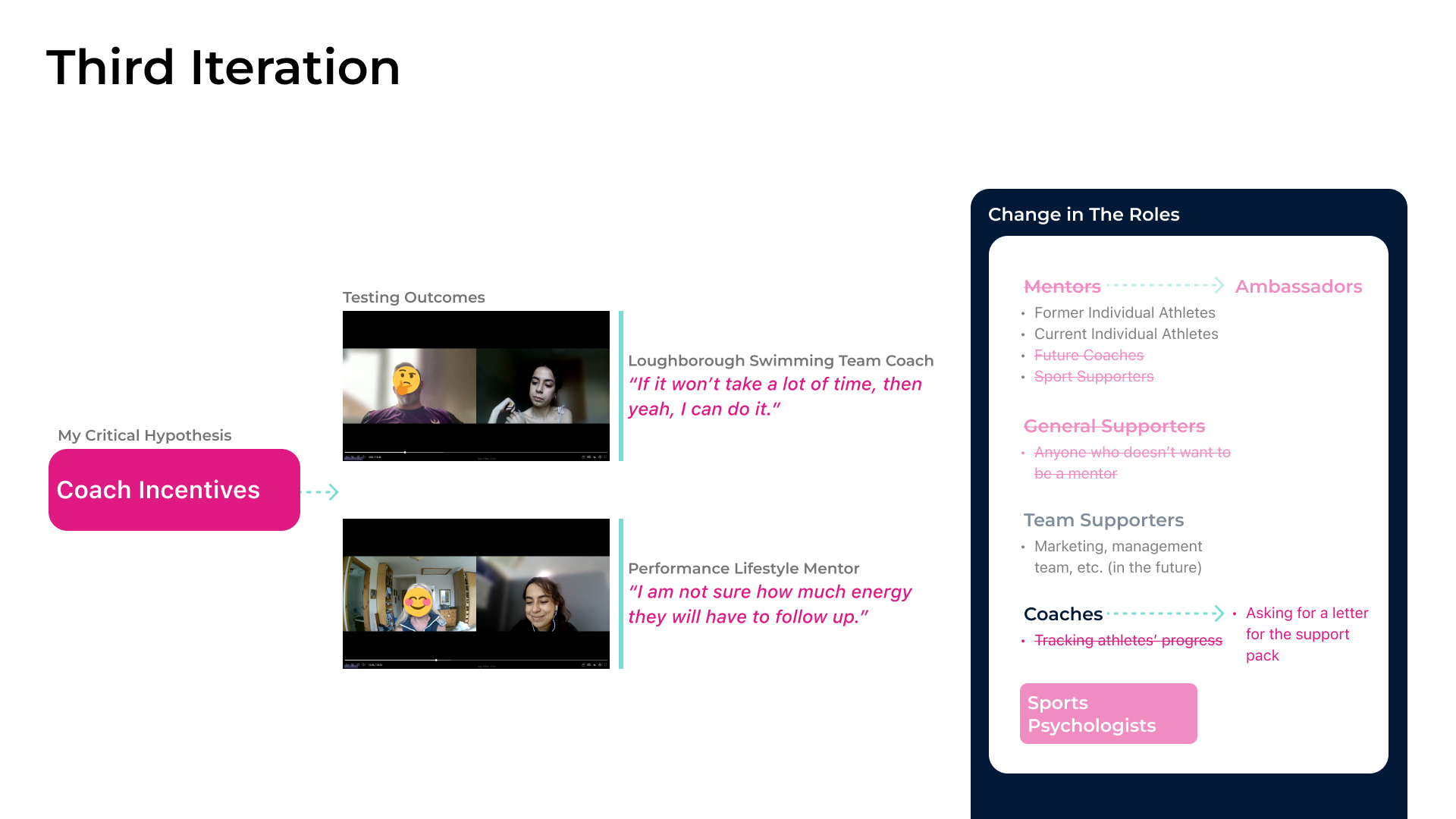
My third iteration comes from testing with coaches. I tested it with one current and one former coach, and it was stated that it might not be feasible for them to track continuously, considering their busy lifestyle. So I decided to just reach out to them for the letters in the support pack.

These iterations showed me the importance of testing with real stakeholders to ensure the solution’s feasibility, and gave me confidence in handling iterations under time pressure.