

I have an interdisciplinary background in user experience design and product design, with solid experience across the full product development process, from needs discovery and user analysis to functional flow design and prototype testing.
I have an interdisciplinary background in user experience design and product design, with solid experience across the full product development process, from needs discovery and user analysis to functional flow design and prototype testing.
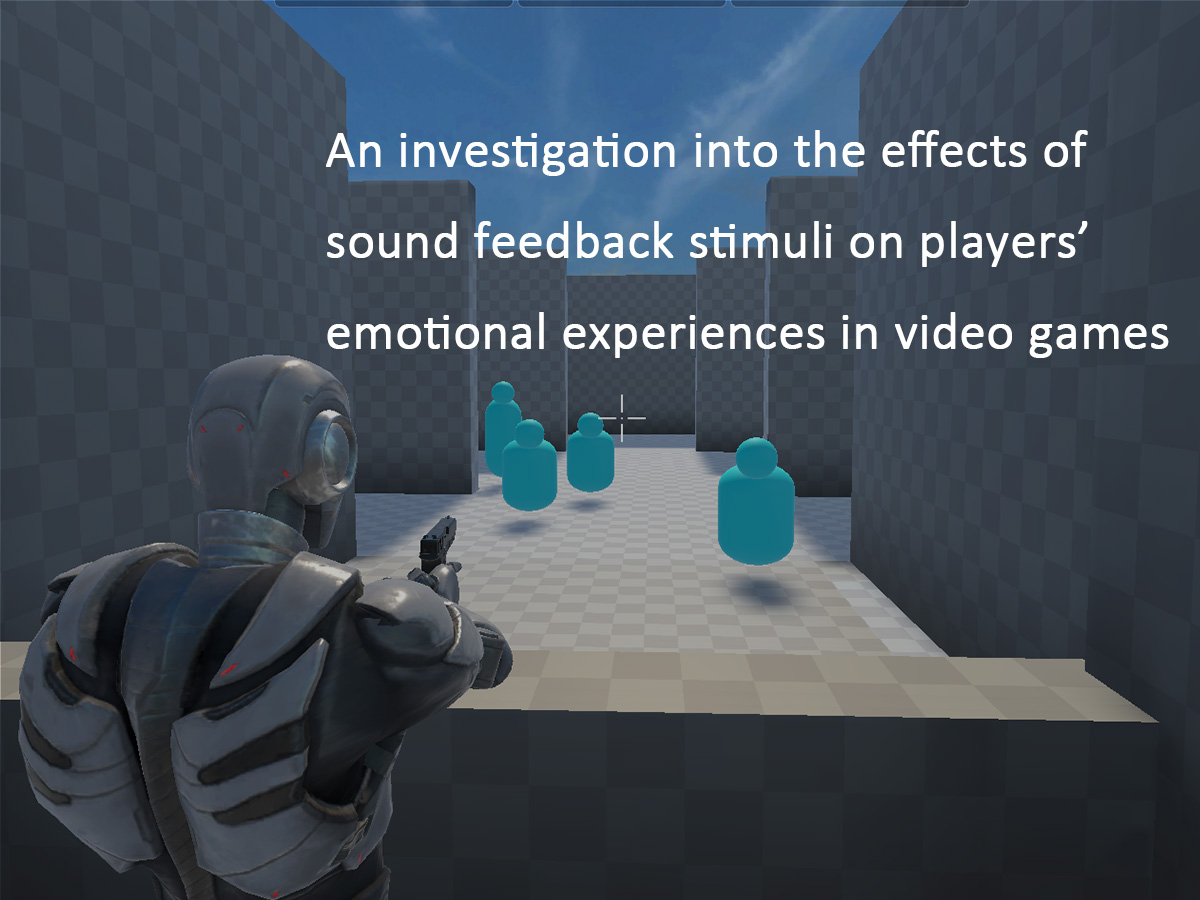
This study examines how killing sounds with different arousal levels influence players’ emotional responses in FPS games. Five sound prototypes were embedded into the Counter-Strike 2 (CS2) game environment and tested using a within-subjects design. Ten participants completed tasks, responded to the PANAS scale, wore heart-rate monitors, and participated in interviews.
Results showed that sound arousal significantly affected positive affect (p < .05), with the progressive high-arousal prototype (E) yielding the strongest response, and the unpleasant low-arousal sound (C) the weakest. Effect size (r = 0.854) indicated strong practical significance. Although heart rate differences were not statistically significant, trends aligned with affect scores. Interviews confirmed that progressive sounds increased motivation, while unpleasant sounds led to emotional disengagement.
These findings suggest that killing sound design plays a key role in shaping emotional feedback and player engagement.
The design of prototypes in this study followed a two-stage process, aiming to develop killing sound effects with distinct levels of arousal.

In the initial screening stage, six short (1–2 seconds) audio clips were selected from a range of popular and classic FPS games.
To assess the emotional properties of these clips prior to prototype development, the study adopted Russell’s Circumplex Model of Affect (1998) to identify differences in audio.
These clips were used to construct the final five prototypes:
This study used a kill sound replacement system based on CS2, which used a dedicated plugin to embed the prototype sounds into the game environment without altering other aspects of the gameplay.
This study examined the emotional effects of killing sound effects at different arousal levels in FPS games, focusing on their impact on positive affect, negative affect, and physiological arousal. Using a mixed-methods approach, it combined PANAS scale ratings, heart rate data, and thematic analysis of interview responses to answer the core research question.
Quantitative analysis showed that the high-arousal, progressive sound (Prototype E) significantly enhanced players’ positive emotional experiences. Interview responses confirmed this, revealing that such sounds improved motivation and immersion. While negative affect scores did not differ significantly across conditions, some participants expressed strong aversion to specific sounds (e.g. Prototype C), indicating types of negative emotion not captured by the PANAS scale.
Although heart rate results were not statistically significant, they were generally consistent with subjective reports. Taken together, the findings validate the role of killing sound effects as emotional feedback mechanisms and show their potential to influence player engagement and emotional investment.