


I excel in furniture and UX design. I'm good at using empathy to understand users' pain points and needs and enjoy user research, especially conflicting views, this reveals more clues, fueling my love for user research.
I excel in furniture and UX design. I'm good at using empathy to understand users' pain points and needs and enjoy user research, especially conflicting views, this reveals more clues, fueling my love for user research.

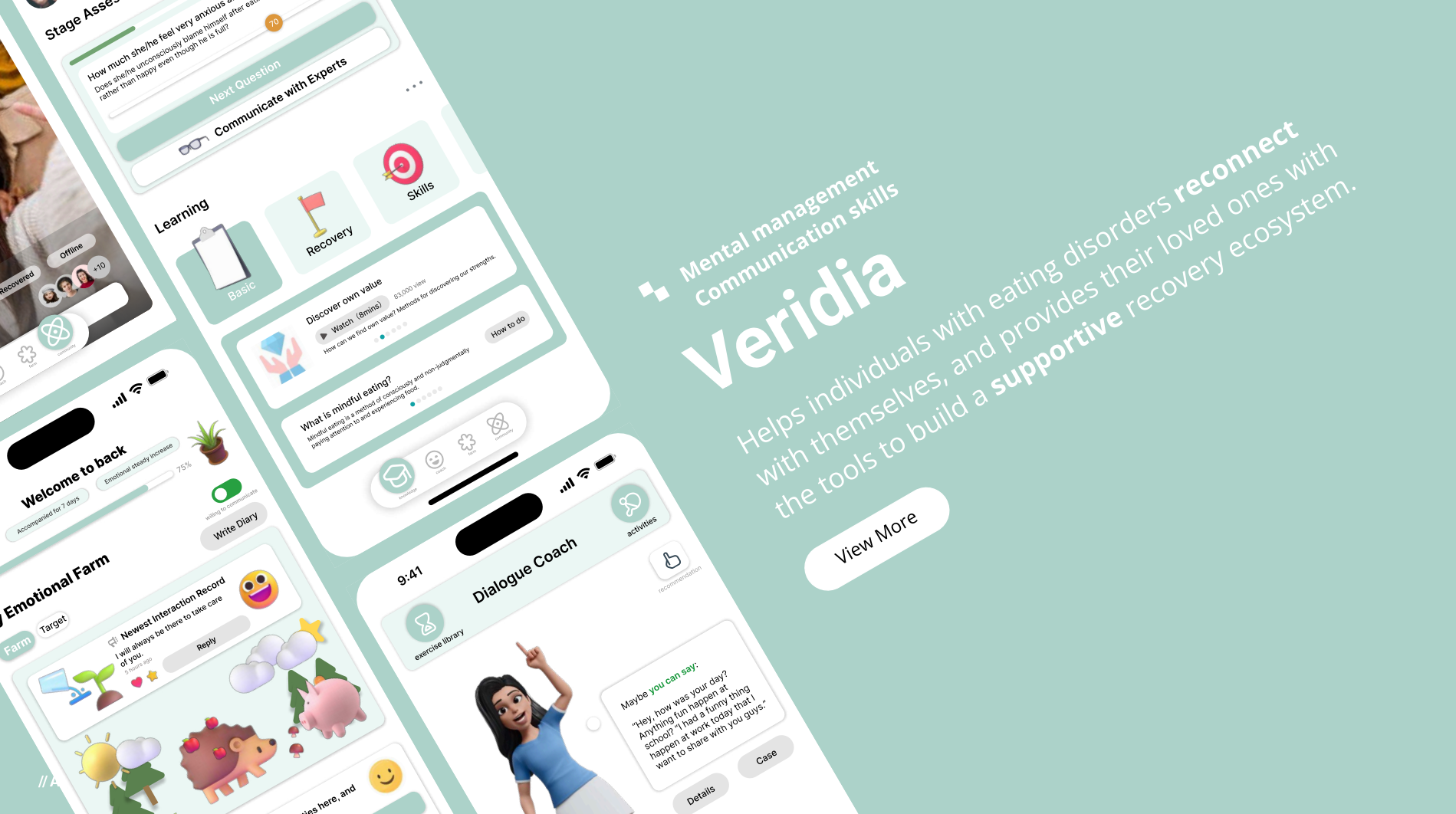
Fat shaming often leads to eating disorders, a problem particularly prevalent among adolescent females. This harm isn’t limited to those with the disorder; their family and friends also feel helpless, anxious, and overwhelmed.
To help individuals with eating disorders regulate their emotions and feel cared for, and to help their loved ones develop empathy and communication skills, “Veridia” created, the target users are those with eating disorders and their support network.
Veridia uses a “emotional farm” to help users visualize and understand the inner world of someone with an eating disorder. By interacting with this farm, family and friends can express warmth and encouragement, working together toward a shared health goal.
The AI dialogue coach and “mood theater” help both parties express their struggles and conflicts while receiving personalized advice. The “rehabilitation knowledge hub” provides professional knowledge, empowering users to face their situation with confidence. The online community ensures users don’t feel alone on their healing journey, offering a sense of hope and solidarity.
The UI is divided into two interfaces: one for individuals with eating disorders and one for their family and friends.
Users can use the app alone or link their accounts with others.
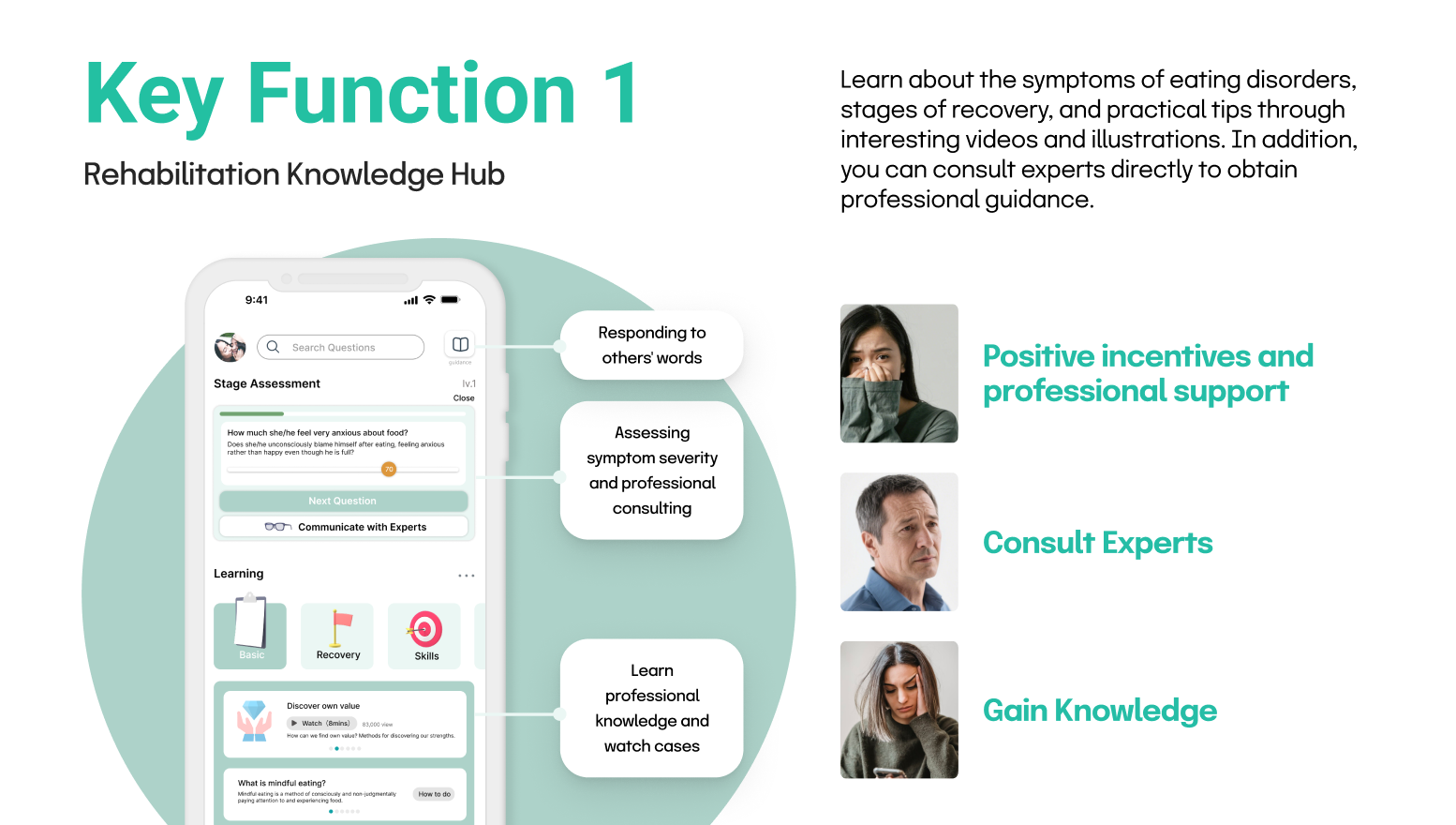
All types of users should first assess their current symptoms or situation. Upon their first use, they are required to learn relevant background information.

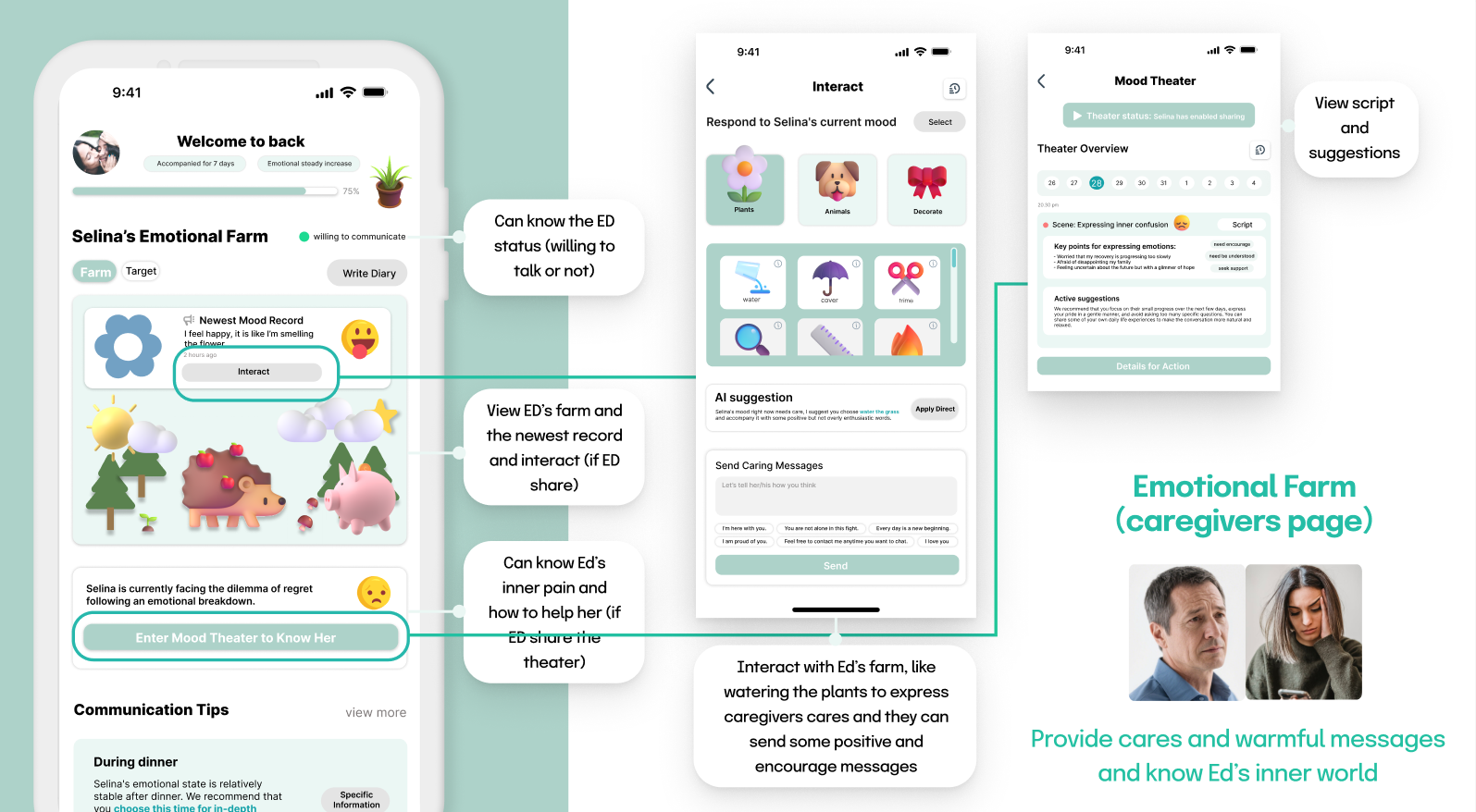

The Emotional Farm allows individuals to visualise and record their feelings in a diary. They can choose different elements or add text to represent their mood. This helps the AI learn and provide more personalised advice.
If they choose to share, their family and friends can see their Emotional Farm, view the AI’s analysis to understand their inner world, and interact with them. They can also see if the individual is open to communicating at that moment, based on their settings.
For family and friends using the app alone, they can also record their daily interactions with the individual, creating a “emotional farm” from their perspective. This helps the AI learn and provide tailored advice.
On this page, they can view the individual’s “mood theater” to understand the conflicts they face, then click to jump to the AI conversation coach for behavioral advice.
In addition to the Emotional Farm, there is also a Target Goal Farm. Users can collaborate to set a “plant” as a goal, complete tasks together, and earn rewards. For example, if they choose an “apple tree,” they can receive real apples upon completion, which encourages healthy eating.

AI dialogue coach–When a user asks a question, the AI provides a response and guidance. The user can then challenge or “rebut” the AI, which helps it continuously learn and improve.
Mood Theater:The AI serves as a confidant, allowing individuals with eating disorders to express their internal, unspoken conflicts. If they choose to share, their family and friends can use the “theater script” and analysis to understand their pain and learn how to offer more effective support.

Including individuals in recovery, experts, volunteers, and more.
Forum–Users can browse or share their experiences, gaining a sense of belonging, no longer feeling alone, and feeling hopeful about recovery.
Help Group–Interact with peers, participate in activities, share experiences, practice together, and complete tasks.
Activities–Eating disorder patients and their loved ones participate in offline activities together to strengthen their bond.


