My background is in digital media design, exploring digital technologies with mobile/web services, interactive media, and motion graphics. Now, as a UX designer, I aim to study users' behaviours and transform them into meaningful, intuitive experiences that improve people's lives.
Improving Digital Consent UX with AI : Comparing User-Controlled and AI-Integrated Settings for Informed Consent Online
Overview
This project investigates how integrating AI agents into a user-controlled consent system can improve user experience. It examines whether AI support enhances comprehension of data usage, reduces cognitive load and time for decision-making, and increases user satisfaction and autonomy in the context of providing online consent.
User Context and Challenges
Users cannot truly consent!
Data collection and asking consent from users have become common when installing applications and visiting websites for the first time. Especially when accessing a website or application for the first time, they must make decisions related to the use of their personal information. However, traditional consent systems often reduce user comprehension due to their confusing legal terminology and interfaces, leading to ‘uninformed acceptance’ (Biselli et al., 2024). This could reduce user trust and undermine the purpose of privacy regulations such as the GDPR (General Data Protection Regulation, 2016).
Assumption
How migh we use AI when giving consent?
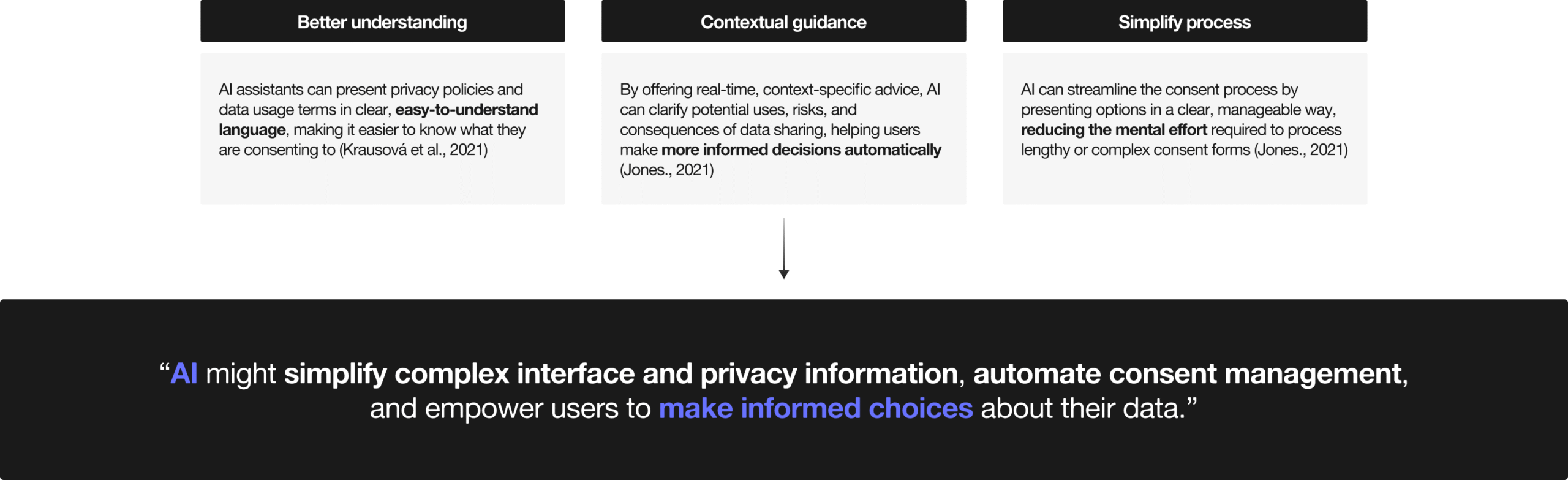
This study assumed that AI agents could enhance the digital consent process to address the accessibility of information and failure of supported decision-making design from the user experience perspective.
Research Aim & Questions
This project aims to facilitate users in providing informed consent more easily in daily digital consent about data usage. The research questions for this study are as follows:
RQ1. Does an AI agent-integrated consent system improve users’ understanding of how their personal data will be used, compared to a user-controlled consent system? (How does this differ between users with high and low privacy literacy?)
RQ2. Does an AI agent-integrated consent system reduce cognitive load and time required to make consent decisions? (How does trust in AI influence the consent decision process?)
RQ3. Does an AI agent-integrated consent system enhance users’ perceived autonomy in consent decisions, compared to a user-controlled consent system?
Link metrix to measure effectiveness of treatment group (AI)
Prototypes
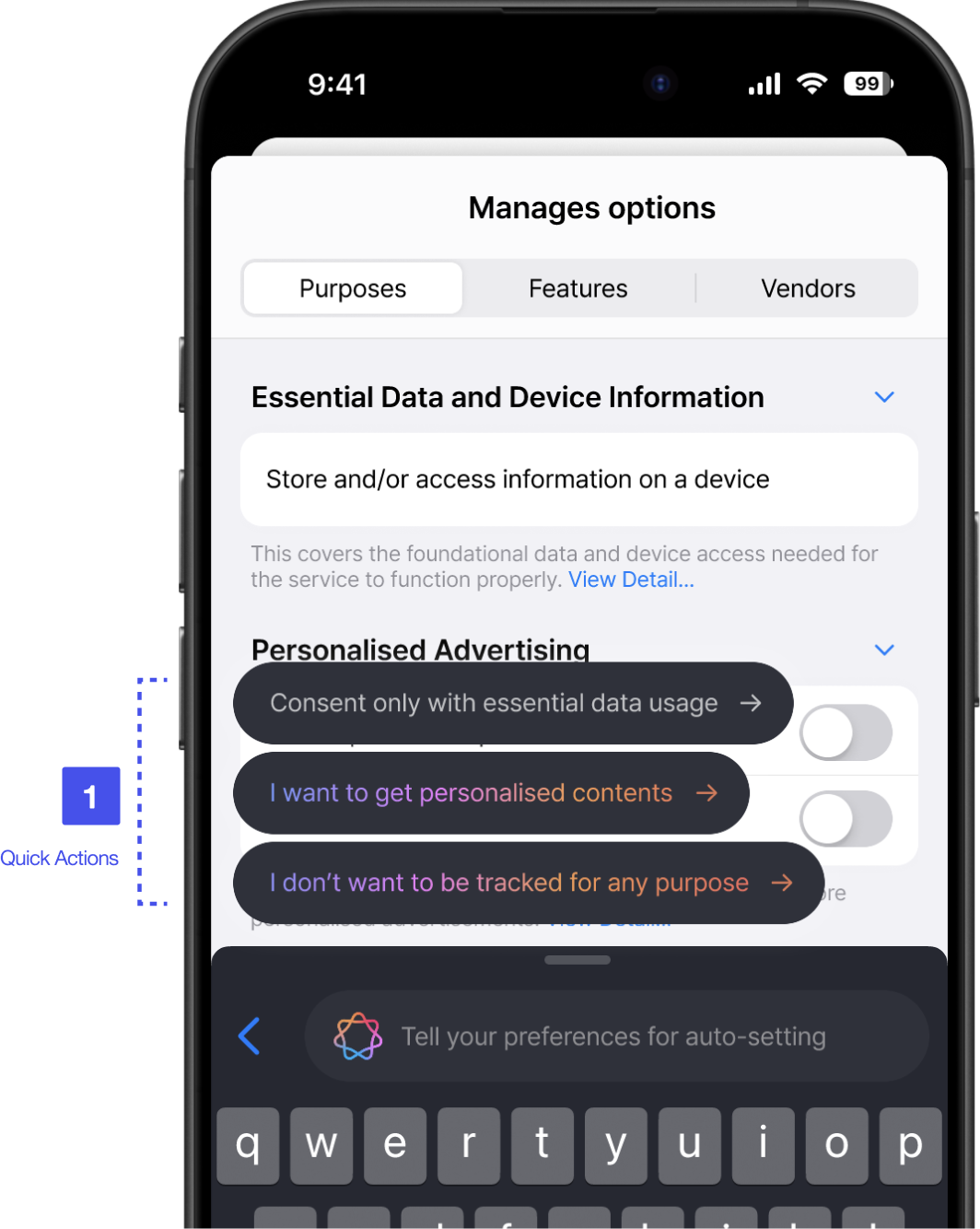
Two prototypes were developed to compare and improve the digital consent user experience. Prototype A is a traditional user-controlled cookie consent page as a control group. Prototype B is an AI agent-integrated system with consent pages, which can answer user questions in real-time and suggest automatic consent settings based on user preferences. These two prototypes shared the same basic interface structure with identical contents, while they differed in the presence of the AI-agent section and its way of interaction.
AI agent-integrated setting banner
Feature 1. On-Demand Explanation
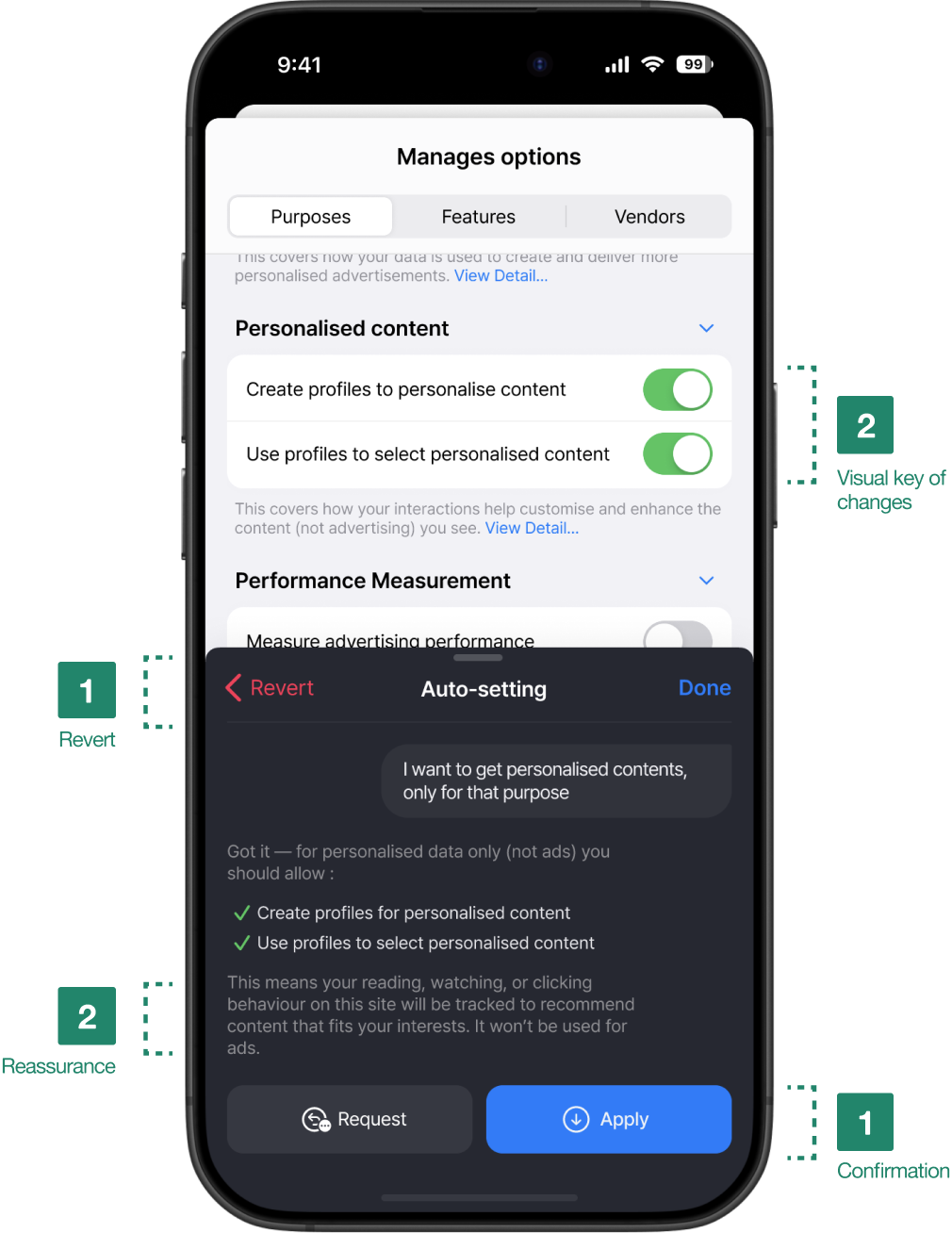
Feature 2. Support Consent Decision
Study Design
Study Procedure and Data Collection
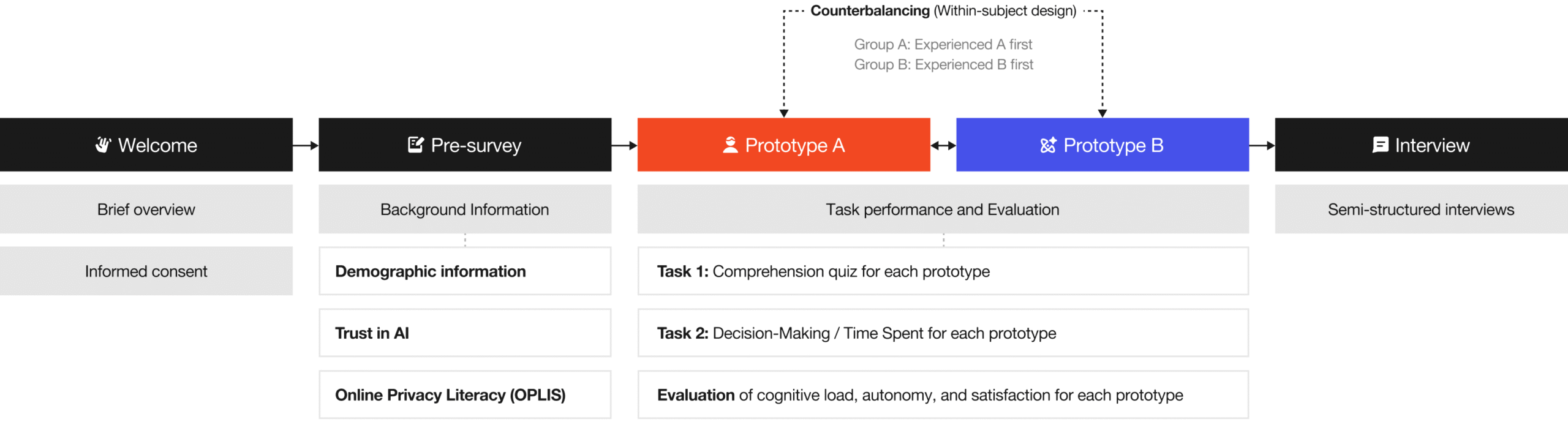
All participants experienced both prototypes (control group and treatment group), conducted two tasks, and assessed their experience. Twenty participants answered a pre-survey about Trust in AI (Jian et al., 2000) and Online Privacy Literacy (Masur et al., 2017). After each task, participants assessed Mental Effort(Paas, 1992), decision time, SUS (Lewis and Sauro, 2021), and Autonomy (Moradbakhti et al., 2024).
Key Results
Quantitative data was analysed to see descriptive statistics, significant differences and their effect. Qualitative data from interviews were coded inductively and analysed using thematic analysis.
RQ1. Comprehension and Privacy Literacy
Comprehension: AI-integrated banner showed slightly higher comprehension (M = 1.70) than user-controlled (M = 1.50), but the difference was not statistically significant (p = .285).
By Privacy Literacy: Significant interaction effect (p = .045), indicating that effectiveness depends on privacy literacy level.
Low literacy → Better comprehension with AI (M = 1.88).
High literacy → Better comprehension with user-controlled (M = 1.75).
RQ2. Making Consent Decision and Trust in AI
Mental Effort: Lower in AI condition (Median = 4) vs. user-controlled (Median = 7) (p = .014, large effect).
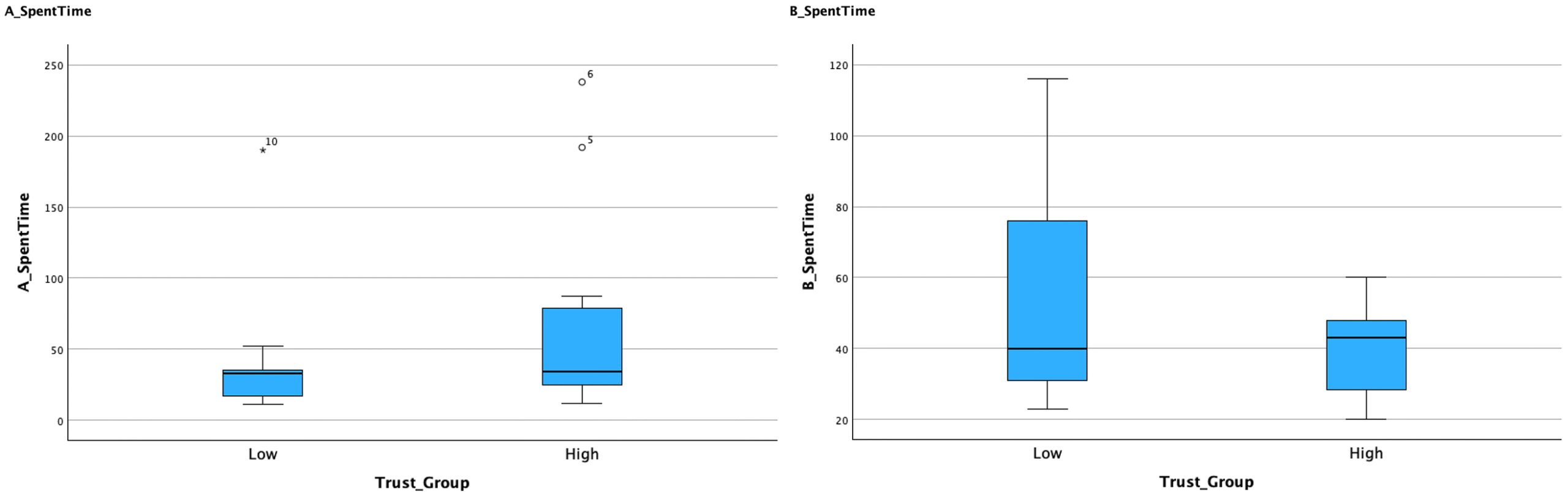
Decision Time: No significant difference (AI M = 38.8s; User-controlled M = 46.0s, p = .881).
Differences not statistically significant (p > .05).
RQ3. Perceived Autonomy and Satisfaction
Autonomy: AI-integrated (M = 3.67) slightly higher than user-controlled (M = 3.42), but not statistically significant (p = .340).
Satisfaction (SUS): AI-integrated (M = 85.62) significantly higher than user-controlled (M = 54.38), with a very large effect (p < .001, r = .78)
Design Implication
RQ1. How to improve understanding?
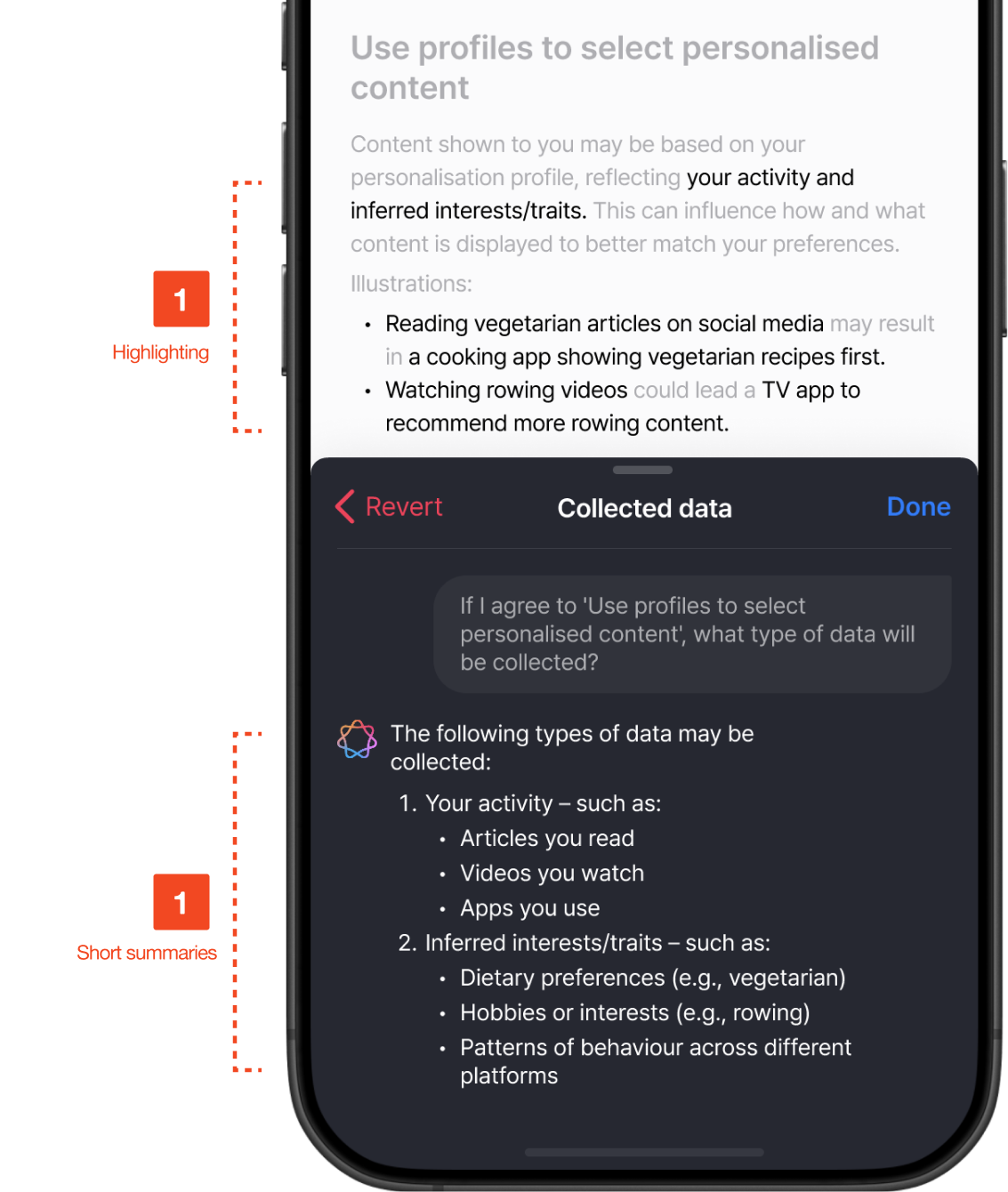
Provide Layered Explanations: Provide both short AI-generated summaries and an easy path to view details or original text with highlighted part.
Adaptive Support: For low-literacy users, default to more structured, more detail explanations. For high-literacy users, enable more adjustable AI support.
RQ2. How to make consent decision easier?
Quick Ask / Suggested Actions: Quick reply buttons reduce users’ cognitive load and decision fatigue by offering predefined options, allowing faster and easier interaction
Provide Verification: For low-trust users, provide an easy “compare with original text” or “step-by-step review” option.
RQ3. How to enhance autonomy and satisfaction with AI when giving consent?
User as a Final decision maker: Keep a final confirmation step so users feel ownership of their choices
Visual key to see change and reassurance: After AI support, show the change that AI made and summary, strengthening both autonomy and satisfaction.
Other Works
24Green
For busy parents to manage their energy consumption efficiently by shifting time to use energy and engage in climate action by sharing their activities.
Penny
Improving the end-to-end expense management process by being bold and creative – leveraging the power of automation and AI for employees, managers and finance teams.