

I'm a UX designer with a passion for creating intuitive, human-centred digital experiences. I enjoy combining design thinking with user research to solve real-world problems.
I'm a UX designer with a passion for creating intuitive, human-centred digital experiences. I enjoy combining design thinking with user research to solve real-world problems.
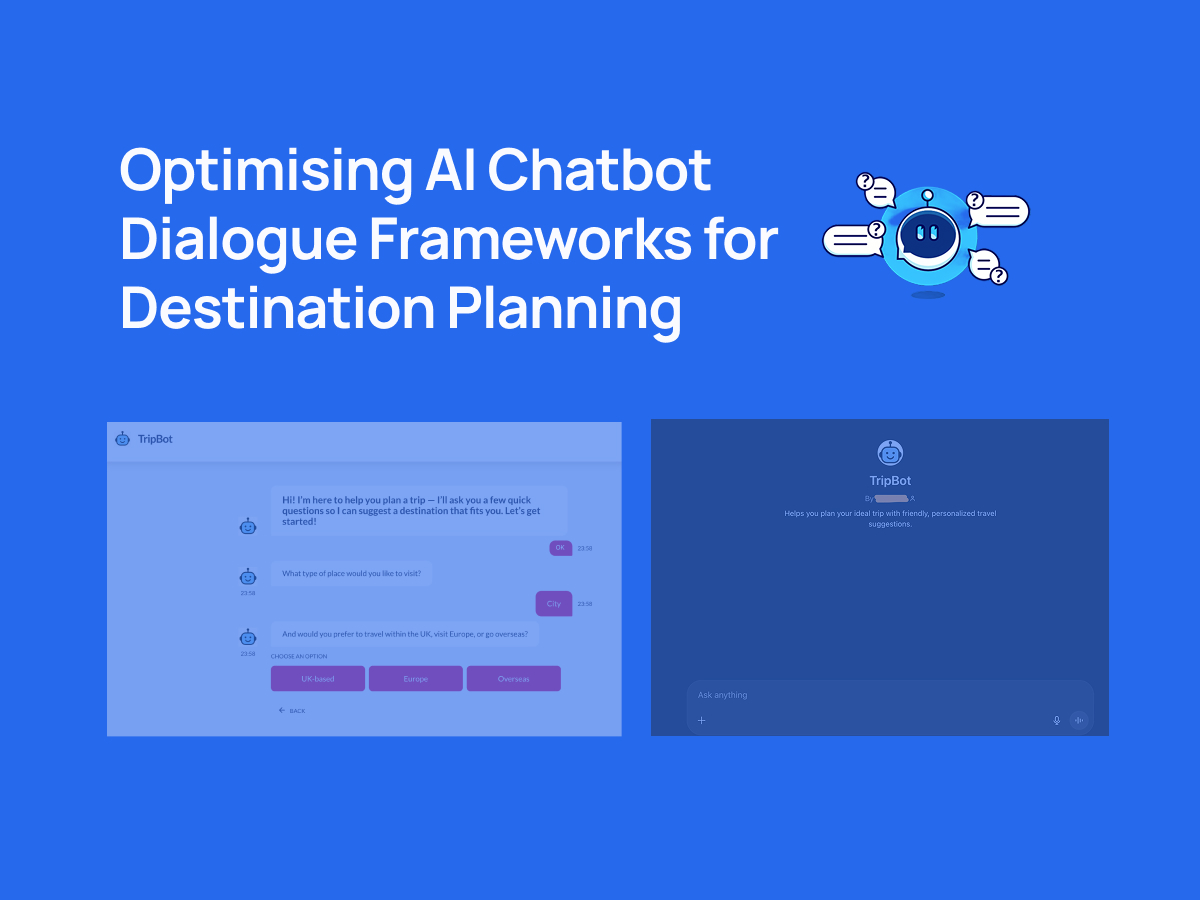
This project explores how AI-powered chatbots can support travel planning by shaping users’ experiences through different dialogue styles. We compared a guided chatbot (structured and step-by-step) with an open-ended chatbot (conversational and flexible) to see how they affect user thinking and feelings during destination planning.
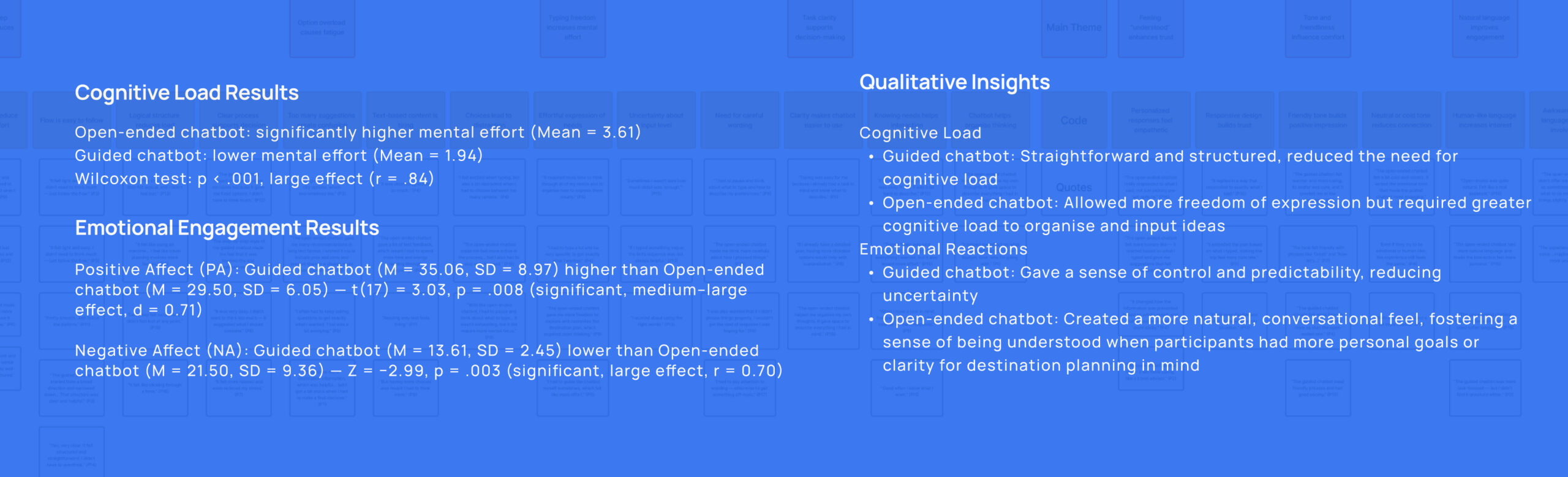
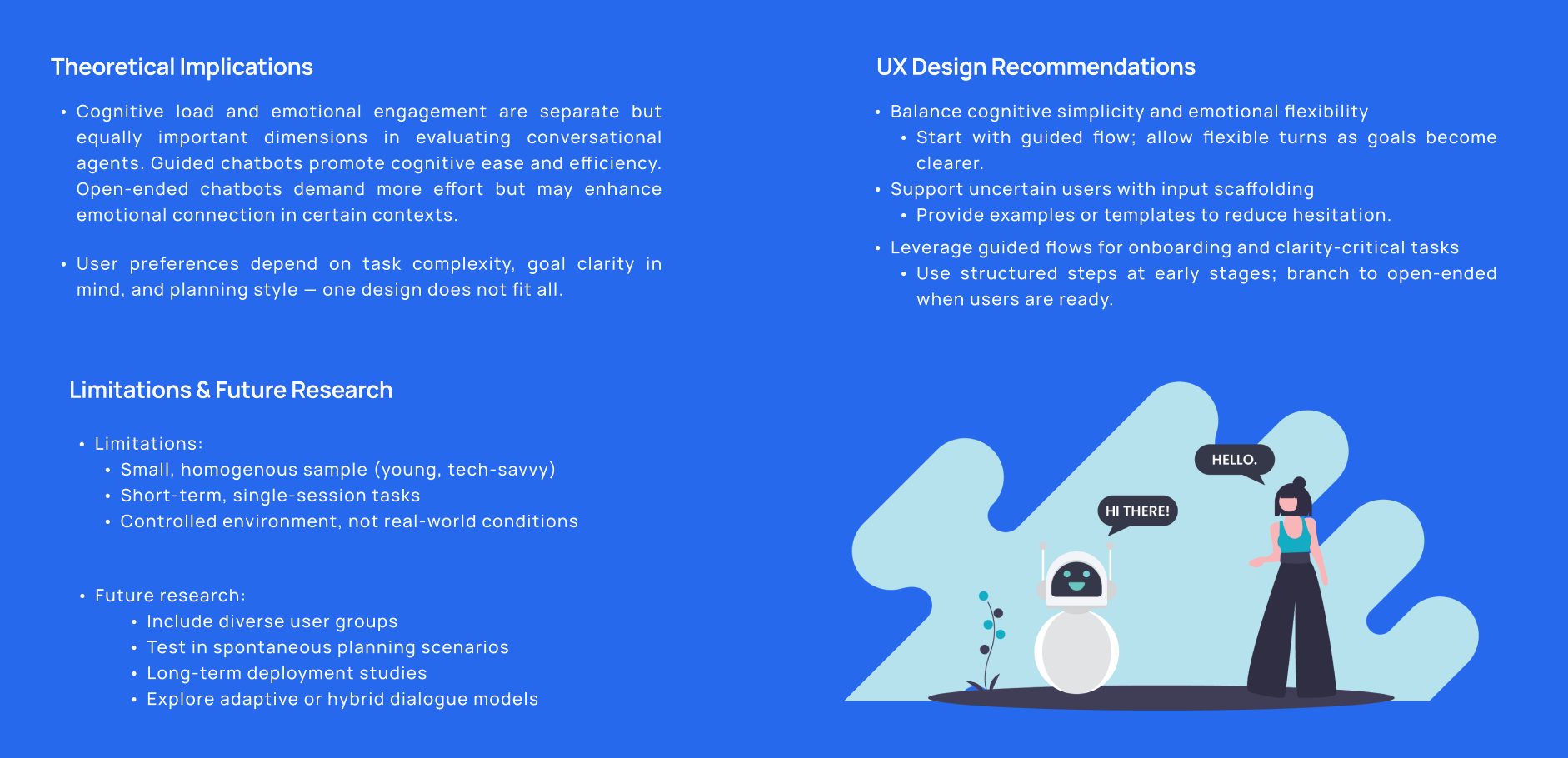
The findings highlight a key trade-off: guided chatbots make planning clearer and faster, while open-ended chatbots offer more freedom and emotional connection. This suggests that no single design fits all—chatbots should adapt their dialogue style depending on the user’s task and confidence.
The project contributes to user experience design by showing how dialogue design influences both cognitive clarity and emotional engagement in digital travel tools.
The Design Thinking process was followed to develop two chatbot prototypes for assisting users in travel destination planning. This user-centred approach included five main stages: Empathise, Define, Ideate, Prototype, and Test.


A focus group was conducted as the primary data collection method. Three participants were recruited, and the discussion was guided by a structured question set covering five areas: travel planning habits, chatbot experiences, interaction style preferences, emotional reactions, and perceived control.
In addition to user feedback, existing studies were reviewed to identify the key factors travellers usually consider when planning a trip. At the same time, the chatbot system itself was examined—comparing how guided and open-ended dialogue frameworks function.

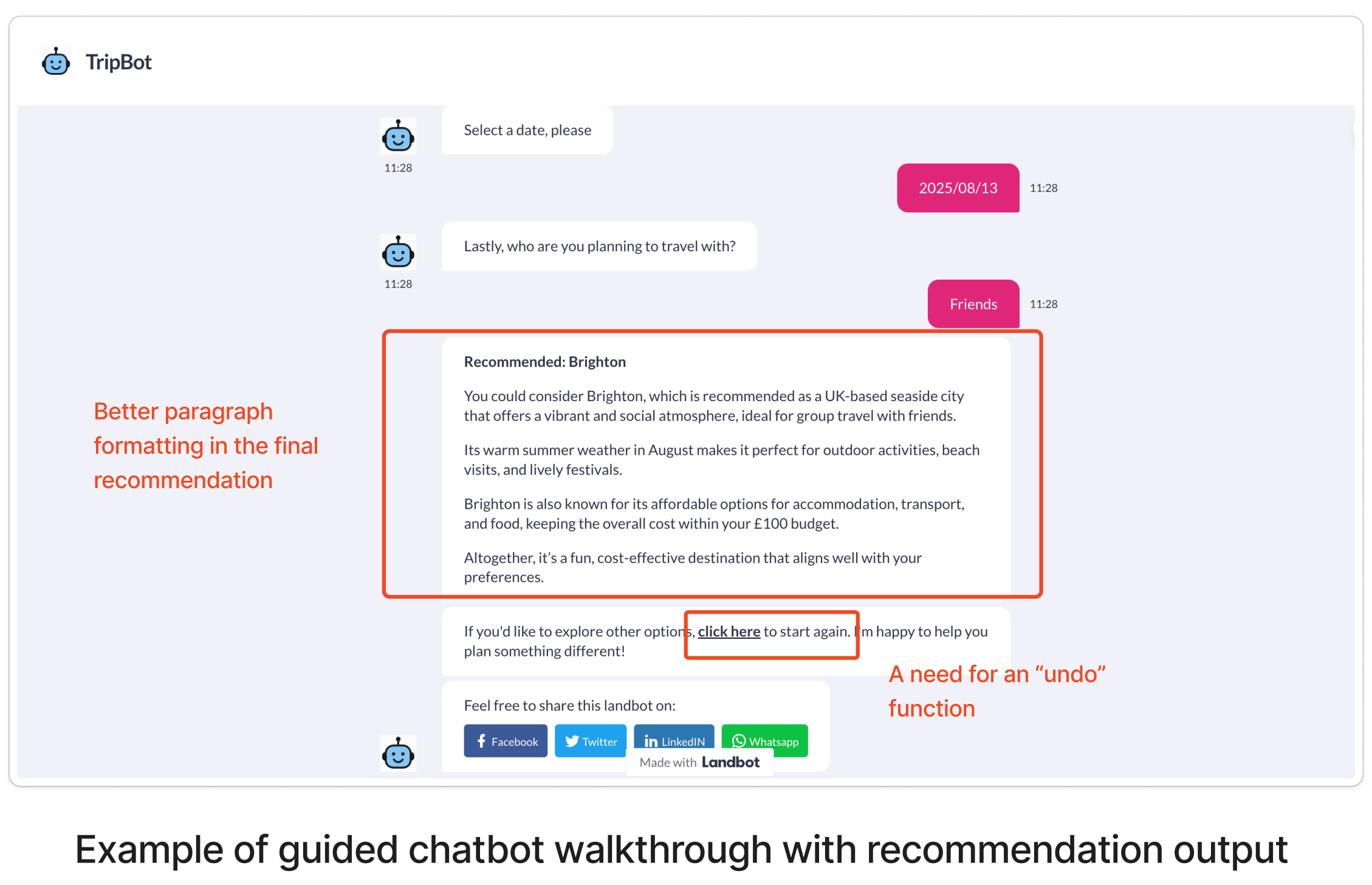
Both chatbot prototypes were tested through a formative evaluation, where participants used them to plan a short UK trip within a £100 budget. The guided chatbot showed clear step-by-step interaction, but improvements were needed, such as a short greeting, better formatting of the final recommendation, and an “undo” option. The open-ended chatbot demonstrated flexibility, though refinements were made to reduce text density and provide gentle clarifying prompts.
Following the ideation stage, both guided and open-ended chatbot prototypes were first created as low-fidelity simulations. After early evaluation of these prototypes, insights were used to refine the interaction flow and improve clarity. For high-fidelity development, both prototypes were refined into functional interfaces, enabling realistic interaction. The guided chatbot integrated structured logic paths and Wizard-of-Oz testing for controlled recommendations, while the open-ended chatbot allowed dynamic natural language input through custom GPT configuration.
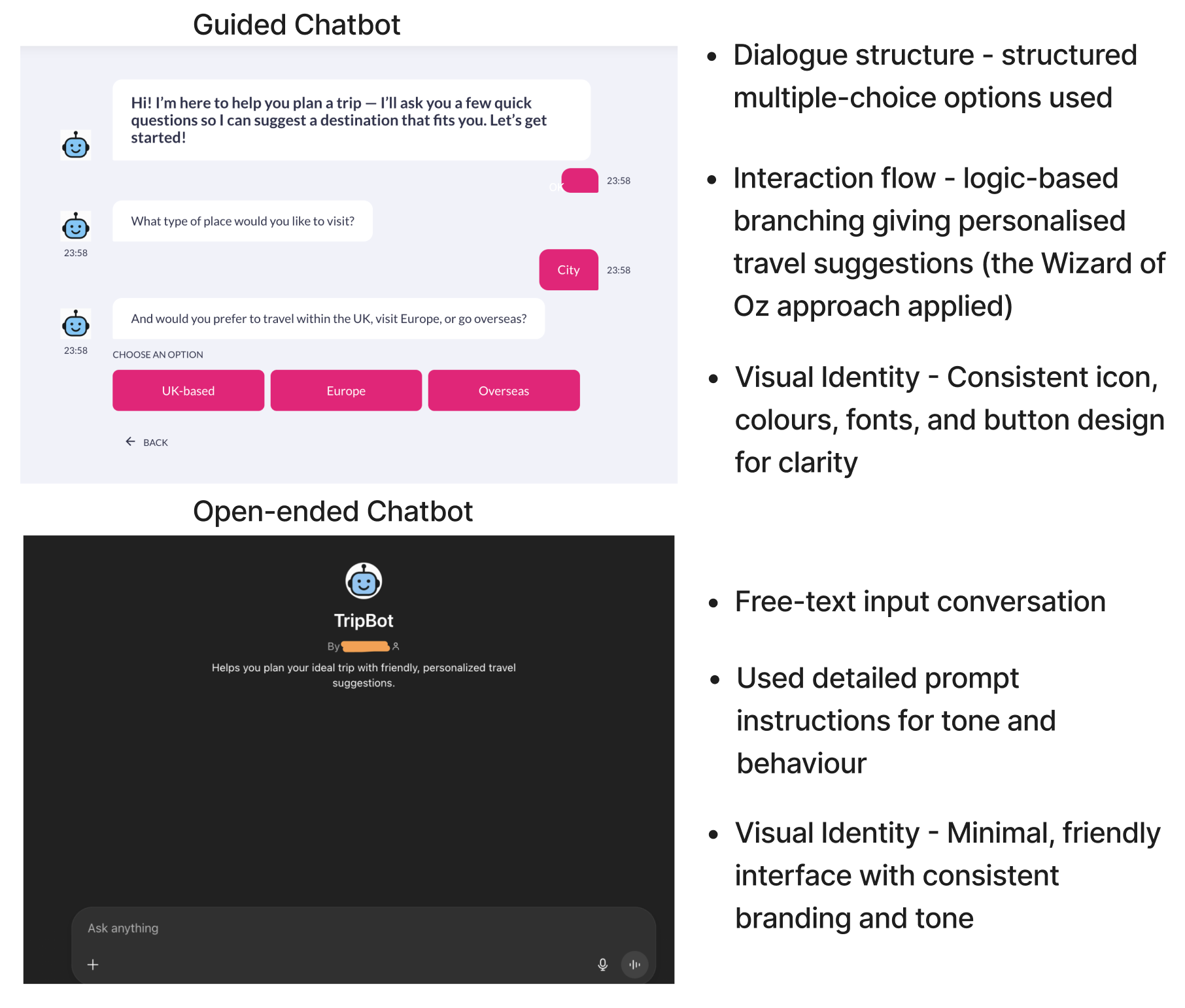
The study followed a structured process combining both quantitative and qualitative methods. Participants first completed consent and background questions before engaging in the chatbot task. Afterwards, post-task questionnaires and exit interviews captured both measured outcomes and personal reflections.
Quantitative data (mental effort, emotional engagement, and task completion time) were analysed statistically, while qualitative interview responses were thematically analysed. Together, these methods provided a balanced view of cognitive and emotional user experiences.