I create human-centered digital experiences that balance business value with user needs. Through a thoughtful blend of interaction design, accessibility, and usability testing, I aim to deliver solutions that are simple, scalable, and impactful.
This study explores how emotionally adaptive tone in AI chatbots influences user trust and satisfaction during e-commerce service failures, revealing that empathetic language can positively reshape digital service recovery experiences.

AI-powered customer service chatbots are increasingly used in e-commerce to handle user queries, especially during order failures. However, many still sound robotic or impersonal, negatively impacting user trust and satisfaction. Without emotional intelligence, these bots can escalate frustration during already stressful situations. There is limited research comparing emotionally adaptive chatbot tone to neutral tone in real service-failure scenarios, leaving a gap in how digital empathy is implemented and evaluated.
Question 1:
How does emotionally adaptive tone in AI chatbots influence user trust and satisfaction during negative user experiences in customer service?
Question 2:
Do different demographic groups like age & tech literacy respond to emotionally adaptive chatbot interactions in negative scenarios?

Research Plan
This project followed the Design Thinking process to create and evaluate two chatbot prototypes: one with a neutral tone and one with an emotionally adaptive tone.
To explore how chatbot tone affects trust and satisfaction, I followed a Design Thinking approach grounded in user-centred methods.
A focus group helped identify pain points in existing chatbot interactions. Participants emphasised the importance of trustworthiness, personalised responses, and clear guidance in emotionally charged service failure scenarios. Feedback highlighted the need for bots to offer empathy, instant feedback, and clarity in tone and terminology.
Guided by these insights, I developed two chatbot prototypes (neutral and emotionally adaptive) for a controlled user study. Each participant interacted with both prototypes during a failed delivery scenario.
Data was collected through:
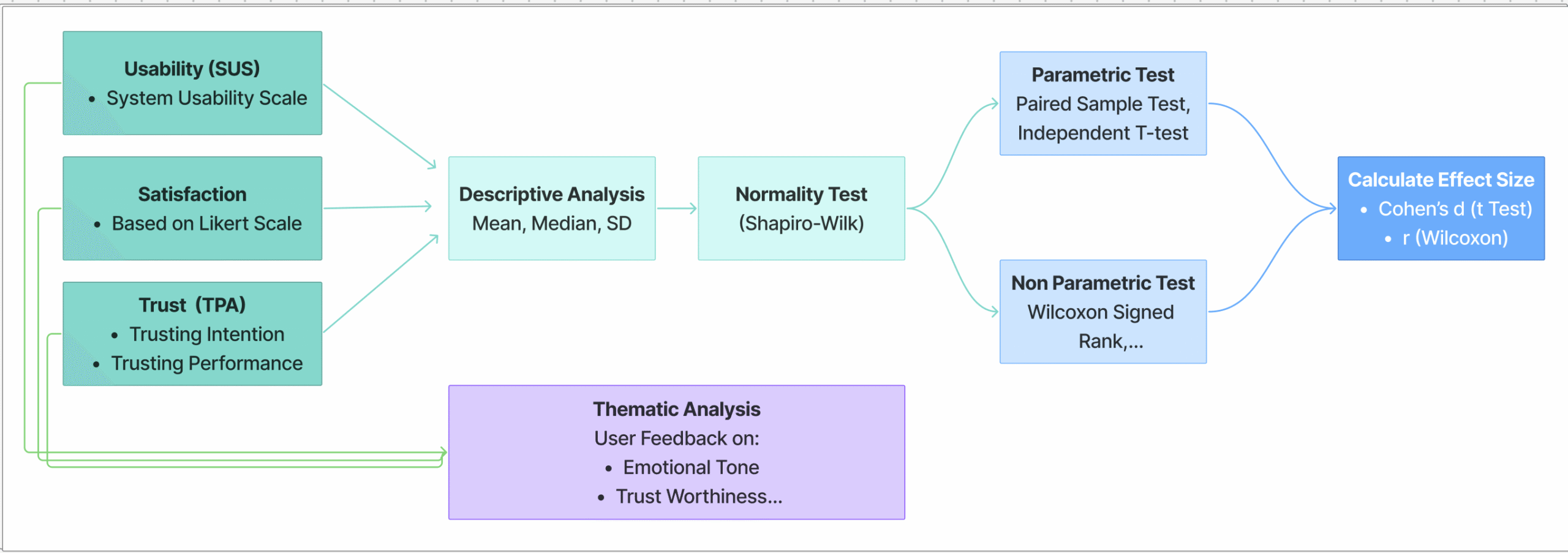
Quantitative data was analysed using t-tests and Wilcoxon tests, while qualitative data was thematically coded to extract key patterns in tone perception.
The method balanced both emotional design and statistical rigour, ensuring user needs informed every design decision.

User feedback was collected through a focus group and formative testing, guiding the refinement of both chatbot tone and study structure.
Participants shared key expectations:
Users valued quick acknowledgment and resolution-focused responses.
Chatbots should sound genuine and emotionally aware, not robotic.
Responses should be clear, structured, and free from complex terminology.

This ensured the prototype reflected real-world user frustrations and expectations, making the chatbot interaction more authentic, time-sensitive, and emotionally engaging.
Study Design
This study followed a within-subjects experimental design, where each participant interacted with two chatbot prototypes: one with a neutral tone and one with an emotionally adaptive tone, across the same service failure scenario.
A total of 40 participants aged 18–35 were recruited voluntarily through online distribution. They were divided into demographic groups based on age and tech literacy. Each participant engaged with both chatbot prototypes, one neutral, one emotionally adaptive, in a simulated failed delivery scenario. After each session, they completed post-interaction surveys measuring satisfaction, trust, and usability from academically validated scales.

Open-ended feedback was analysed using thematic analysis with an inductive approach, allowing themes to emerge naturally from participant responses.

Key Themes Identified
These insights complemented the quantitative findings, highlighting the importance of emotional tone in chatbot design.
This section outlines how both the chatbot prototypes and application flow were designed using Botsonic and structured UX techniques.
Chatbot Design (Botsonic)
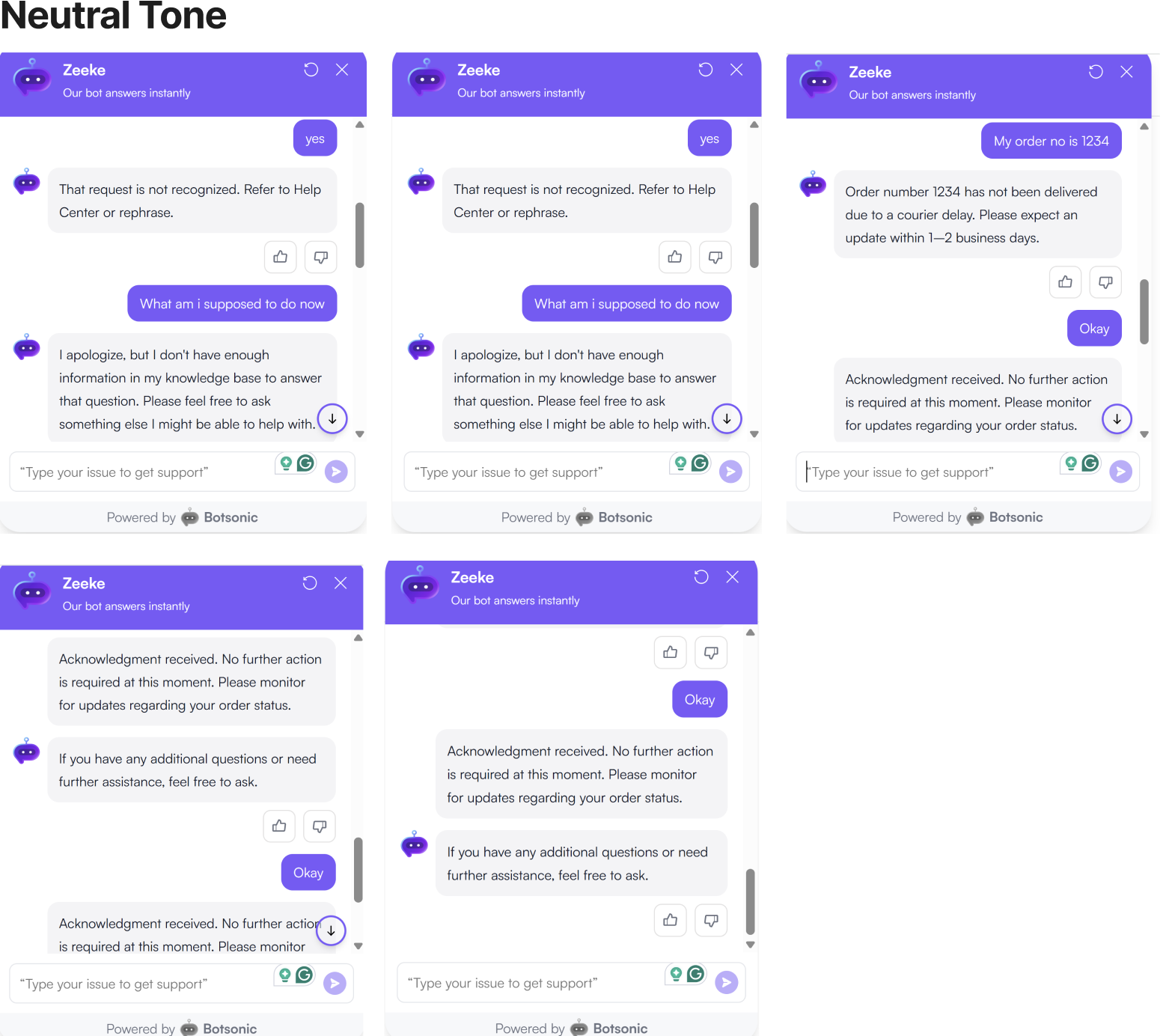
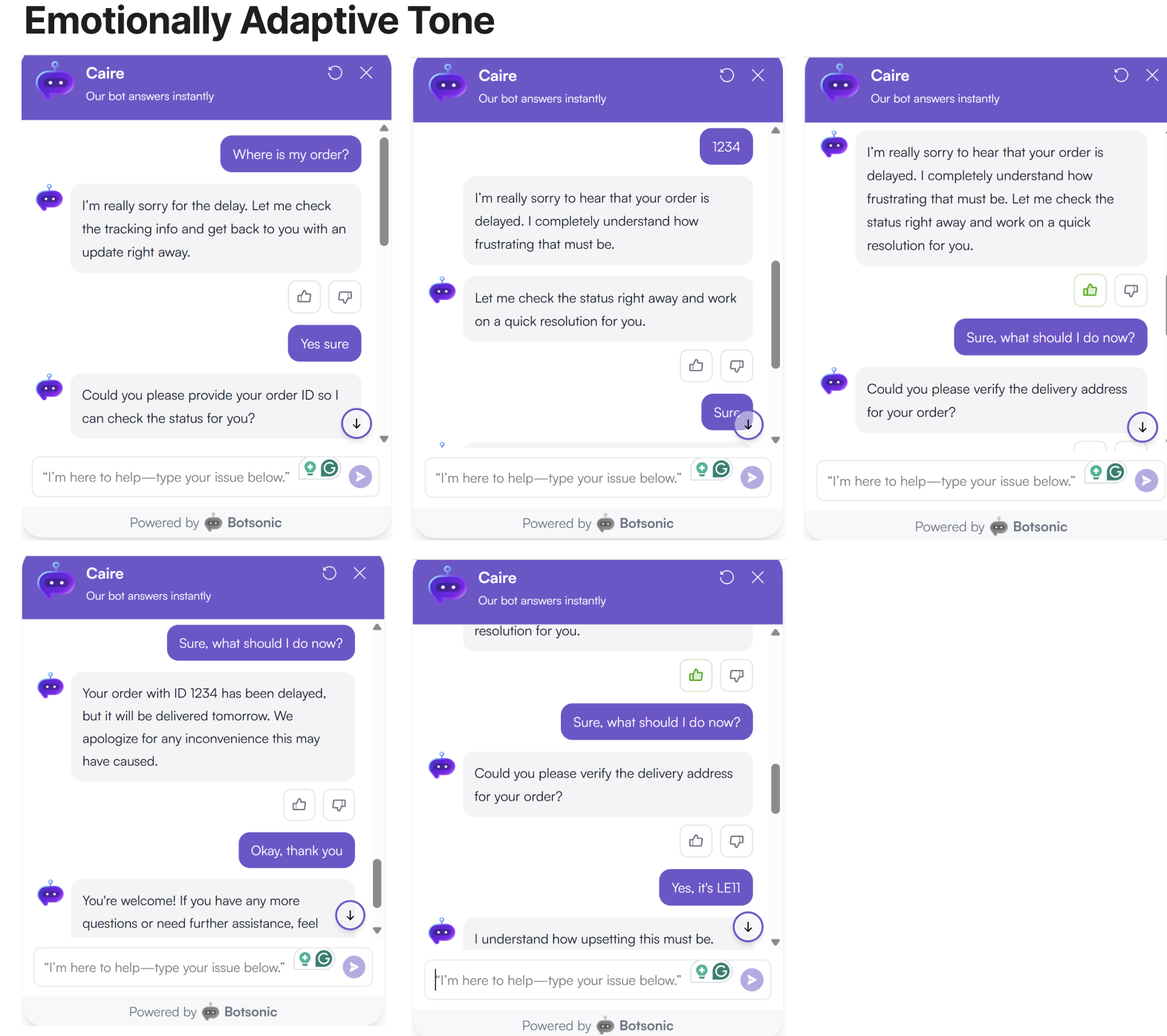
Designed two chatbot prototypes for a failed delivery scenario using Botsonic
Both followed the same logic but differed in tone:
Tone scripting was based on emotional design principles (Norman, 2004).
Custom conversation flows were created in Google Sheets and uploaded to Botsonic.
Fallback messages and escalation responses were added to simulate real service experience.
Each bot was tested for tone consistency and smooth conversational flow.


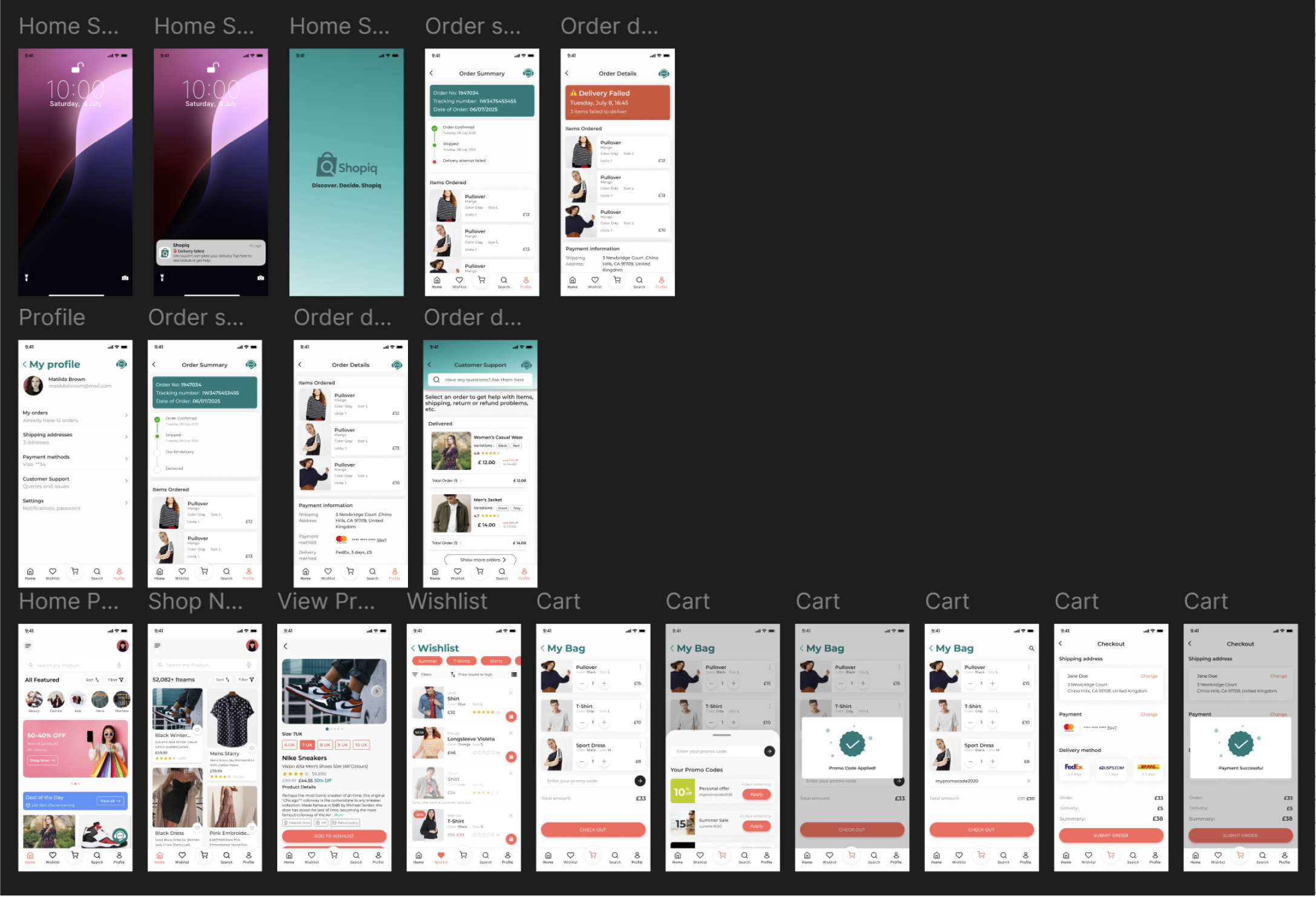
Application & Interaction Design

Scenario Framing: Participants completed a time-limited e-commerce task (e.g., failed delivery) to simulate real urgency.
Interface Presentation: Chat UI was shown via Figma or web embed with consistent font, layout, and timing.
User Flow: Consent → Scenario → Chatbot A → Survey → Short Break → Chatbot B → Survey → Final Feedback.
Testing Tools: SPSS (data analysis), Google Sheets (bot flow), JISC Online Surveys (questionnaires), and word cloud tools (qualitative themes).
A within-subjects experiment was conducted to evaluate two chatbot tones, neutral and emotionally adaptive, using a realistic e-commerce task: resolving a failed delivery.
Participants followed a structured user flow:

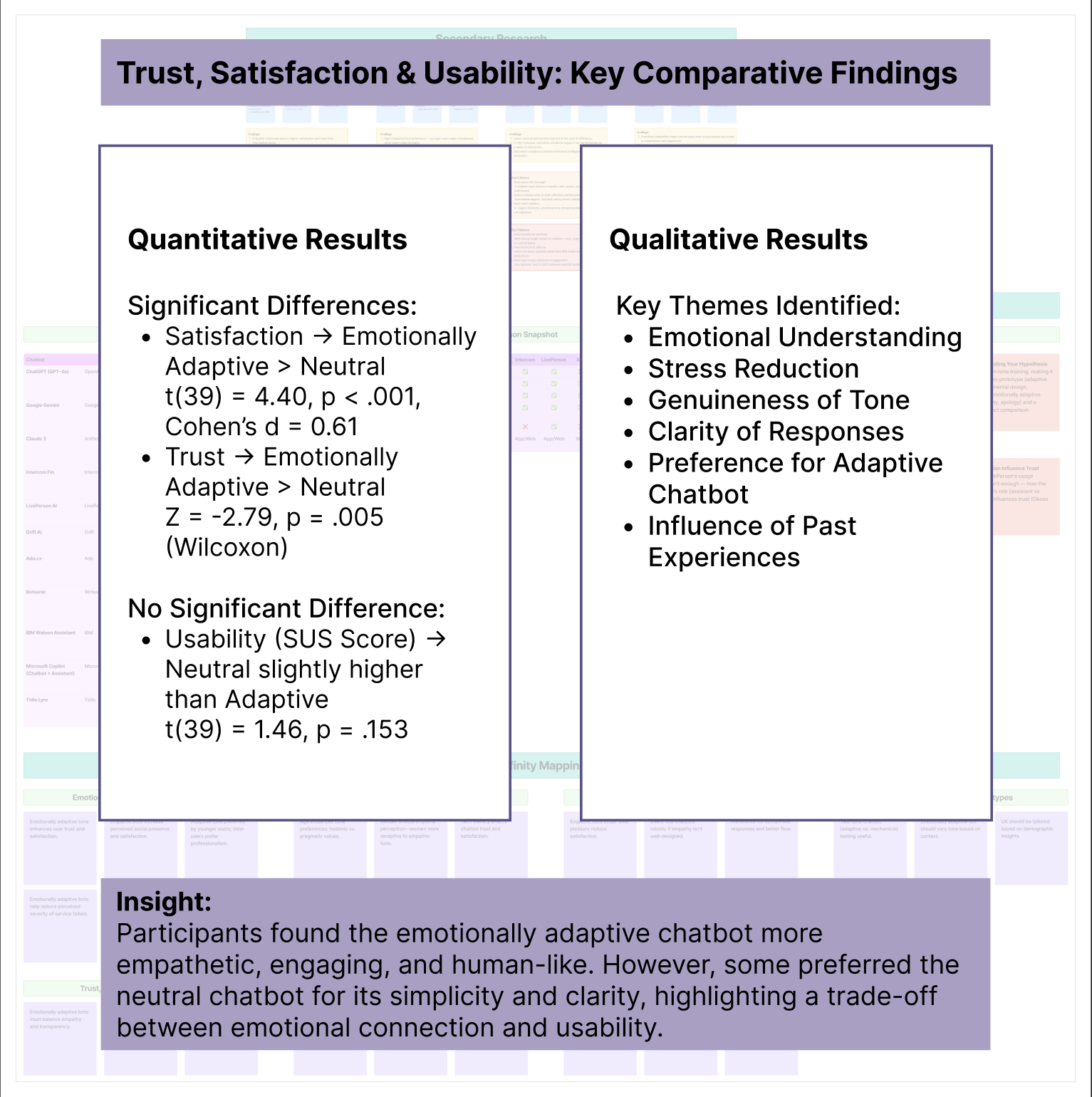
The evaluation assessed how chatbot tone influenced user satisfaction, trust, and usability during a simulated e-commerce service failure.
Open-text responses revealed key themes:
While both prototypes effectively completed the task, the emotionally adaptive chatbot enhanced the user experience by building emotional trust and reducing stress. However, the slight dip in usability suggests that designers must balance empathy with clarity and simplicity.


This project explored how emotionally adaptive chatbot tone can shape user experience during service failure scenarios. Through designing and testing two chatbot prototypes, the study revealed that empathetic tone significantly improves trust and satisfaction, especially for users seeking support in stressful situations.
However, findings also highlight the need to balance empathy with clarity. While emotionally rich responses strengthen connection, overly scripted tone or complex phrasing can affect usability. The research demonstrates that tone is more than a stylistic choice; it’s a functional UX tool that impacts how users feel, respond, and resolve issues.
As a designer, this project taught me that emotional design is not just about aesthetics, it’s about creating conversations that feel human, supportive, and contextually aware.