


Postgraduate UX researcher focused on immersive technologies and cognitive experience design.
Postgraduate UX researcher focused on immersive technologies and cognitive experience design.
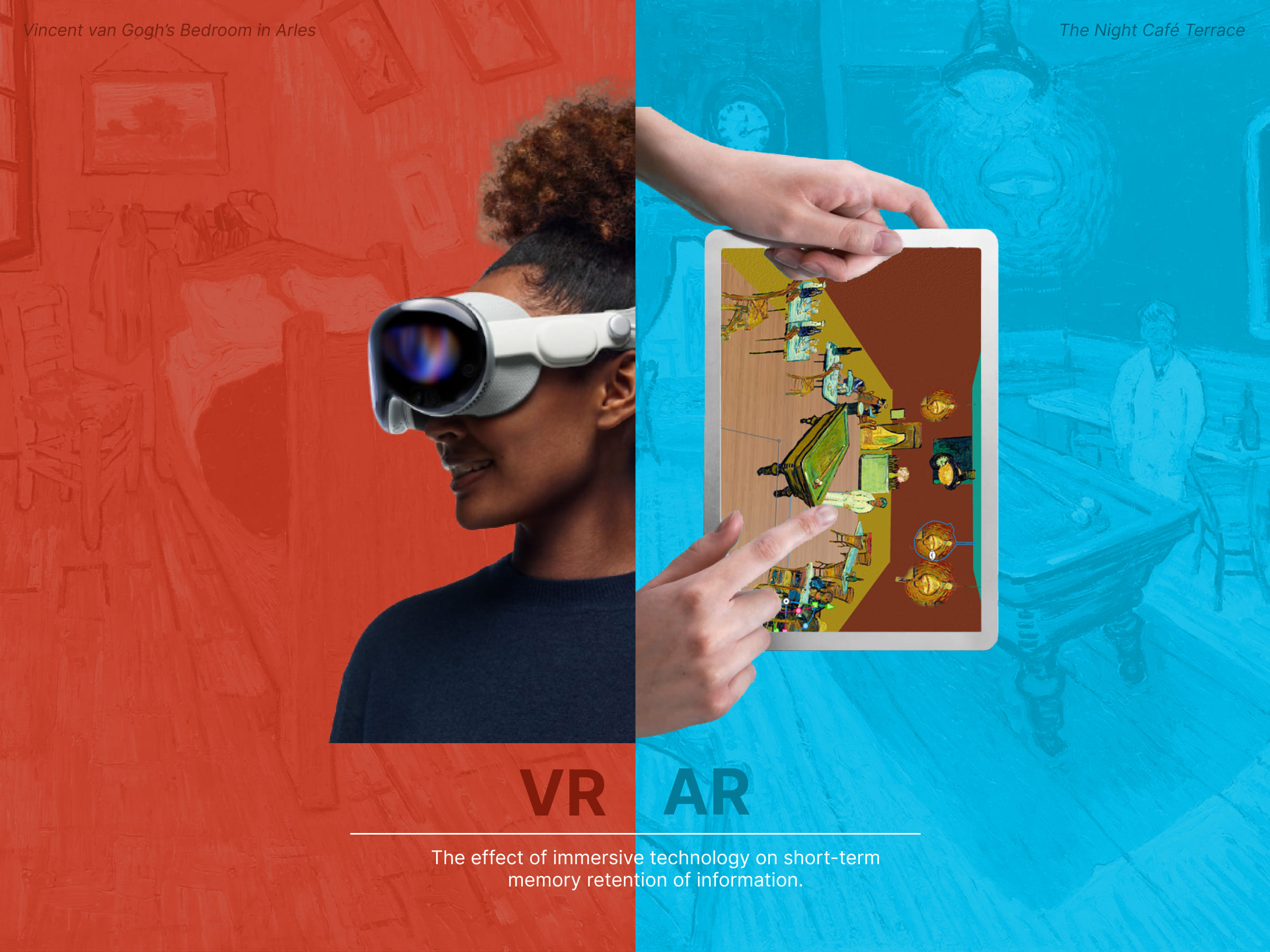

Design and evaluate three culturally themed environments with varying degrees of immersion:
• A virtual reality (VR) scene based on Van Gogh’s The Bedroom
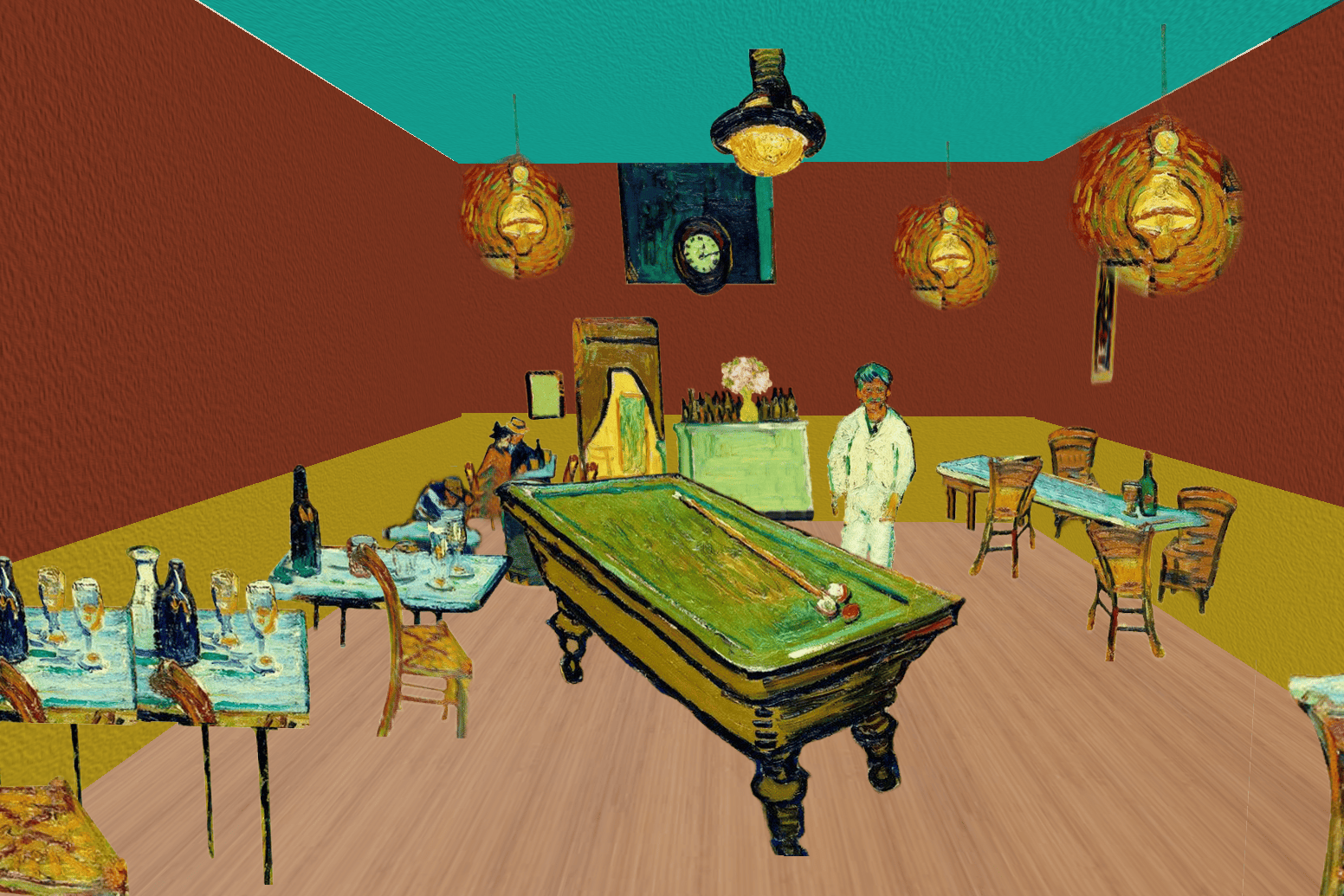
• An augmented reality (AR) mobile experience based on Van Gogh’s Café Terrace at Night
• A two-dimensional web version based on Van Gogh’s The Langlois Bridge
These environments aim to investigate how different interaction modes influence users’ memory retention and cognitive load during cultural navigation tasks. To ensure experimental comparability, participants completed identical tasks across all three conditions. The VR and AR prototypes were developed using ShapesXR and Unity, while the two-dimensional interface was tested as a browser-based simulated interface under controlled conditions.

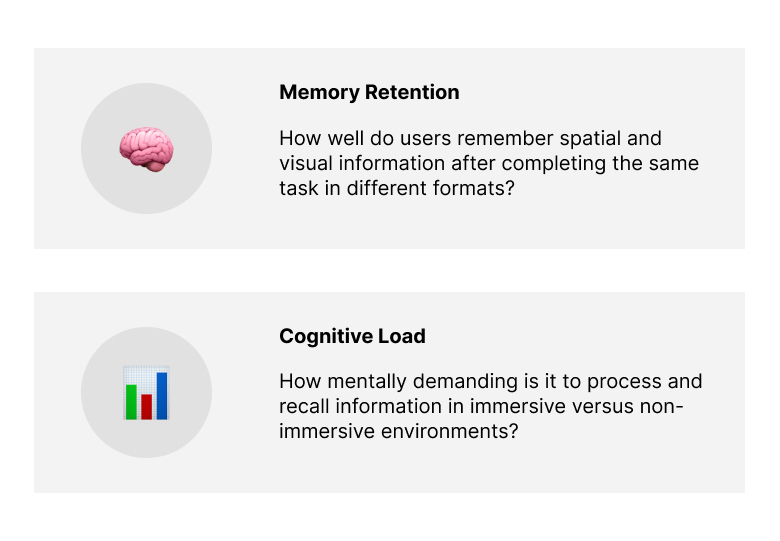
To assess the effect of different immersive technology(VR vs AR)on memory retention and cognitive load


Although VR and AR demonstrated marginally higher memory accuracy than the web version, the difference was not statistically significant.
• Participants experienced the least cognitive load when using VR, followed by AR, with the web version imposing the greatest cognitive burden.
• VR and AR environments proved more effective at stimulating user engagement and immersion, though these were accompanied by physical discomfort such as dizziness and fatigue.
• The traditional web version presented clearer information with high readership, yet offered a monotonous experience and lower engagement.
• Immersive technologies proved more effective at boosting engagement and reducing subjective cognitive load, though usability and comfort must be balanced.
A VR memory task set in Van Gogh’s The Bedroom, allowing participants to explore the space and recall visual details through immersive interaction.
An AR memory task based on Van Gogh’s Café Terrace at Night, guiding participants to view, read, and recall visual and spatial details using mobile interaction.