As an empathetic UX designer focused on emotional design and storytelling, I'm driven by a deep curiosity about the world and people and I'm passionate about translating complex technical decisions into seamless experiences that users can understand, trust, and enjoy.
Enhancing Passenger Trust in Robotaxi with an Anthropomorphic Assistant
While the vision for Robotaxis is a future of safer, more efficient, and accessible urban mobility. The majority obstacle to their adoption is a widespread lack of public trust.
The technology is almost in place, but passengers are not yet ready. User experience design is now key to the success of Robotaxis. Its role is to close this trust gap and win the public’s trust in the future of transportation.
A common view in the industry is that adding anthropomorphic features to an in-car digital assistant, such as natural language, voice or a virtual avatar, can help build passenger trust.
1 Research Questions
This study contribution is to clarify the effect of anthropomorphism design, aiming to verify whether anthropomorphic assistant (AA) can basically enhance passenger trust compared to human driver. Also, I focus on the trust decrease in an emergency condition, assuming AA have positive potential in this case to maintain passenger trust.
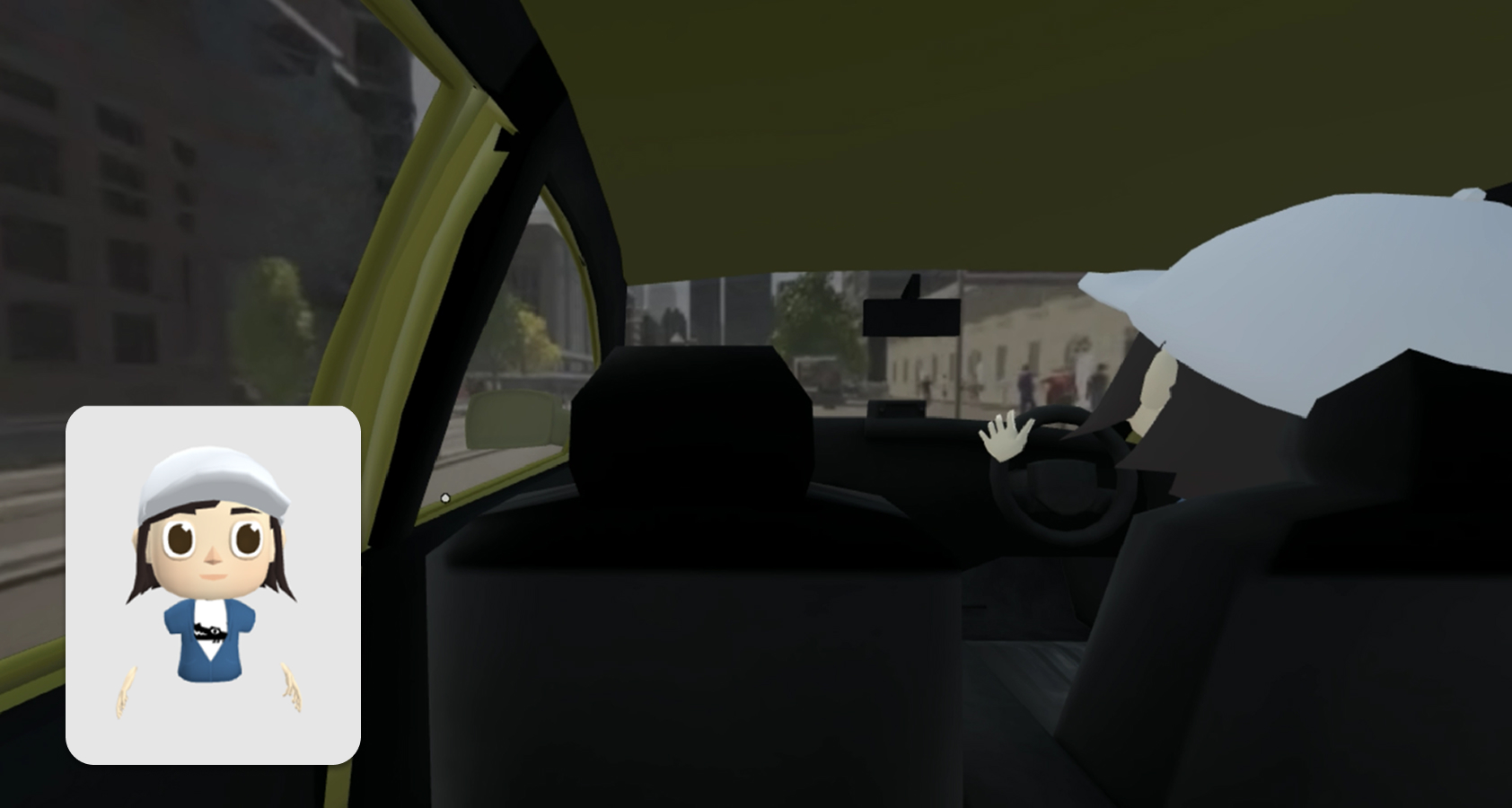
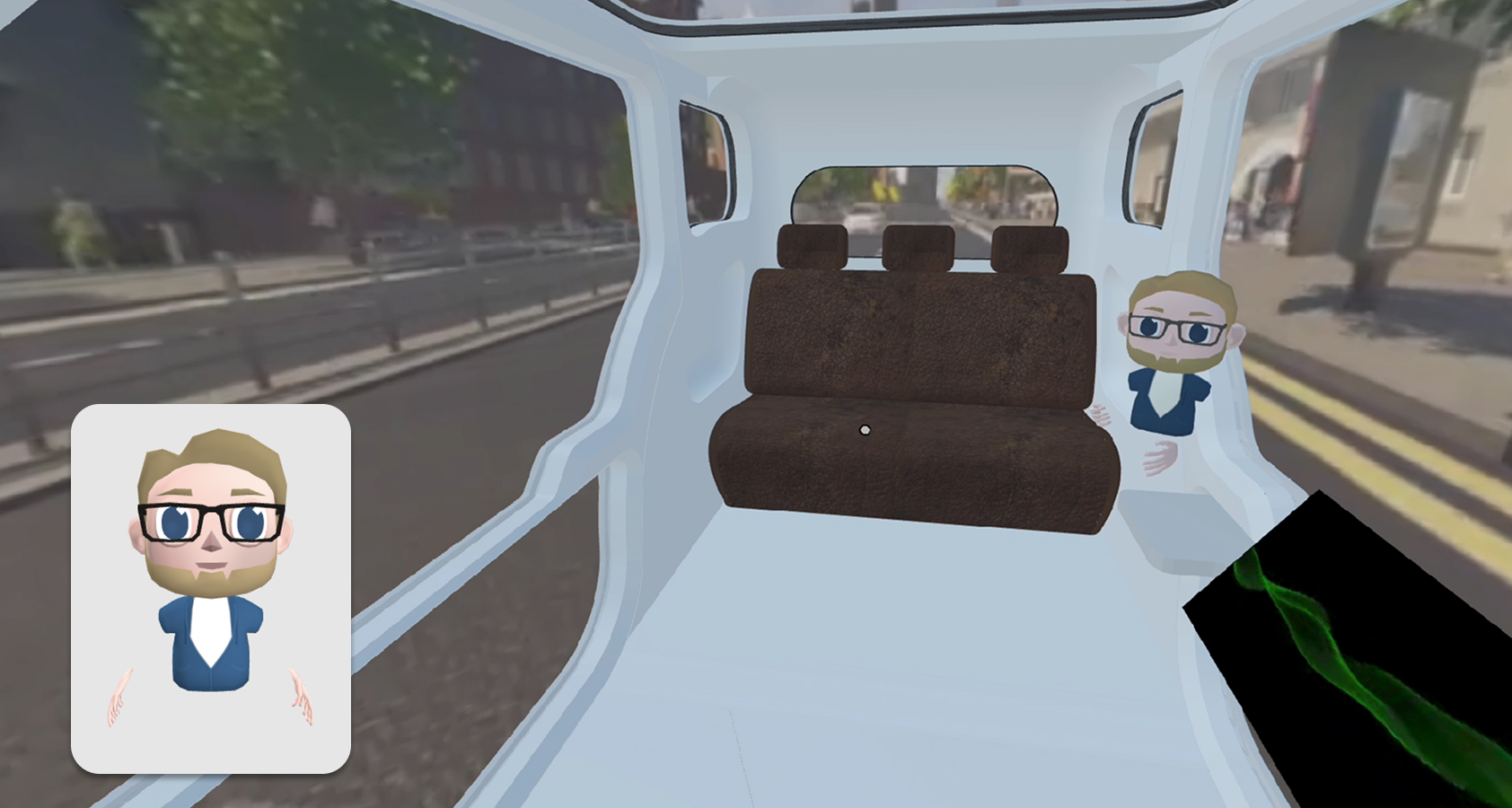
Based on the research questions, two key variables were identified for the prototype design: the level of anthropomorphism and the driving conditions. There are three groups of prototypes designed: (A) a traditional taxi ride with a human driver; (B) a robotaxi ride with a low AA; and (C) a robotaxi ride with a high AA. Each group of prototypes includes two types of driving conditions: a normal ride and an emergency event. There are total of 6 prototypes for the experiment.
2 Prototype and Testing
To control the variables, all prototypes use the same 360° video as the background to simulate a real-world riding view in VR for the passengers.
In normal condition, the prototypes simulate a daily taxi or robotaxi trip in a city, as for the emergency event, the prototypes simulate a car fire during a ride.
Prototype A
Prototype B
Prototype C
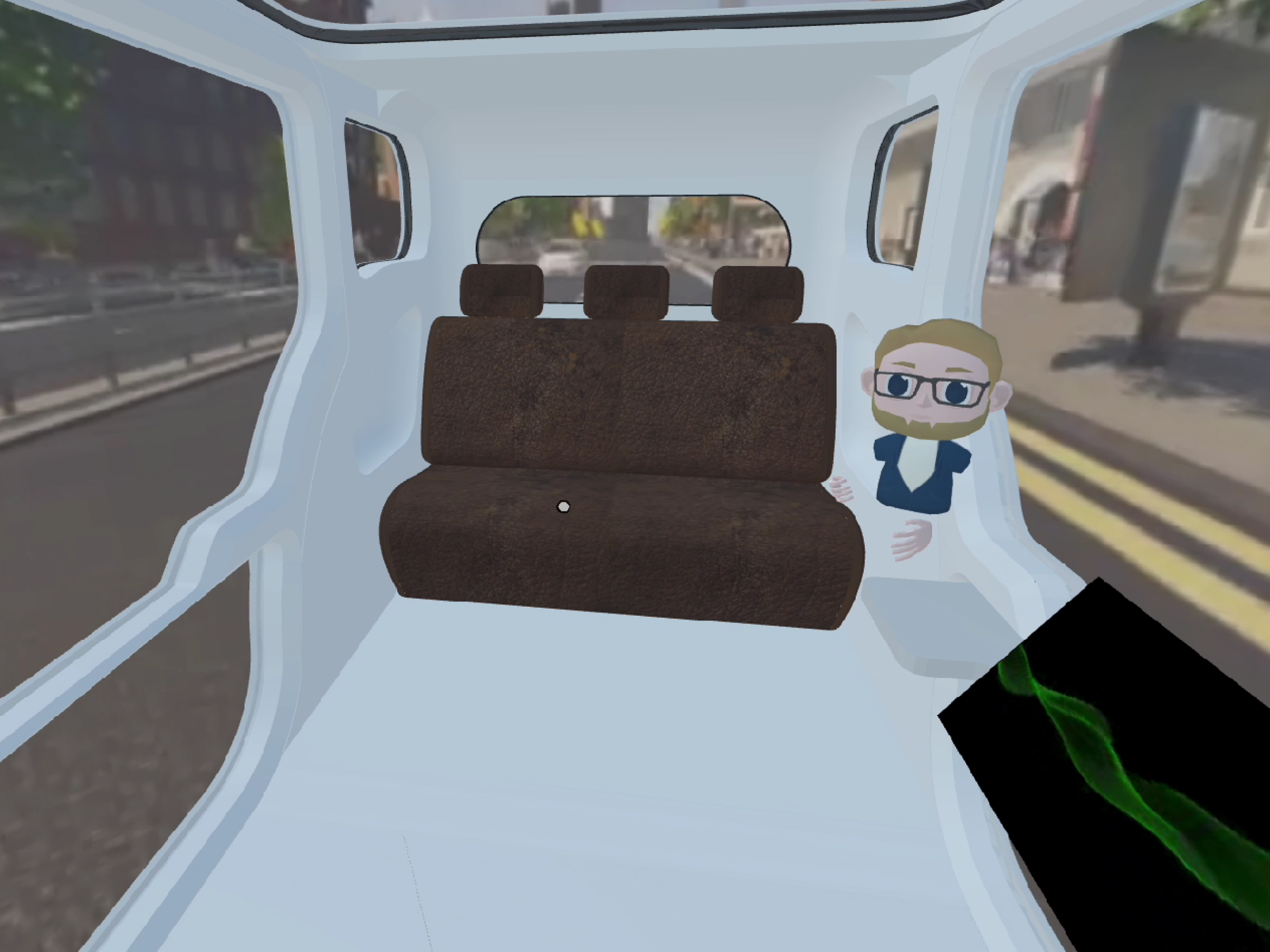
In this study, the wizard would use a VR headset to join the testing environment with the participant. In prototypes, the wizard would have an appropriate avatar and position, control the avatar posture and speak (prototype A) or play the prepared dialogue record (Prototype B and C) in real time.
3 Result and Conclusion
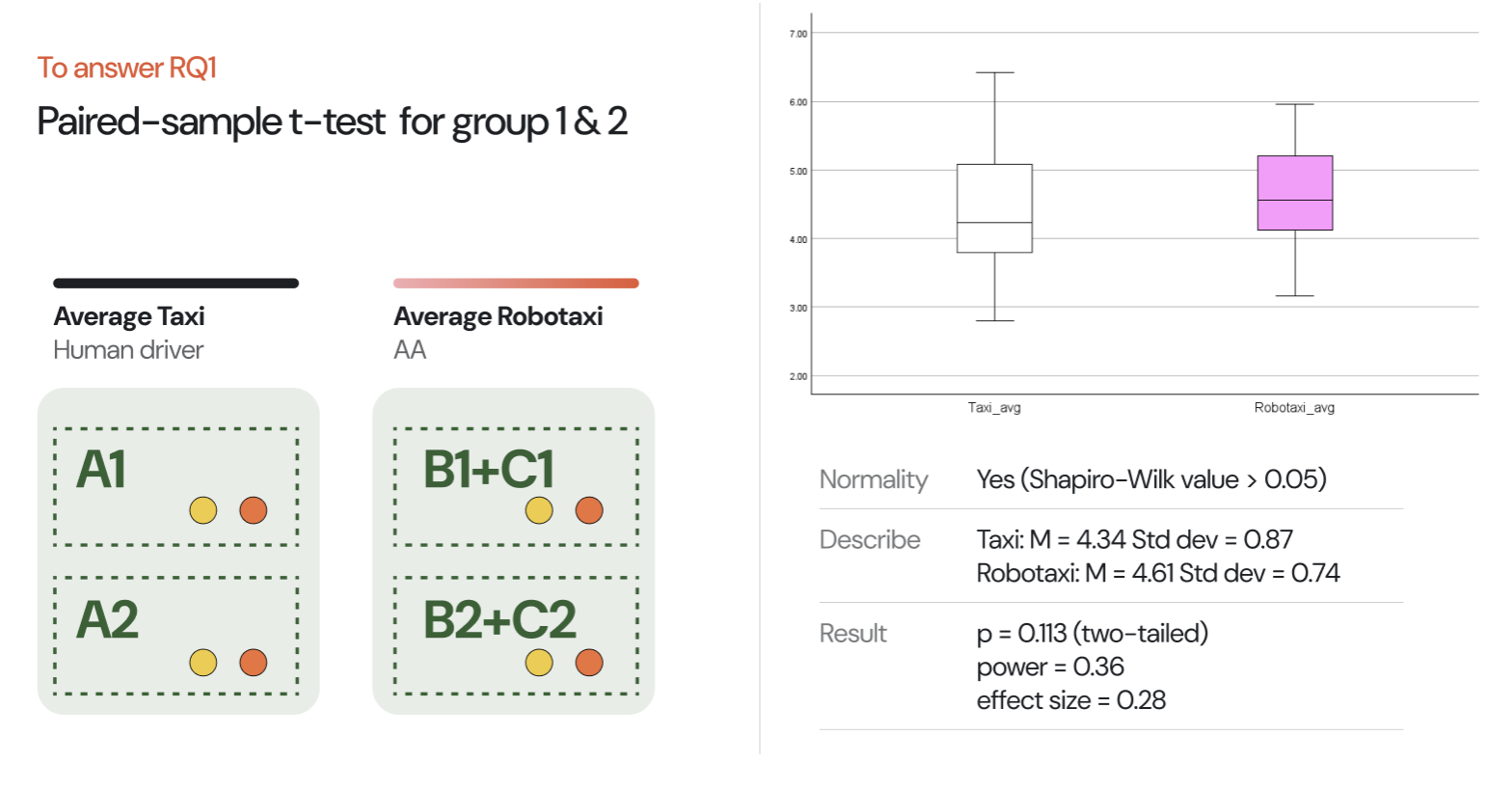
Results suggested the majority of participants do not have a specific preference in the choice of taxi and robotaxi under both driving conditions.
Result of Paired-sample t-test for answering RQ1
Results also show that even if in-vehicle voice agents are designed to have different levels of human-like characteristics, it may not have a significant effect on trust.
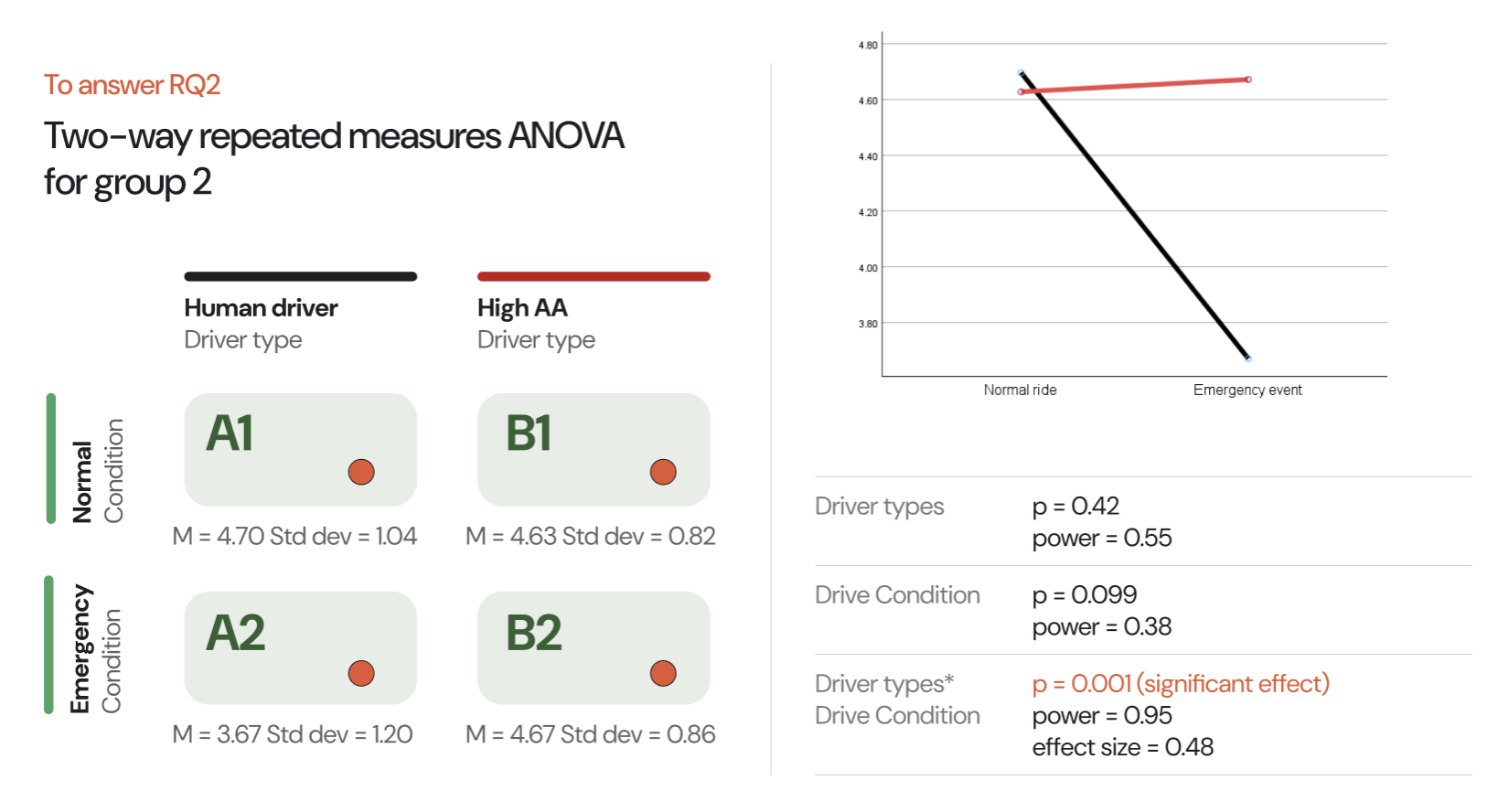
Then, the effect of driving conditions was further considered. In this case, the study emphasises the interaction affect between driving conditions and agent type. In the end, the result found a significant interact influence. To be specific, under emergency conditions, trust drops off in all scenarios (Human, Low AA and High AA). However, compared to a human driver, both low AA and high AA can significantly reduce the rate of trust decrease.
Result of ANOVA(1) for answering RQ2
Result of ANOVA(2) for answering RQ2
4 Implications
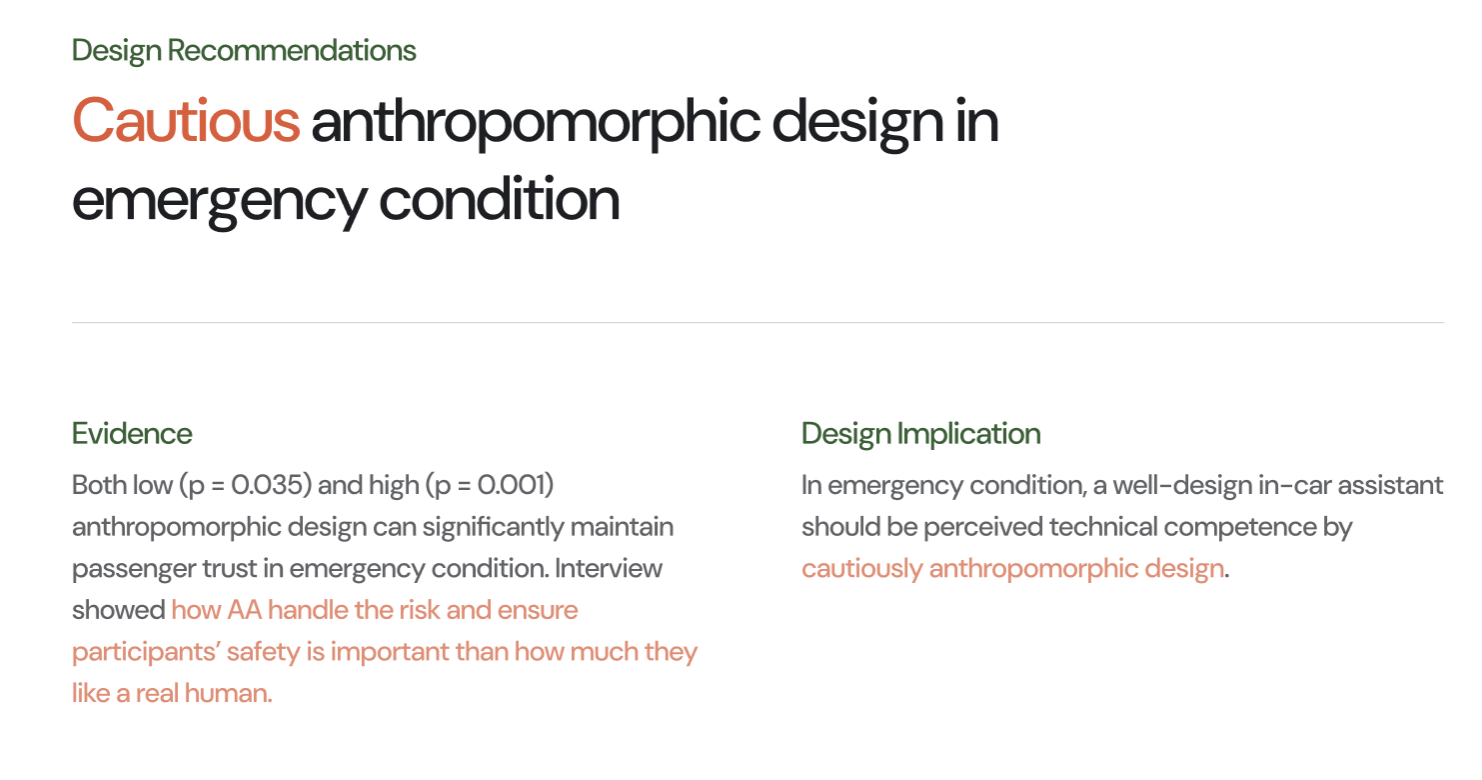
When an assistant shows positive social cues (warmth, good faith and friendliness), participants would perceive a high social presence and also respond positively, which can maintain the passenger trust facing a risk factor. Therefore, future research could focus on anthropomorphic design in risk conditions, explore the specific social cues and find out which of them (voice, eye contact or expression) is most effective to ensure participants’ perception of technical competence. The UX designer can make them in reference to enhance participants’ trust in robotaxi or other advanced technologies by anthropomorphic design.
UX Design Practitioner Implications 1
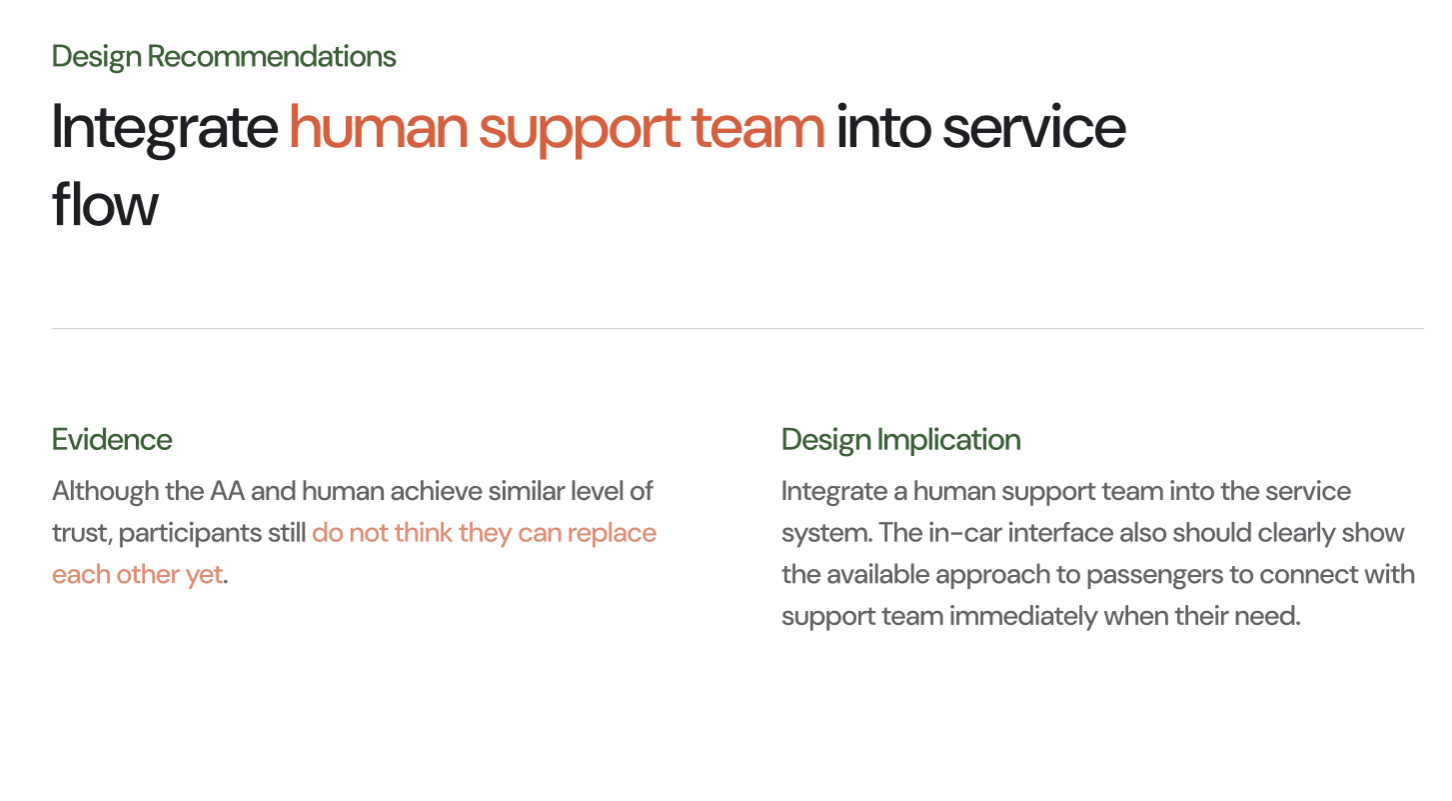
UX Design Practitioner Implications 2
Acknowledgement
Thanks to my mom and everything she gave me.
Past Project: Yangwang U8 Wonderland
Challenge: In traditional showrooms, users often struggle to understand complex automotive features, failing to create a lasting emotional impact.
Solution: This project aims to transform product selling points into perceivable, relatable, and memorable moments through an immersive narrative experience. By guiding users to naturally perceive the brand’s value in a virtual environment, we trying to enhance their trust and purchase intention.