With a strong interest in sustainable and user-focused design, I aim to create purposeful, empathetic work that bridges people, design, and the environment—design that not only solves problems, but also fosters awareness, connection, and long-term positive impact.
Final Product
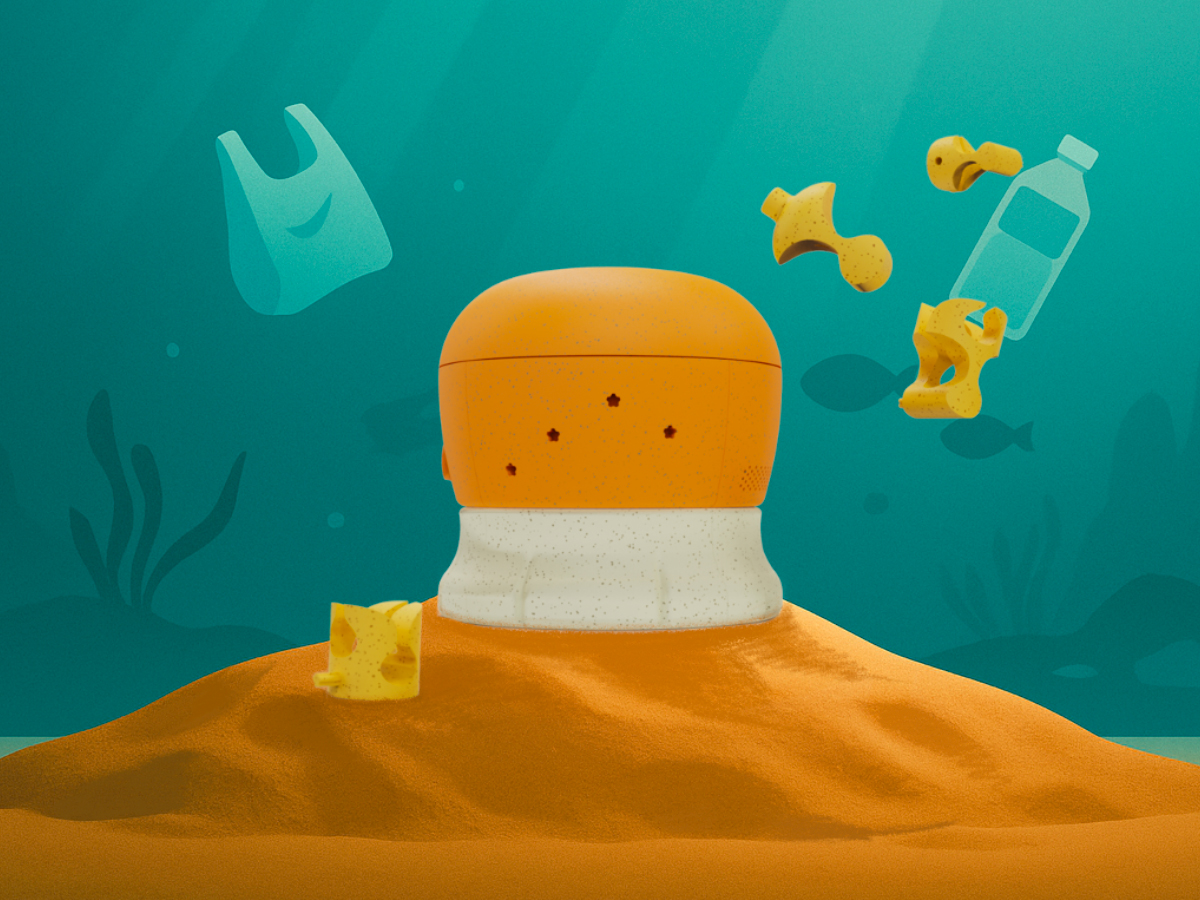
Thematic Rendering: Ocean Pollution
Play Scenario Visualization
Storyboard
Play to Protect the Ocean
This educational toy turns children into members of a “Marine Rescue Squad”, working in teams to help ocean animals affected by microplastic pollution. The toy features colourful marine creatures whose bodies are covered with detachable microplastic modules. As children remove the pieces, the animals’ facial expressions become happier — creating emotional connection and reinforcing the learning experience.
When the animal’s body is filled with microplastic blocks, the toy cannot function as a stool — symbolizing the discomfort caused by pollution. Only after the modules are fully removed can the toy be used for seating, transforming restoration into a meaningful physical interaction.
The microplastic blocks can be connected into common plastic products, helping children recognize the link between marine pollution and everyday consumption. Made from recycled ocean plastics, and designed with vibrant shapes and colours, this product combines sustainability, storytelling and play.
A dual-wall structure with ribs ensures the toy is lightweight yet strong enough to support over 90 kg, making it safe and portable for children.
Snap-fit lips and concealed screws allow easy assembly and maintenance while keeping the appearance clean.
Magnetic pogo pins and hidden switches enhance safety by preventing accidental contact, and wireless charging avoids exposed cables.
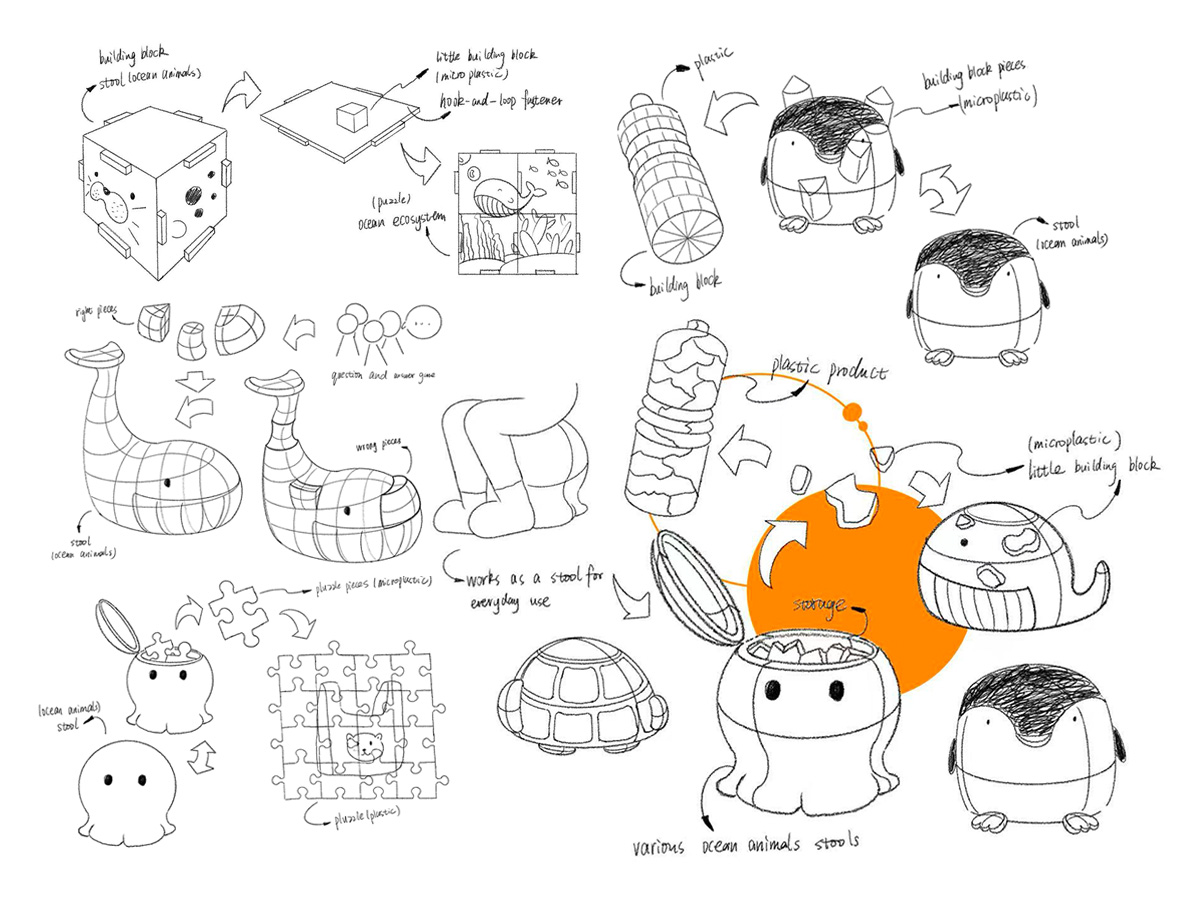
Sketches
In the early stage of the project, research, user interviews, and market analysis helped define the core direction: designing an educational toy for children that addresses the invisible but critical issue of microplastic pollution in oceans. Since the concept of microplastics can be abstract and hard for children to understand, the design aimed to make it tangible and relatable through play.
A large number of hand-drawn sketches were created to explore game mechanics, interaction modes, and connection methods. These sketches investigated how storytelling, physical assembly, and emotional feedback could work together to deliver sustainability education. Through the development of character roles, functional layouts, and visual languages, the initial concept began to take shape, laying the foundation for the prototyping and testing phases that followed.
Concept Form Exploration
Detail Exploration
Prototype
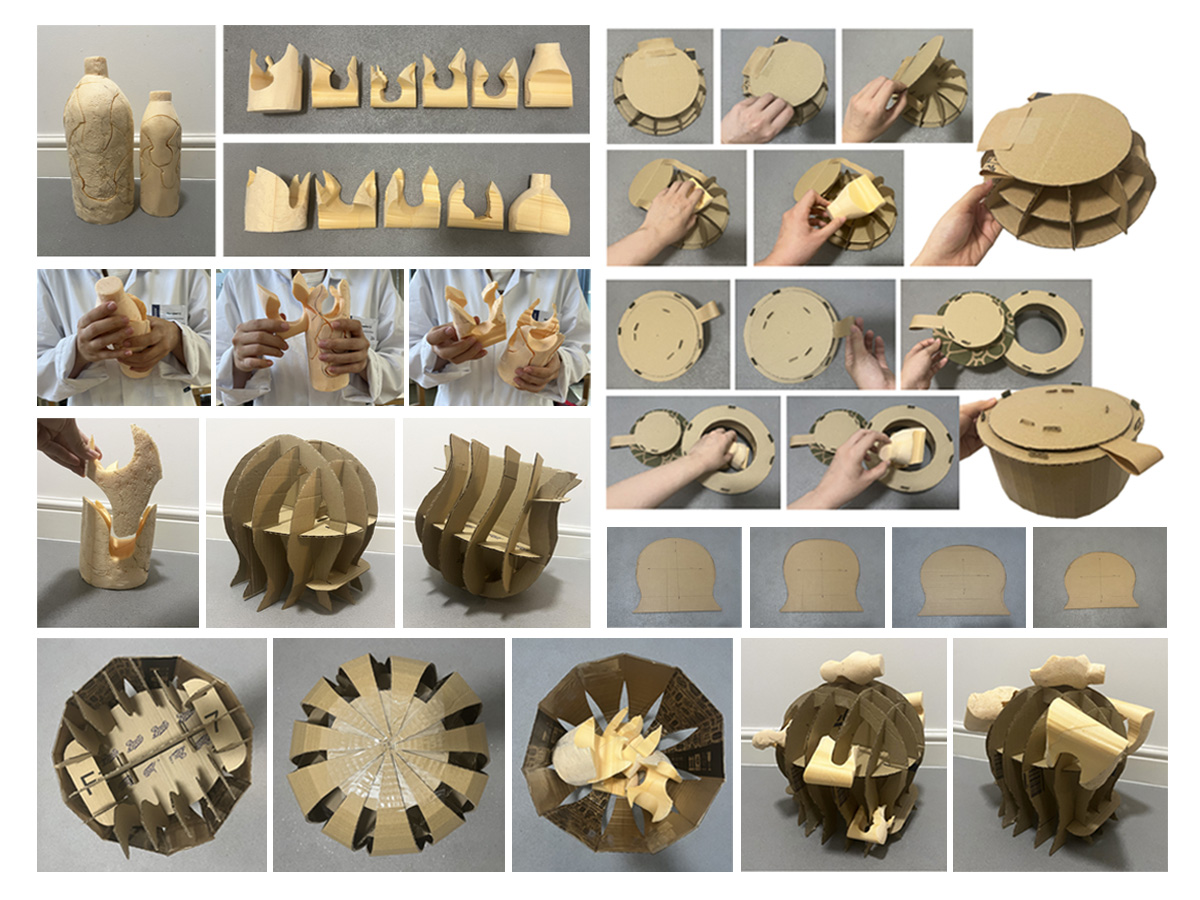
The prototyping process progressed through two key stages, moving from early conceptual testing to high-fidelity functional validation. Initial prototypes were built using cardboard and high-density foam to quickly explore the overall form, dimensions, and connection strategies. These low-fidelity models enabled fast iteration and allowed for a rough evaluation of how children might physically interact with the toy.
In the second stage, two more refined prototypes were developed to test different aspects of the design. An electronic function prototype, 3D printed in PLA, was embedded with an OLED screen, LEDs, sound elements, and magnetic modules to simulate interactive feedback, including changing facial expressions. In parallel, a 1:1 scale structural prototype was constructed using laser-cut HIPS panels, allowing for the validation of assembly logic, ergonomic proportions, and physical presence. Across both stages, multiple connection methods—such as magnetic joints, snap-fit designs, and interlocking grooves—were trialed and optimised through hands-on testing.
This two-stage prototyping process not only improved the physical and functional clarity of the design but also laid the groundwork for later user testing and refinement.
Prototype Stage 1
Prototype Stage 2
User Testing
To ensure the design was aligned with the needs and behaviors of real users, user testing was conducted at the final stage of development. Due to ethical considerations, children were not directly involved in the process. Instead, three parents and a teacher were invited to engage with the full-scale prototype, simulating how children would interact with the toy through structured observation and role-playing.
The teacher followed the suggested activity flow: opening the stool, attaching the microplastic modules, and inviting children (imaginary or hypothetical) to act as “Ocean Guardians.” Participants simulated the complete interaction process—from removing microplastic blocks and observing the animal’s emotional change, to assembling the removed modules into recognisable plastic products, and finally sorting them into the correct recycling categories. The prototype was also tested for its role as a stool, and as part of a marine ecosystem puzzle when placed on the floor.
Feedback highlighted the toy’s potential to communicate sustainability through storytelling and physical interaction. Participants appreciated the symbolic feedback (happy expressions when animals are cleaned) and the modular educational value. Suggestions included optimising connection mechanisms for smoother user engagement.